



Description
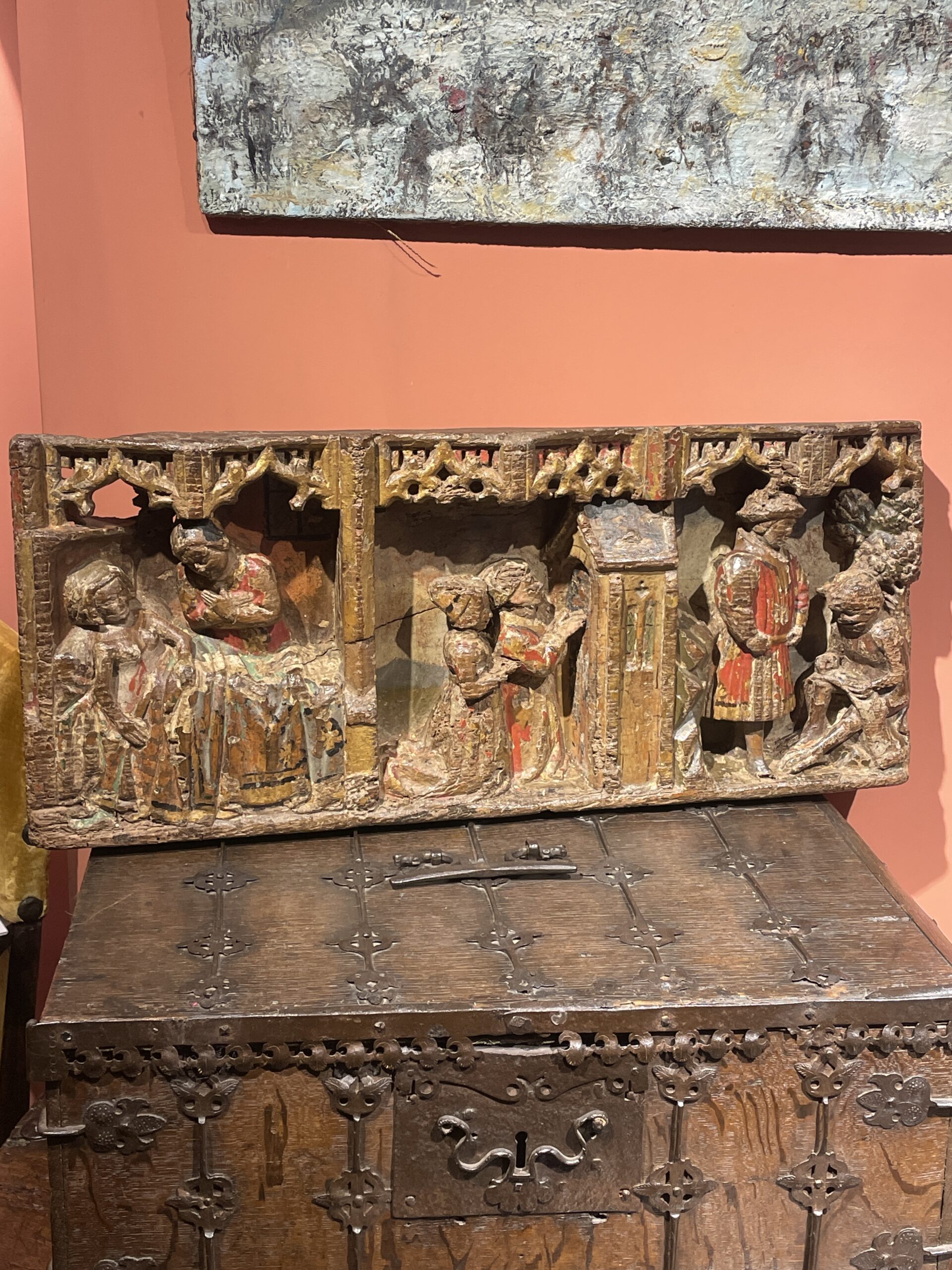
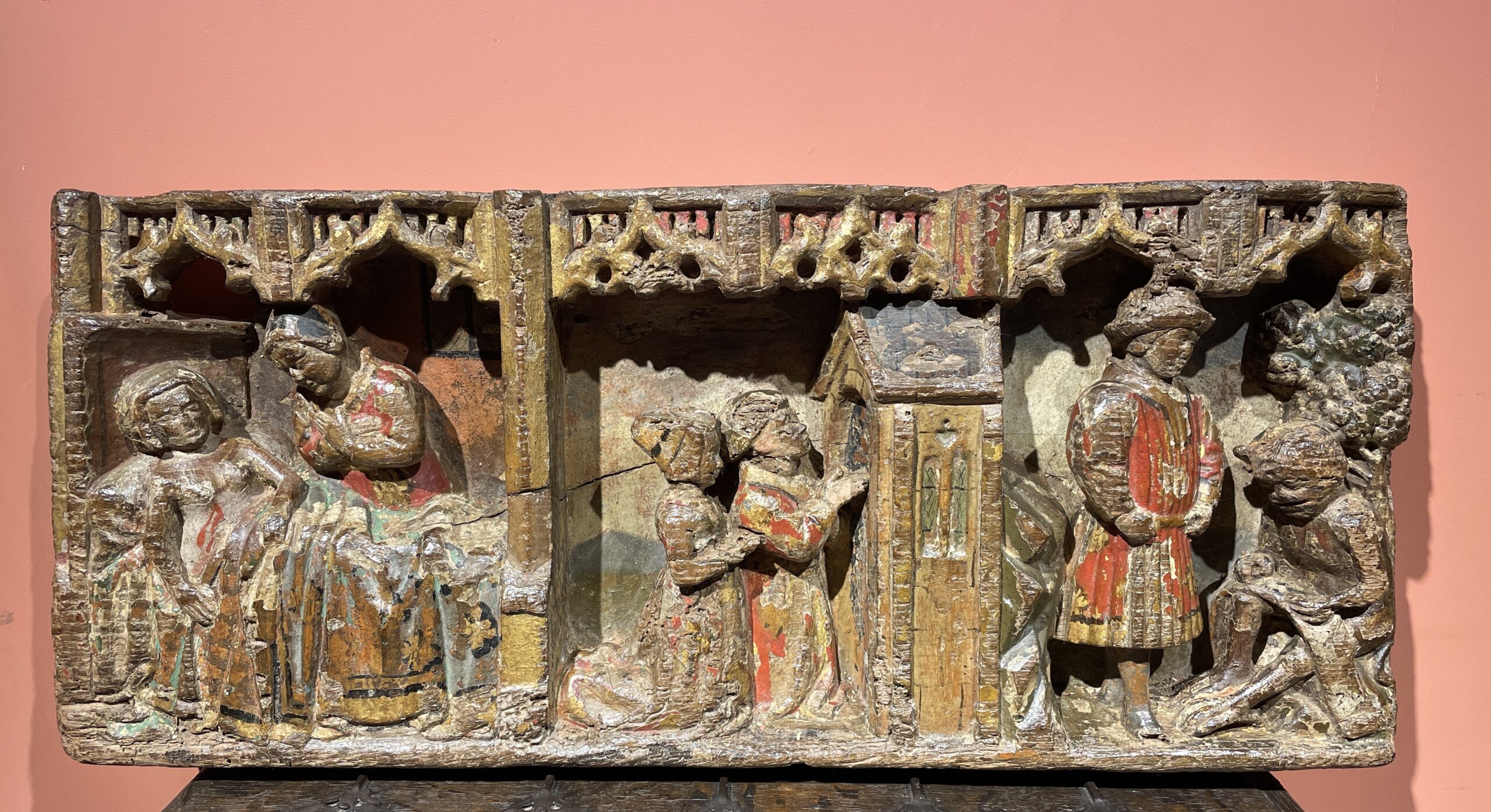
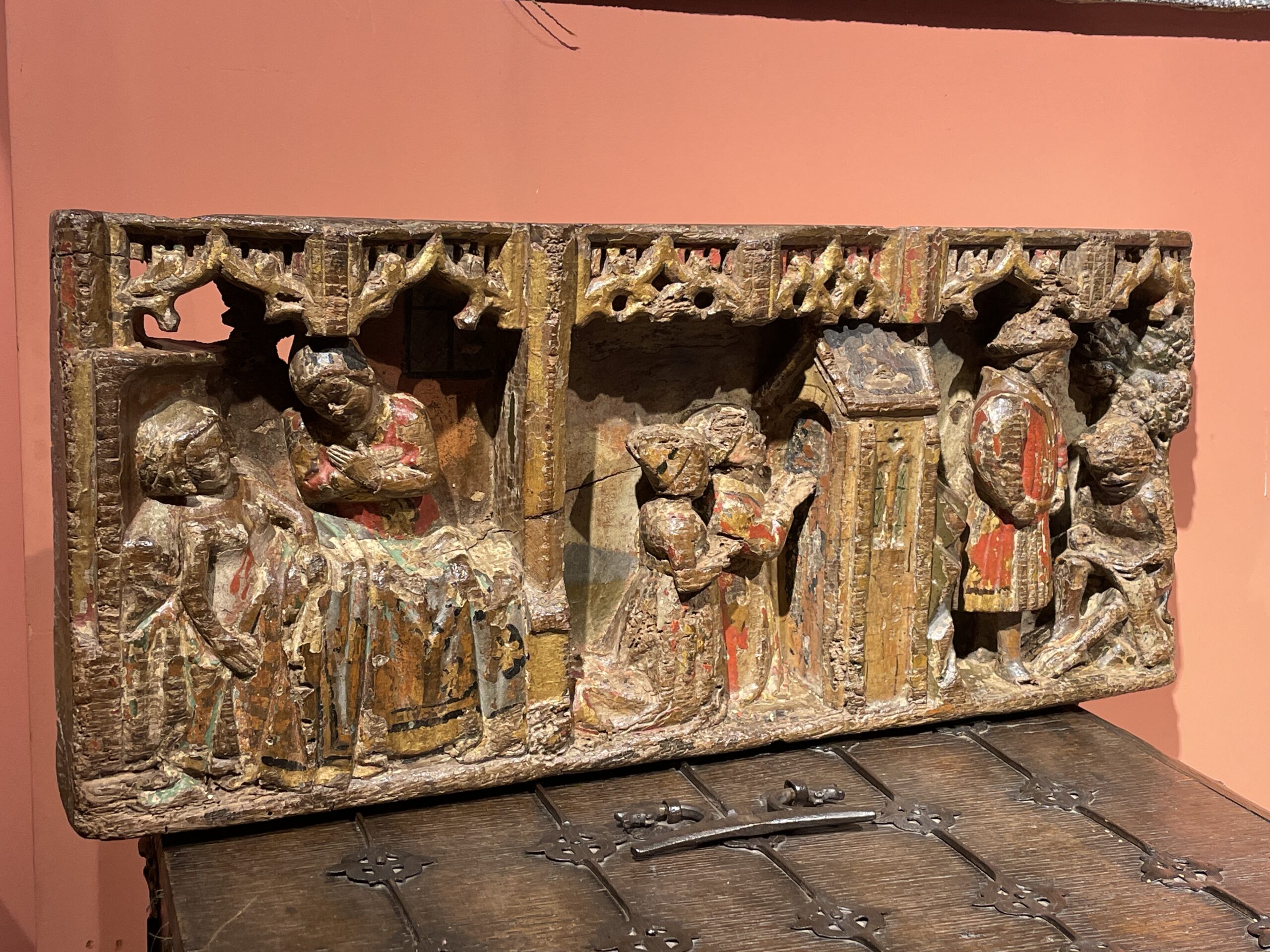
This predella in carved chestnut wood, polychromed and gilded, features three small narrative scenes set beneath a delicate openwork tracery frieze of distinctly Gothic character.
The principal theme is the Life of Saint Benedict of Nursia, father of Western monasticism.
Saint Benedict is regarded as the founder of Western monasticism. Born in Nursia (Umbria, Italy), he left Rome at a very young age, disillusioned by the moral corruption of society, to live as a hermit in solitude. His reputation for holiness soon attracted disciples, and he founded several monasteries, the most famous being Monte Cassino.
Benedict wrote the Rule of Saint Benedict, a foundational text organizing monastic life around a balance of prayer, work, and reading (ora et labora).
His Rule emphasizes obedience, humility, stability, and communal life, and it became the basis for many monastic orders throughout Europe.
Throughout his life, Saint Benedict was renowned for his miracles, spiritual wisdom, and discernment in the face of evil. He resisted temptations, thwarted the snares of the devil, and guided his monks with both firmness and compassion.
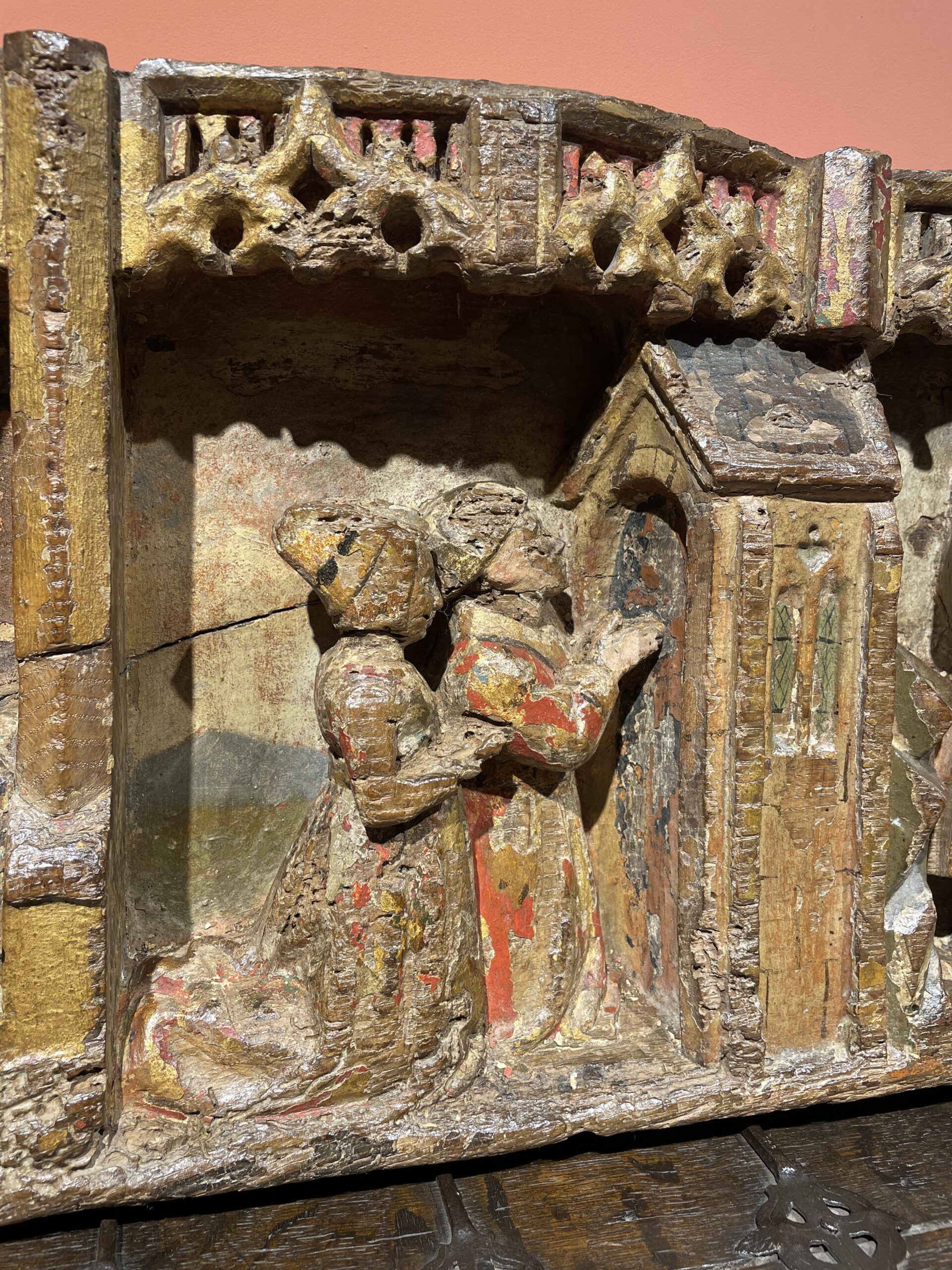
The central scene depicts Saint Benedict accompanied by a young woman, both kneeling in prayer in front of a Gothic-style Chapel.
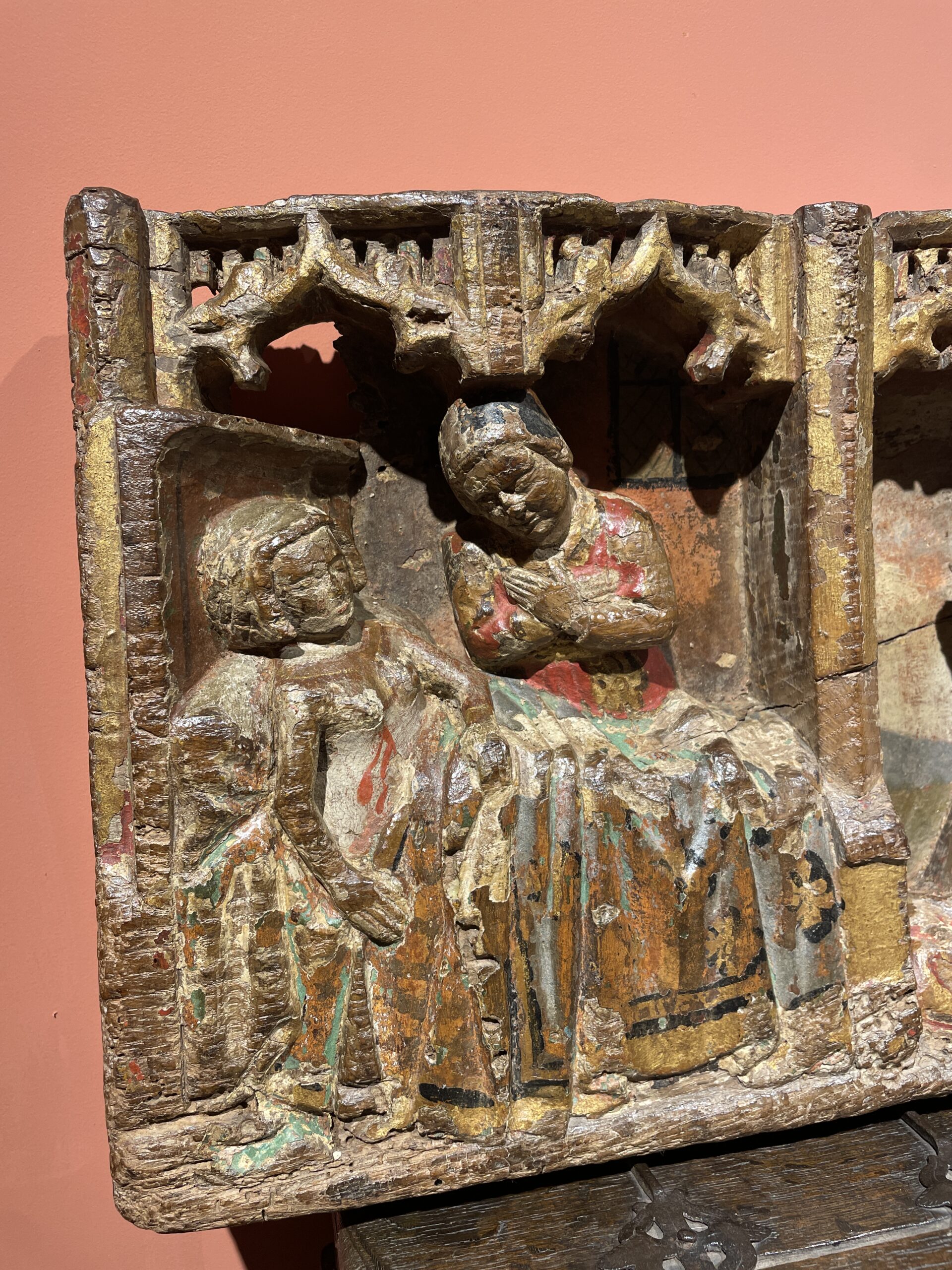
The scene of his sister Scholastica on her deathbed
The left-hand scene shows Saint Scholastica, Benedict’s twin sister, who also dedicated her life to God. Once a year, they met to speak of spiritual matters. During their final meeting, Scholastica, sensing her impending death, asks Benedict to prolong their conversation.
When Benedict refuses to remain beyond the rule, Scholastica prays to God, and a miraculous storm breaks out, preventing him from leaving. Shortly thereafter, Scholastica dies. Benedict then sees her soul ascend to heaven in the form of a dove.
In iconography, and as shown here, she is depicted reclining in bed, frail yet radiant, while Benedict watches over her with hands crossed upon his chest, expressing fraternal love, faith, and the imminence of their separation.
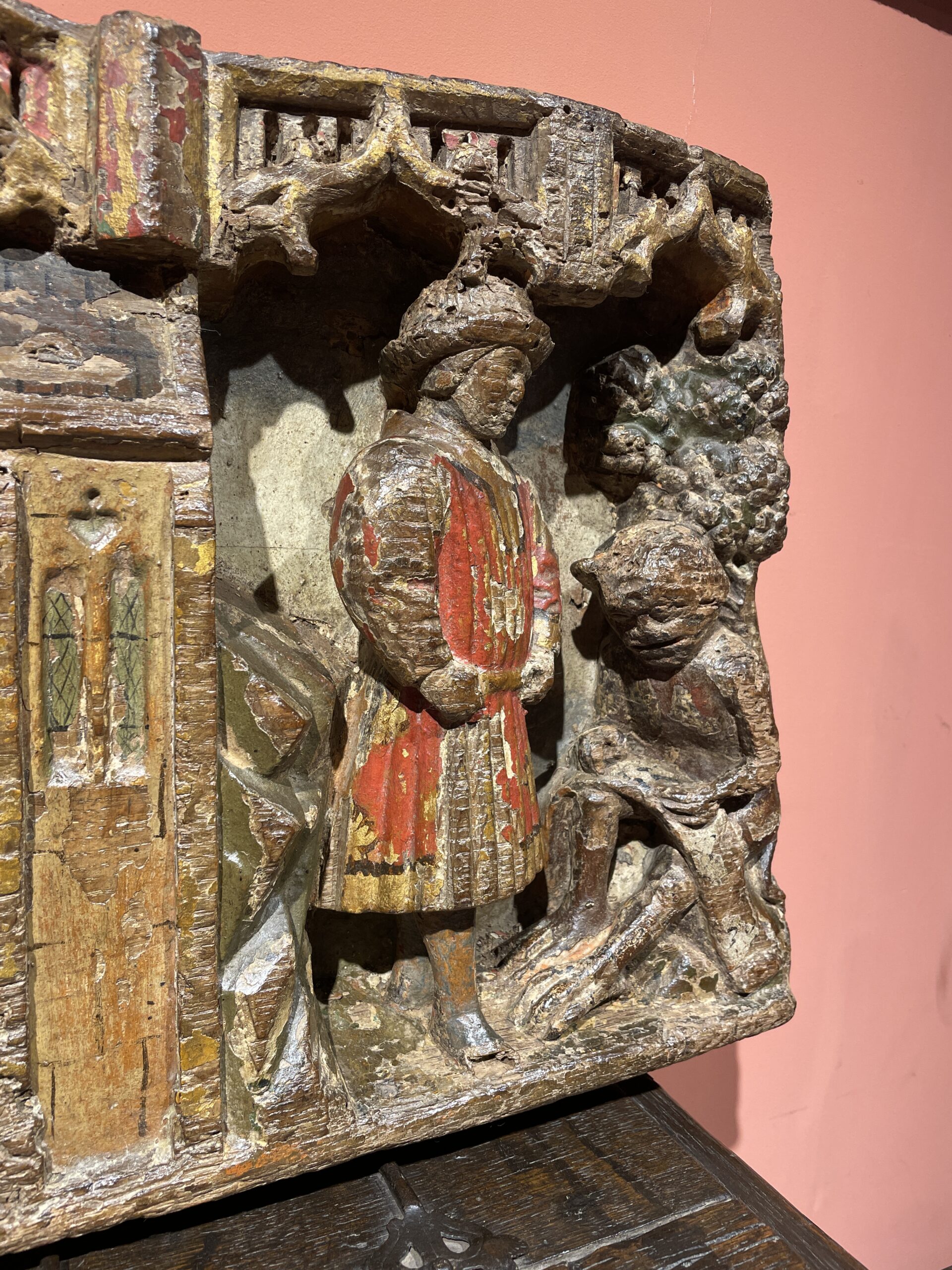
The scene of the demon with the phylactery
The right-hand scene presents another famous episode: Saint Benedict confronted by the demon, who attempts to disrupt the life of the monks. The horned demon, with clawed feet, is here shown seated and writing on a phylactery – a scroll or banderole bearing deceitful or accusatory words -symbolizing temptation, cunning, and the corrupting power of language.
Through prayer and spiritual authority, Benedict exposes and drives away the evil spirit, illustrating his constant struggle against evil and his role as protector of the community.
This scene highlights the conflict between divine truth and falsehood, and the idea that sacred speech triumphs over corrupted speech.