



Description
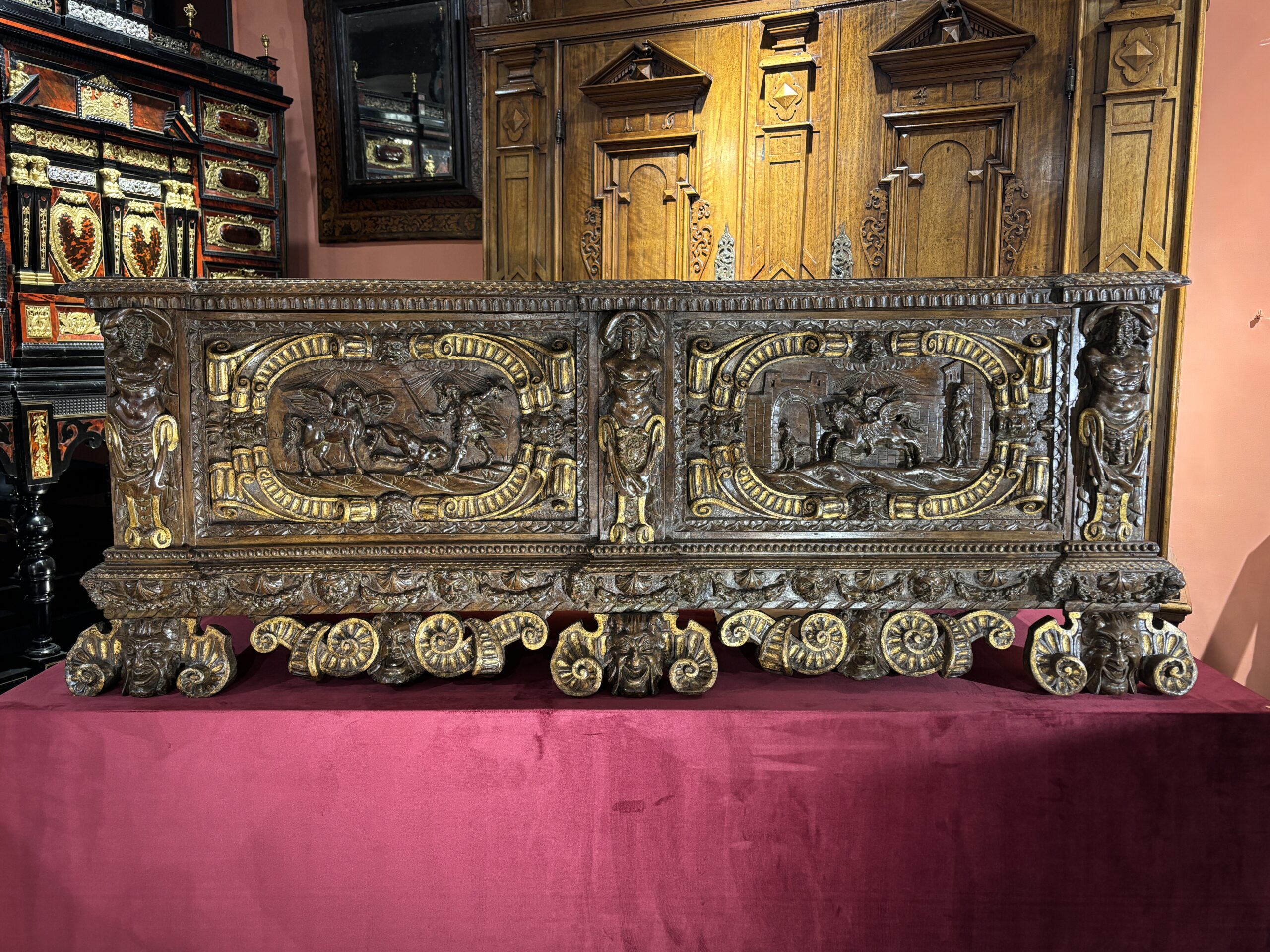
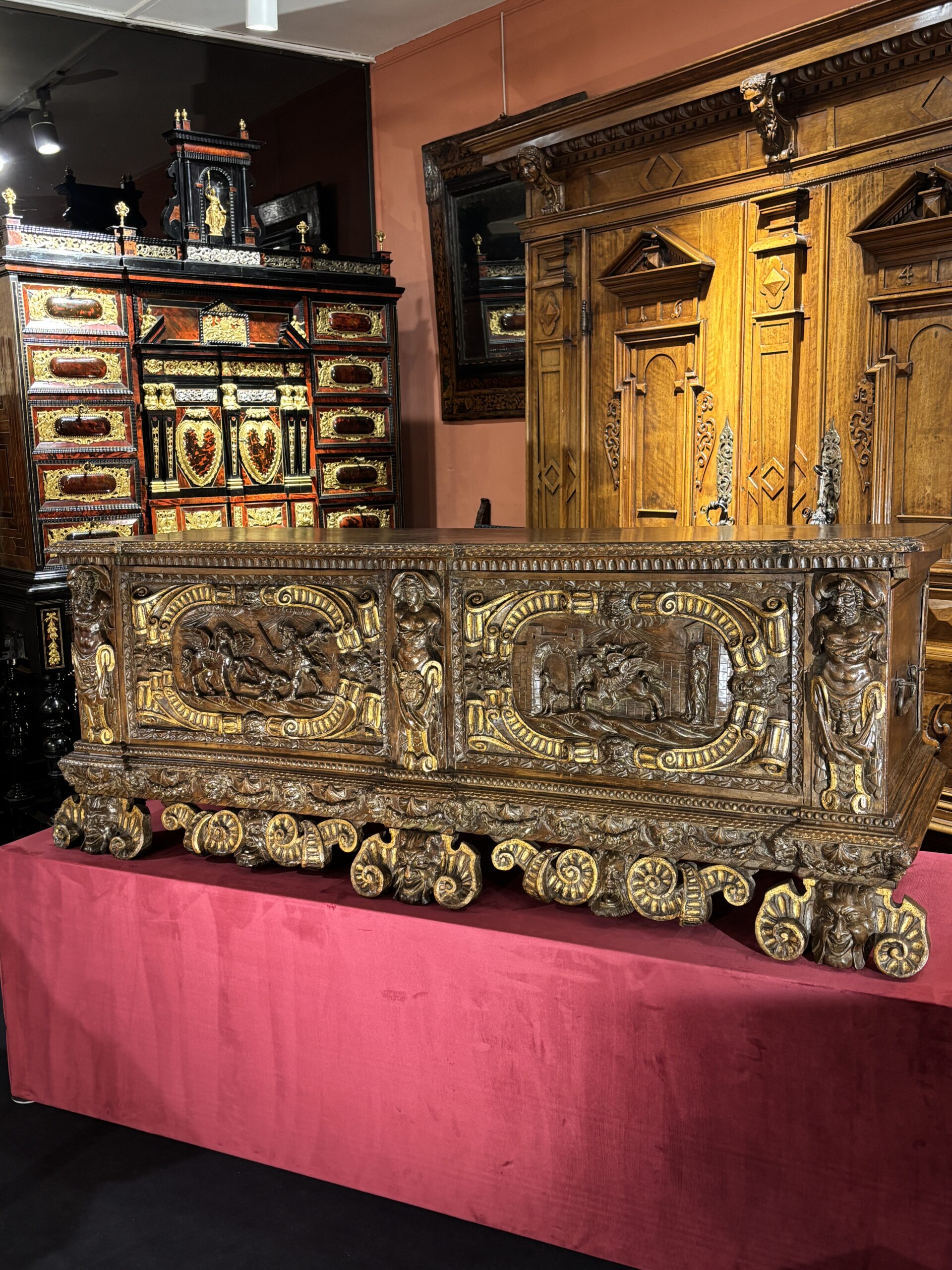
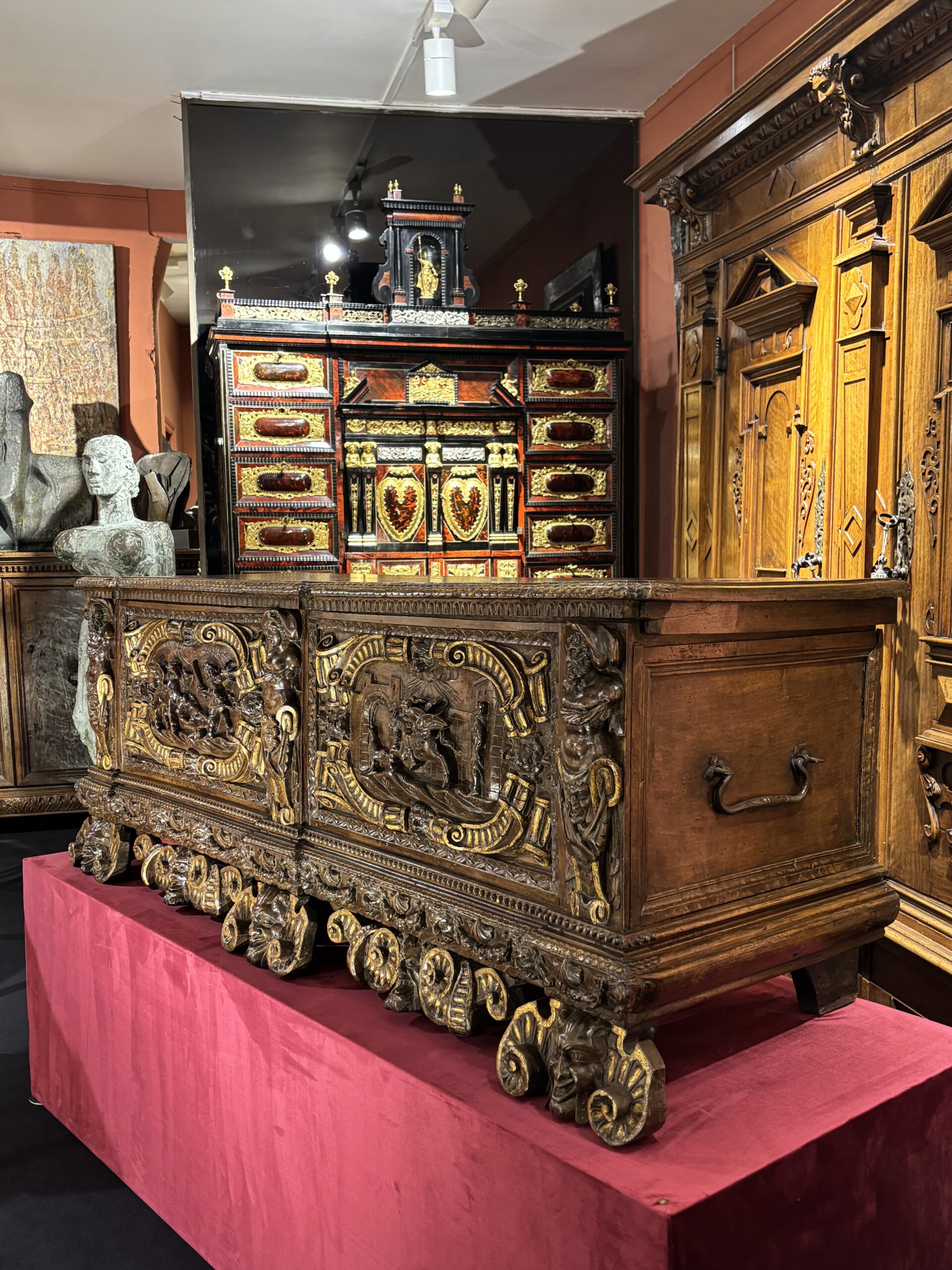
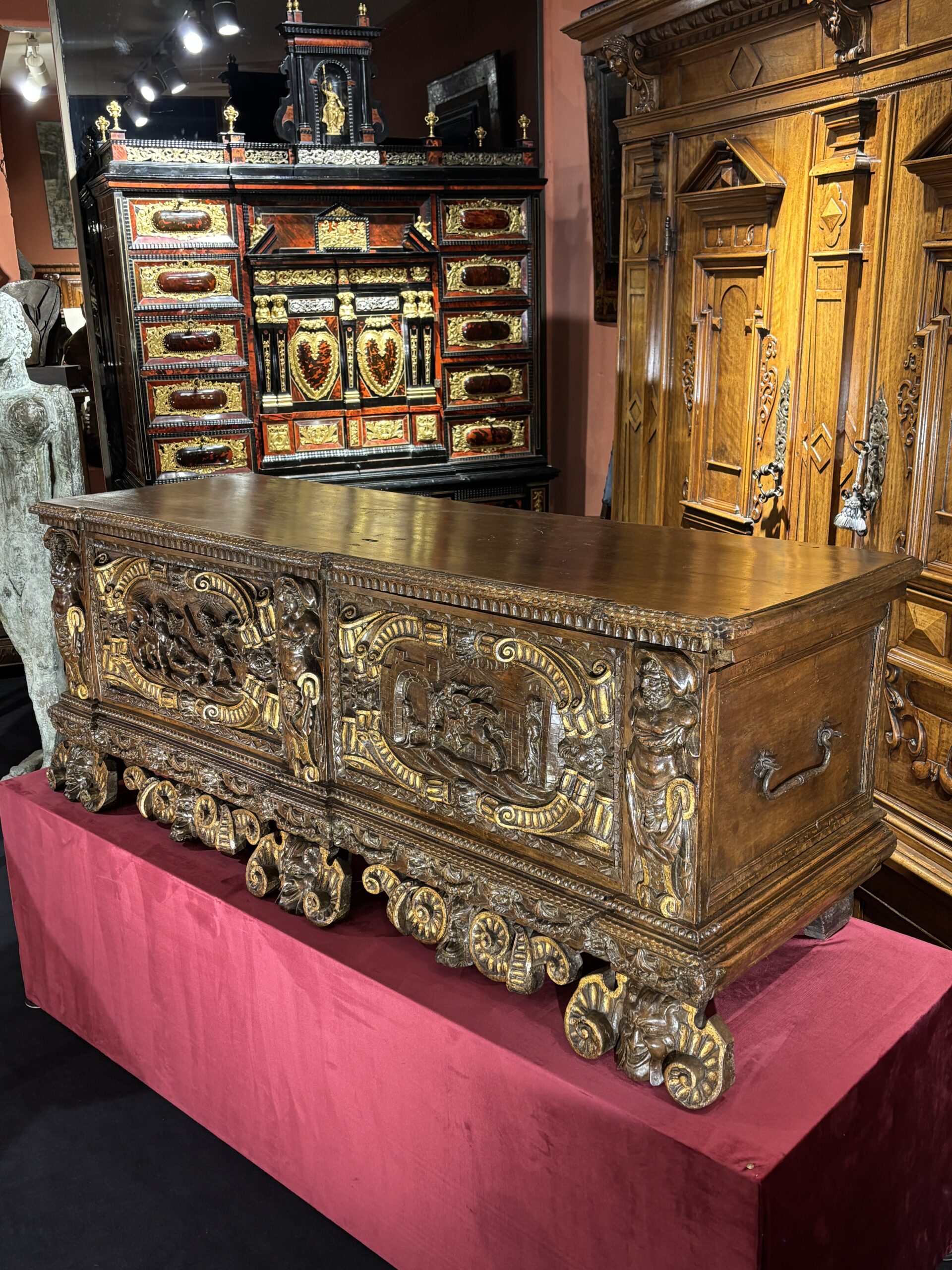
This important and rare chest, also known as a cassone, is carved in high relief from fine walnut wood.
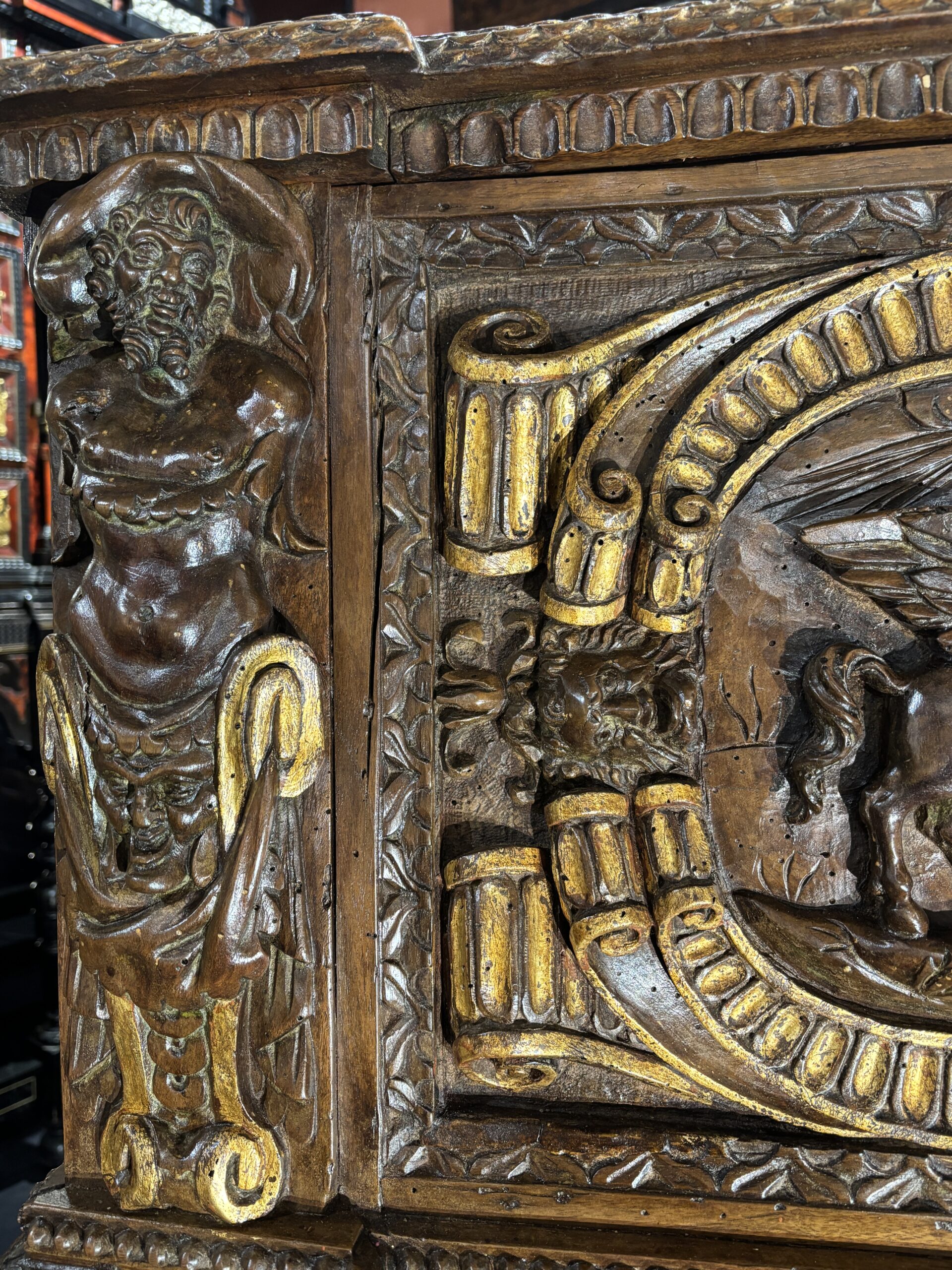
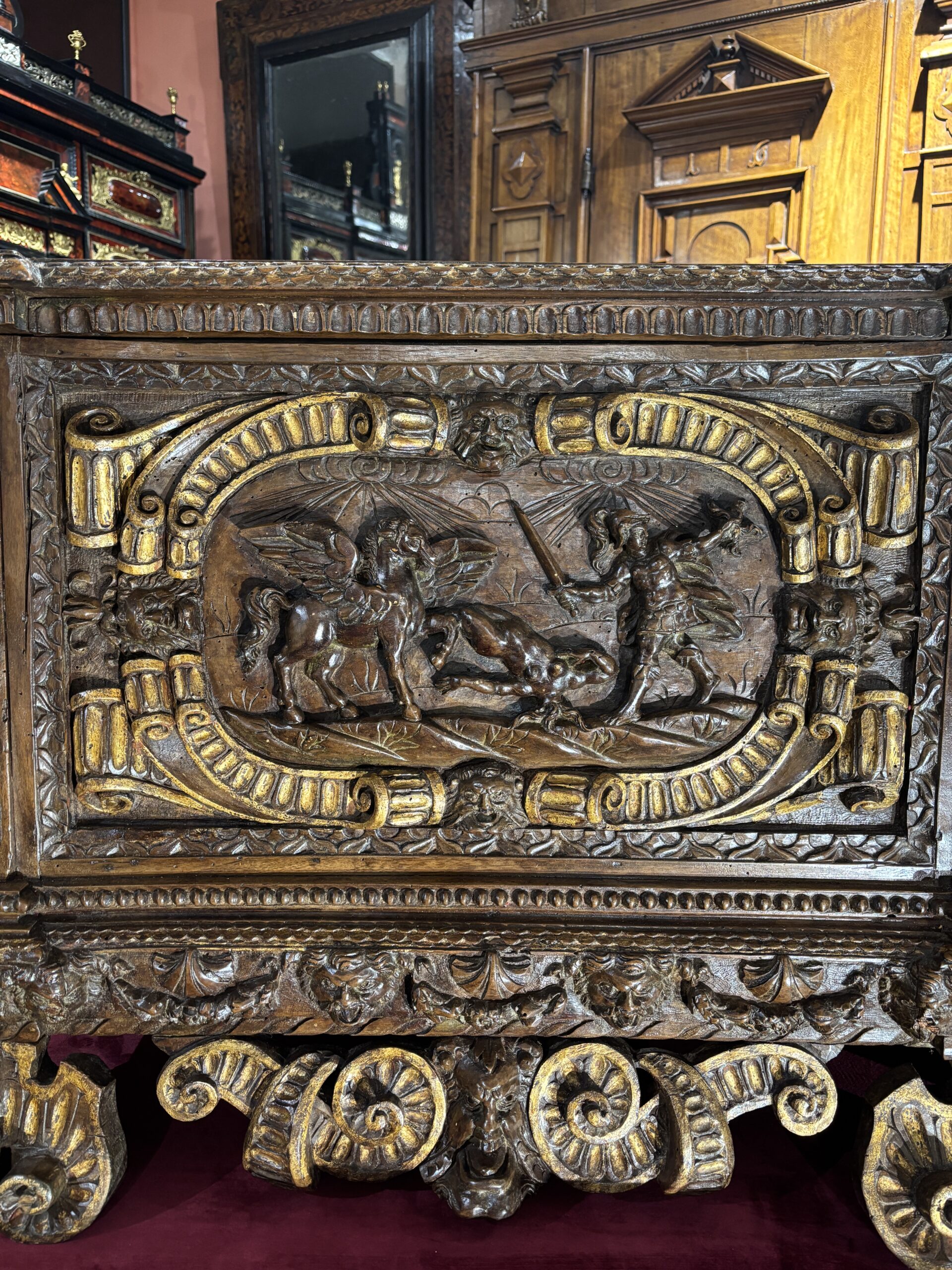
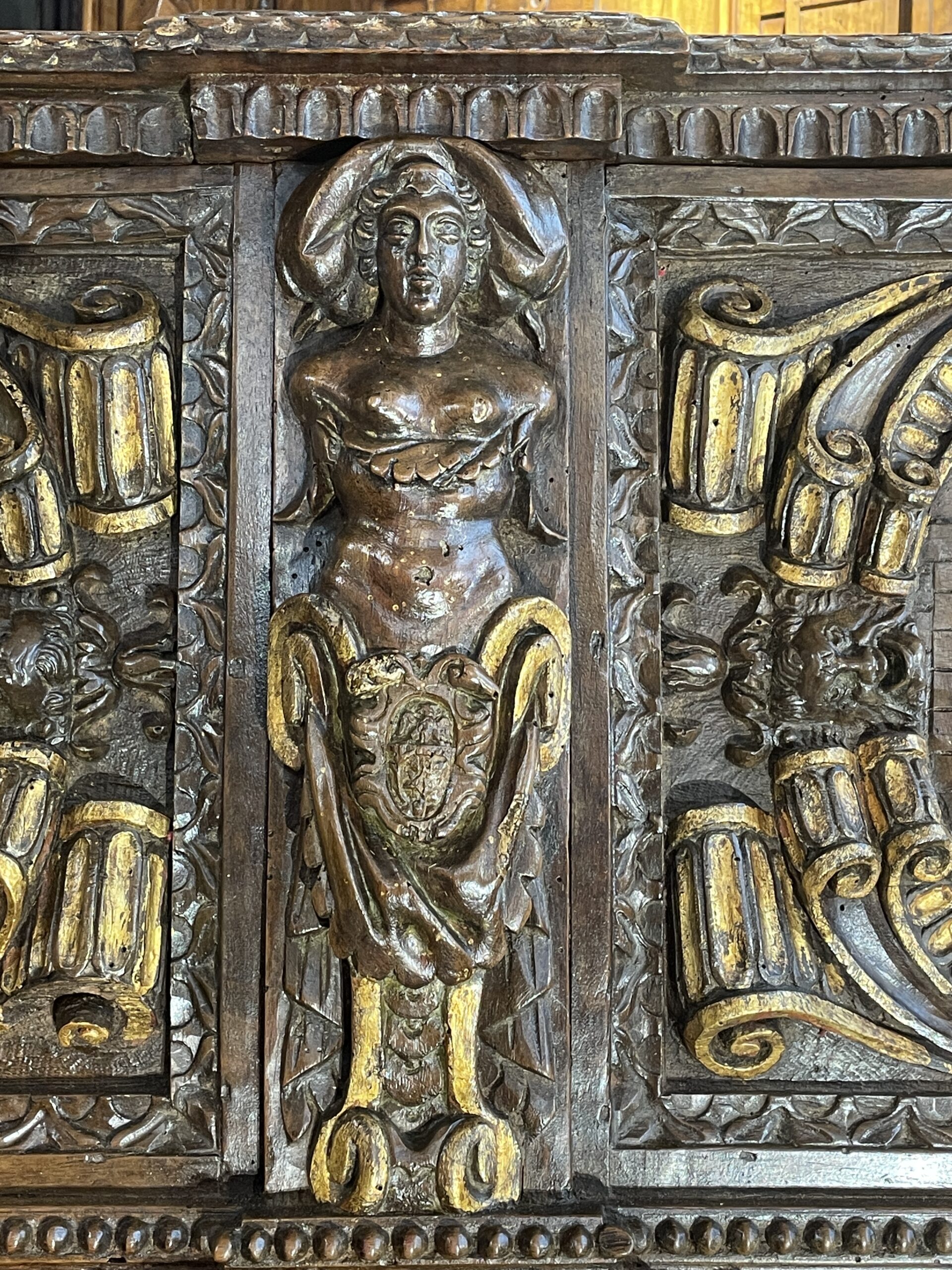
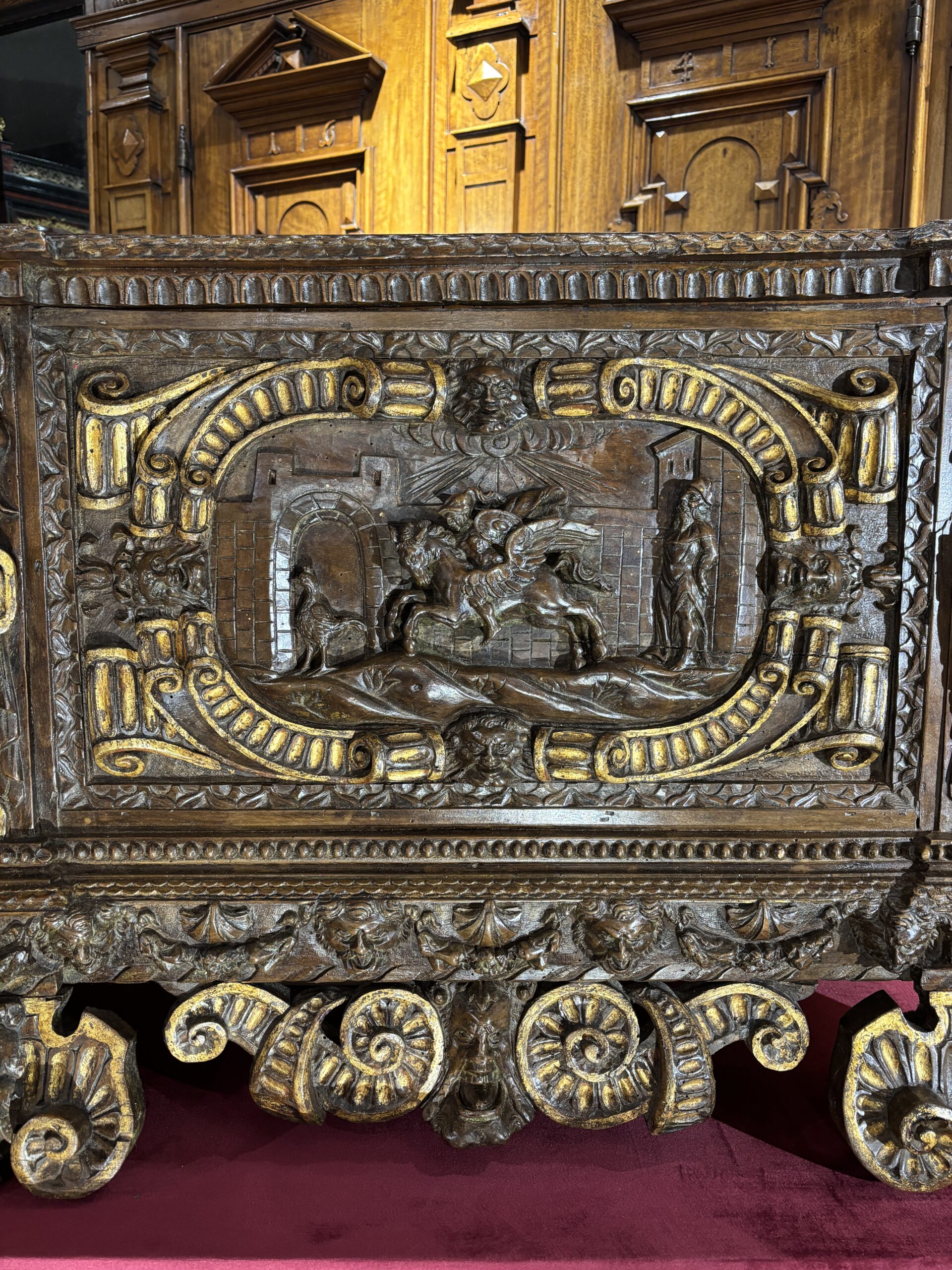
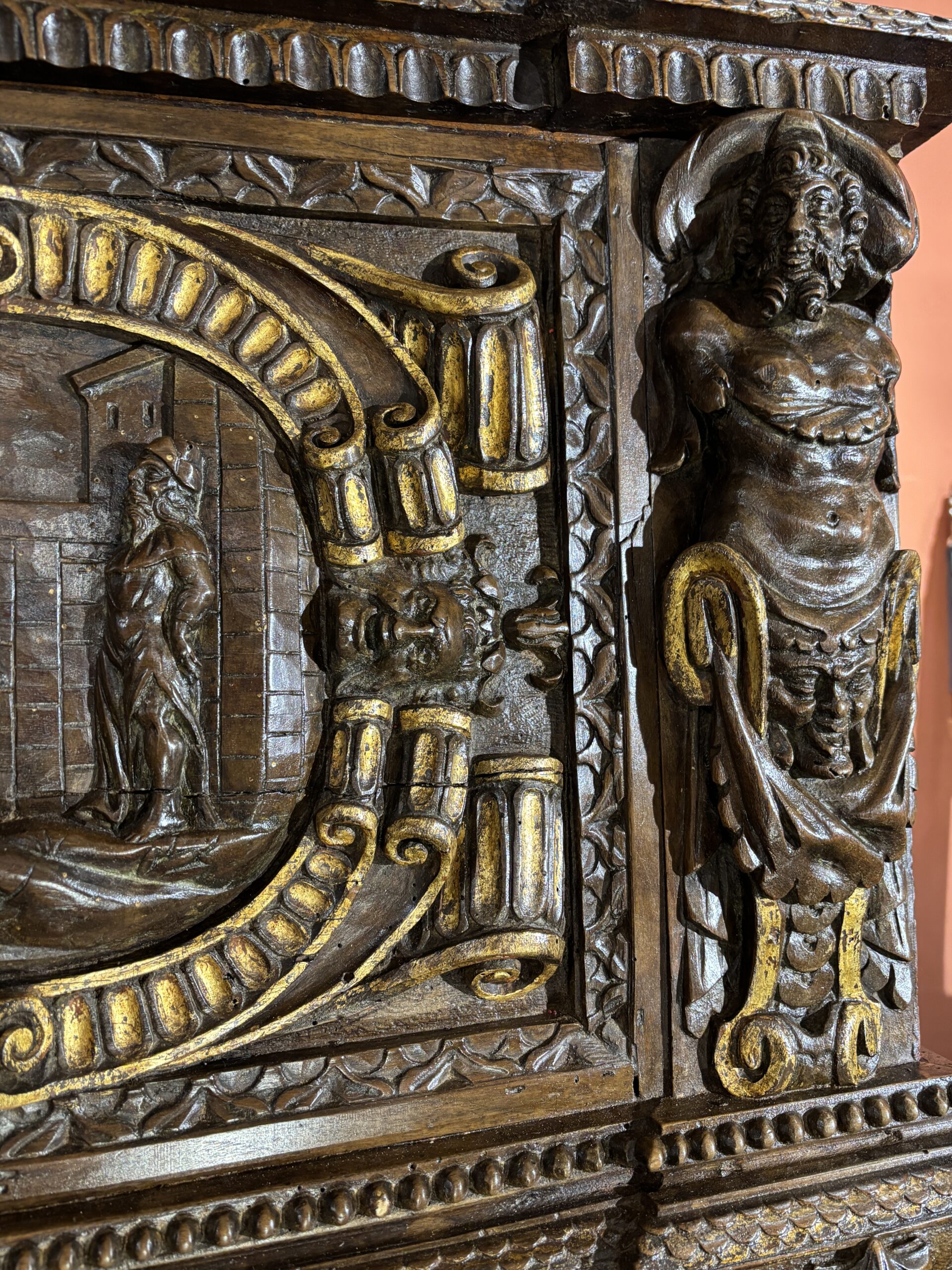
The partially gilded front, set within frames of fluted scrolls reminiscent of cut leatherwork, features two scenes drawn from the Labors of Perseus and Pegasus, interspersed with two lateral telamons and a caryatid in the center bearing a heraldic shield.
On the left-hand scene, Perseus is shown triumphantly displaying the Head of Medusa, which he has just severed with his sword—an act that gave rise to the birth of the famous winged horse, Pegasus.
On the right-hand scene, under the gaze of Emperor Augustus, Bellerophon (or Perseus, according to the legend), clad in armor and holding a shield, rides a spirited Pegasus to confront the Chimera, depicted as a bird.
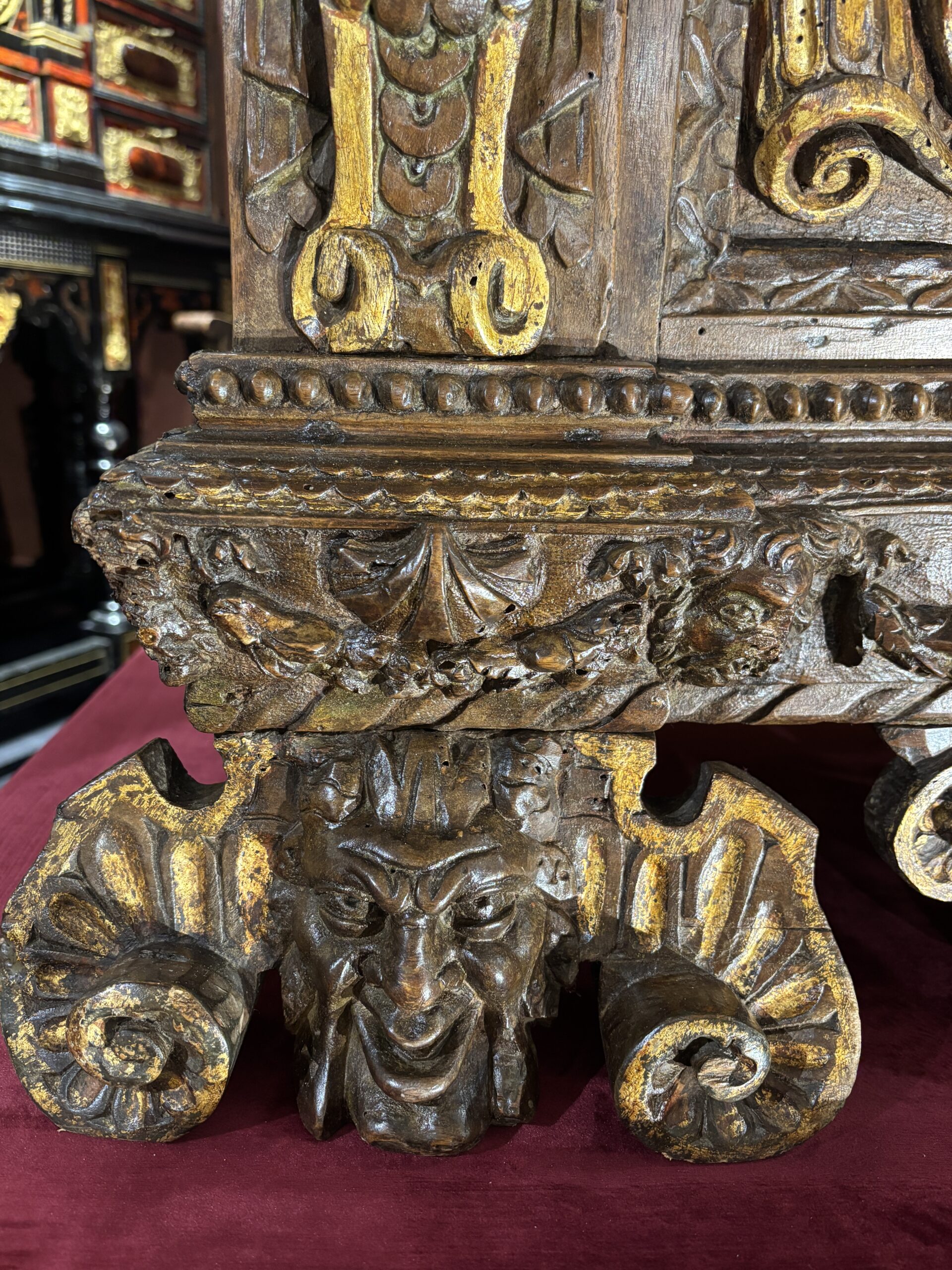
Beneath these mythological scenes, the lower frieze is adorned with festive garlands of fruit interspersed with grotesque figures of a distinctly diabolical appearance.
Below this, an apron plinth concealing the five front feet features satyr-like mascarons centered within fluted and gilded scrollwork, further enriching the overall composition. Such flared feet are found in particular on a small number of rare Venetian chests.
The top is bordered by an elegant frieze decorated with a still-gilded scale motif, while the sides are fitted with finely wrought iron handles forming grips for the transport of the chest.
This typically Venetian cassone unmistakably adopts the ornamental and stylistic repertoire associated with Sansovino frames. – a distinctive Venetian model named after the architect and sculptor Jacopo Sansovino (1486–1570), active in Venice from 1527 until his death.
These frames are characterized by scrolls and interlacing motifs, as well as by the contrast between the rich dark brown color of the walnut and the gilded highlights – an effect known as « lumeggiato in oro ». In the more elaborate examples, the design may be enriched with fruit garlands, putti, grotesque masks, and flanked by figures, often female.
Through the richness of its ornamentation and the rigorously structured nature of its composition, this chest stands as a rare surviving example of a Venetian cassone to have come down to us to the present day.