



Description
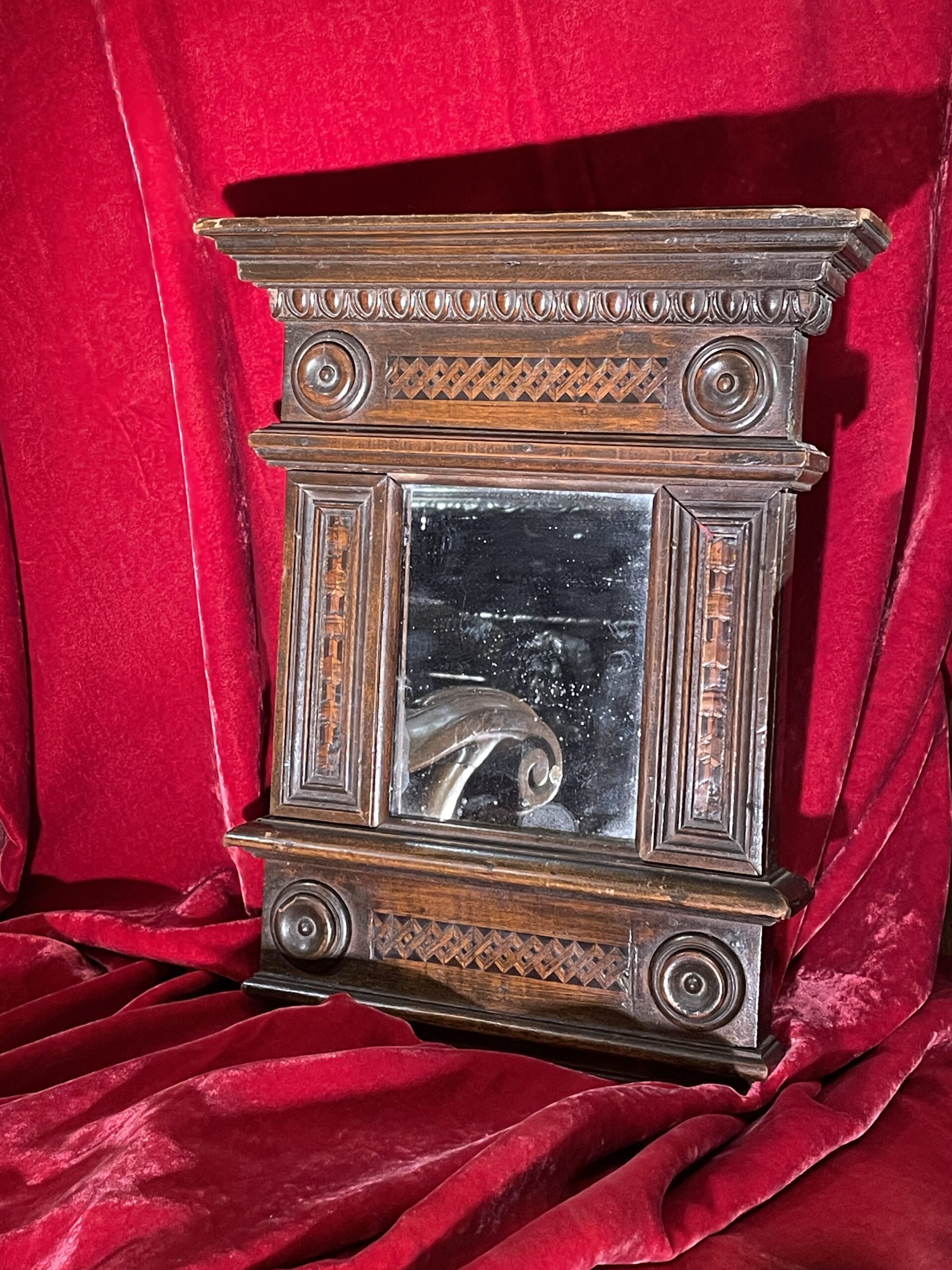
This small Italian mirror is a masterpiece of refinement.
Dating from the Renaissance period, the frame is inspired by classical architecture.
Sober and beautifully harmonious, it follows an antiquizing architectural order with its lateral pilasters topped by turned knobs that frame the entablature, repeating the same motif at the base.
The cornices are moulded, giving rhythm and structure to the composition. The upper cornice, more substantial, houses a beautiful egg-and-dart frieze.
The pilasters are decorated with panels revealing perspective trompe-l’œil motifs executed in certosina. The two horizontal stretchers similarly display an interlacing pattern rendered in perspective.
This marquetry ornamentation is composed of small pieces used to create geometric forms, frames, twists, and other polygonal friezes.
Etymologically, certosina referred to work produced by the Carthusians. The disciples of Saint Bruno devoted themselves for centuries to inlay work in wood, as well as marquetry in bone, ivory, mother-of-pearl, and pewter. The technique quickly spread beyond the monastic order, particularly into the workshops of Florentine marquetry makers.
The richness of its decoration and the quality of its craftsmanship suggest that this small mirror once belonged in the chamber of one of the grand residences of its time.