



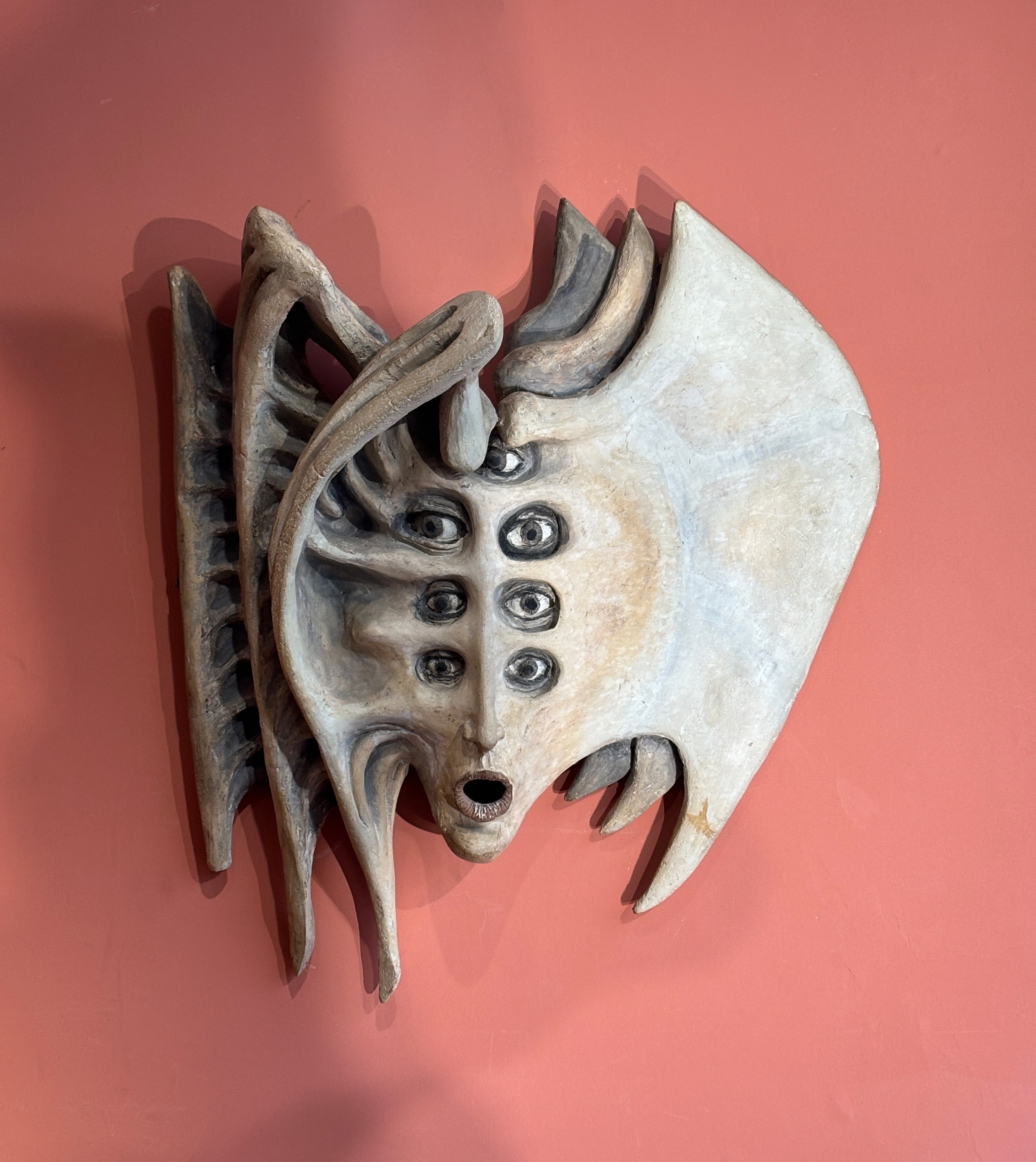
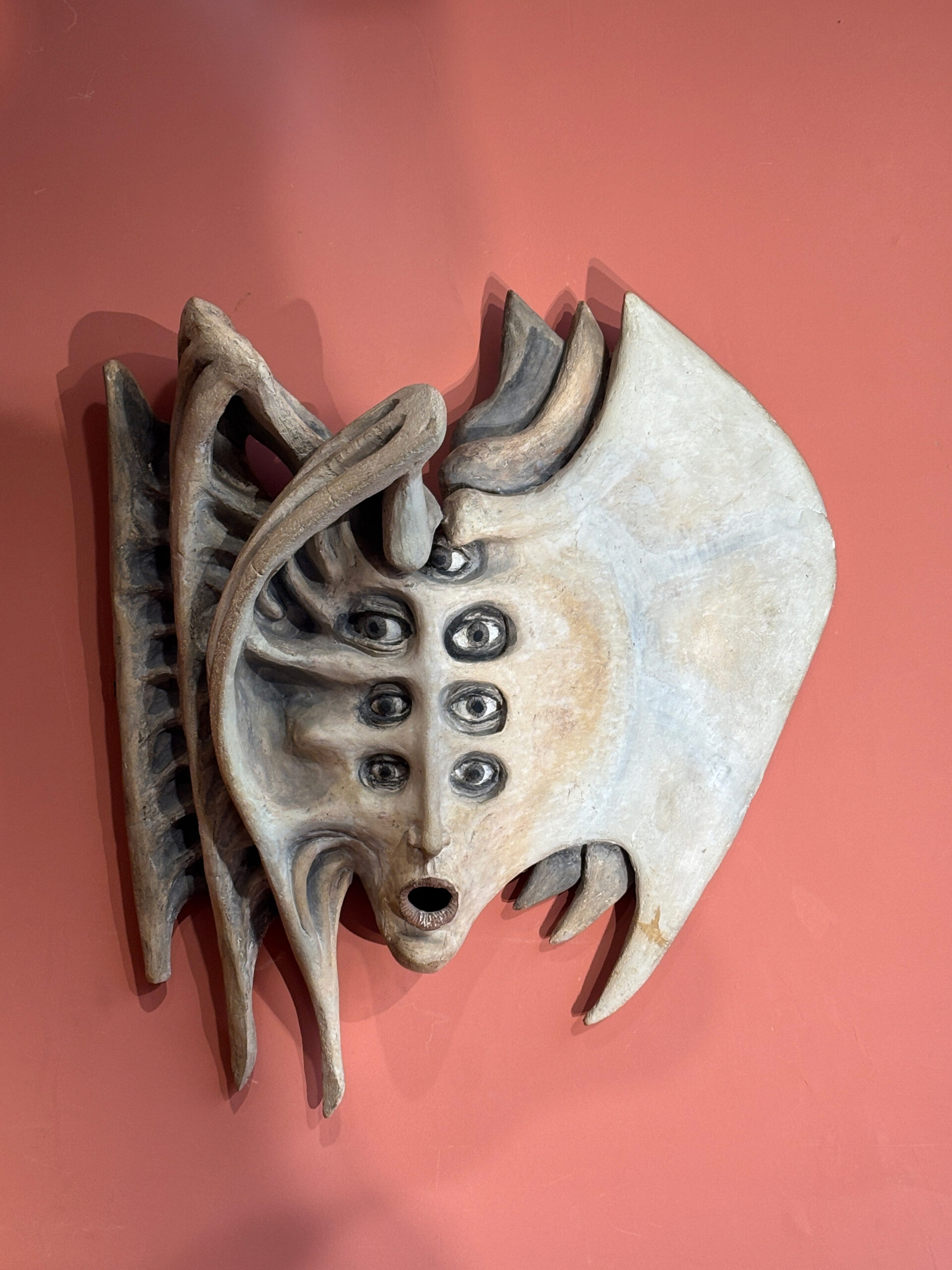
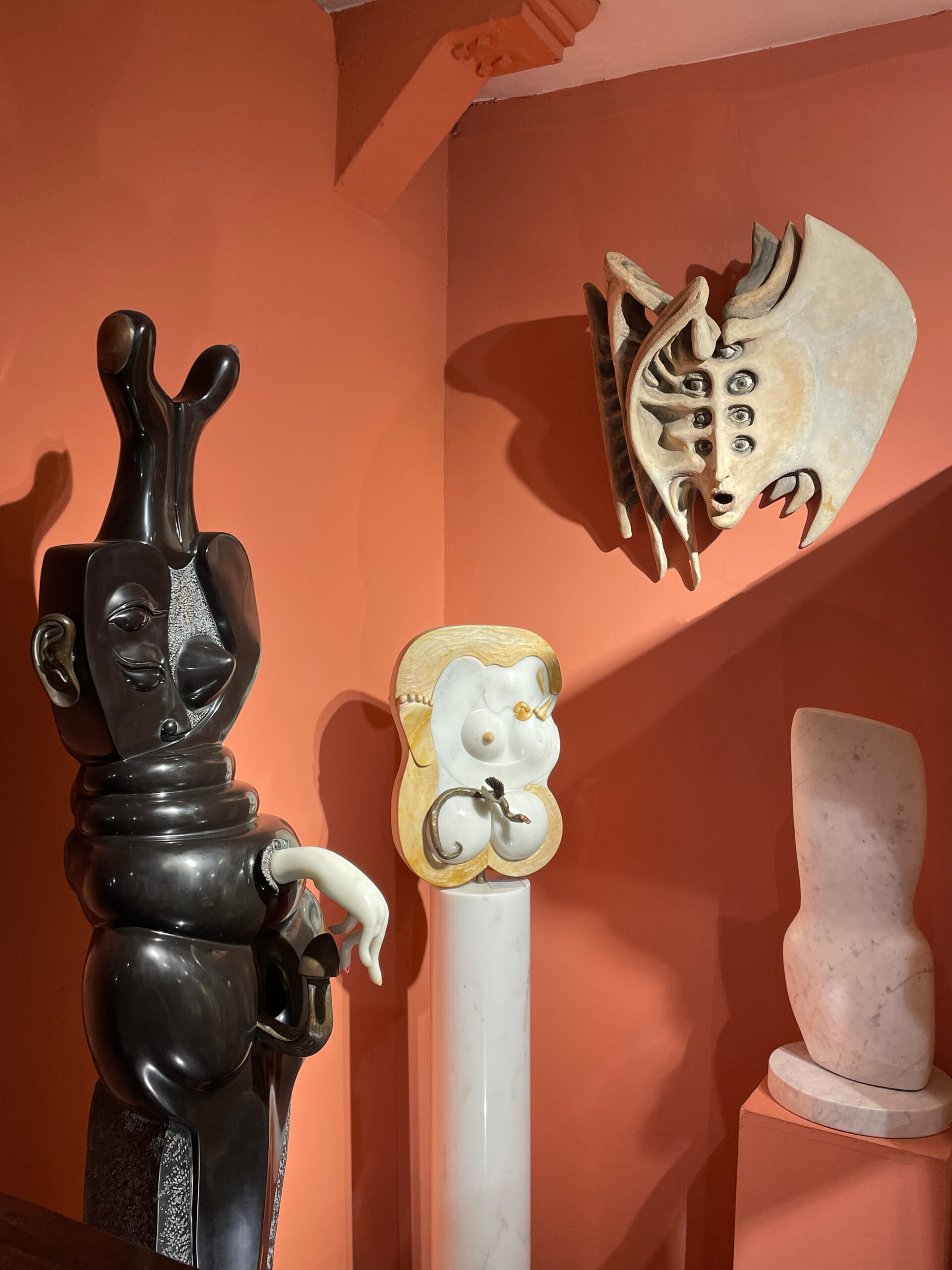
Description
Biography :
An architect, but also a sculptor, painter, furniture designer, and man of letters, Ricardo Porro developed a vitalist architecture rooted in the work of Gaudí, Mendelsohn, Asplund, Frank Lloyd Wright, and Rudolf Steiner, while also drawing inspiration from vernacular architectural traditions. Porro grew up in Havana, in the heart of the Caribbean, where he completed his architectural studies.
In 1960, Fidel Castro and the Cuban government entrusted him with his first major commission: the design of a group of art schools, most notably the National School of Plastic Arts and the Modern Dance School in Havana. These early works already embody the defining characteristics of Porro’s architecture: a striking mastery of elliptical space and a sensuous exuberance of form. Here, architecture becomes image, at once figurative, through its persistent anthropomorphism, and symbolic, evoking the cosmic order of the universe.
The syncretic nature of his architecture, which seeks to reconnect humanity with the world, manifests itself as a vast living body in which architectural elements become the equivalents of human limbs and organs. While these explicit symbolic images are central to his work, Porro’s buildings are equally the expression of coherent architectural programmes, in which form and content, inseparable in his view, carry equal significance.
During the Cuban Revolution, Porro went into exile in Caracas, Venezuela, before returning to Cuba, where he taught at the University of Havana. In 1966, he settled in France, where he taught the history of art and architecture until 1992. His first European commission was an arts centre in Liechtenstein in 1969. This was followed in 1972 by designs for a youth centre in Vaduz, Liechtenstein, and a holiday village at Vela Luka in the former Yugoslavia.
Numerous other projects followed, including the Gonzalo School at Marne-la-Vallée (1976); La Forêt, a housing development in Cergy-Pontoise (1978); the Villeneuve-d’Ascq Library (1980); the Paris Opera Ballet School (1983); and the extension to the Saint-Denis Town Hall (1985). After forming a partnership with Renaud de la Noue in 1986, Porro completed a significant number of projects throughout the Paris region, particularly in Seine-Saint-Denis. Their buildings, including housing developments and educational facilities, are distinguished by their recurring evocations of the natural world, expressed through vegetal and animal metaphors.