



Description
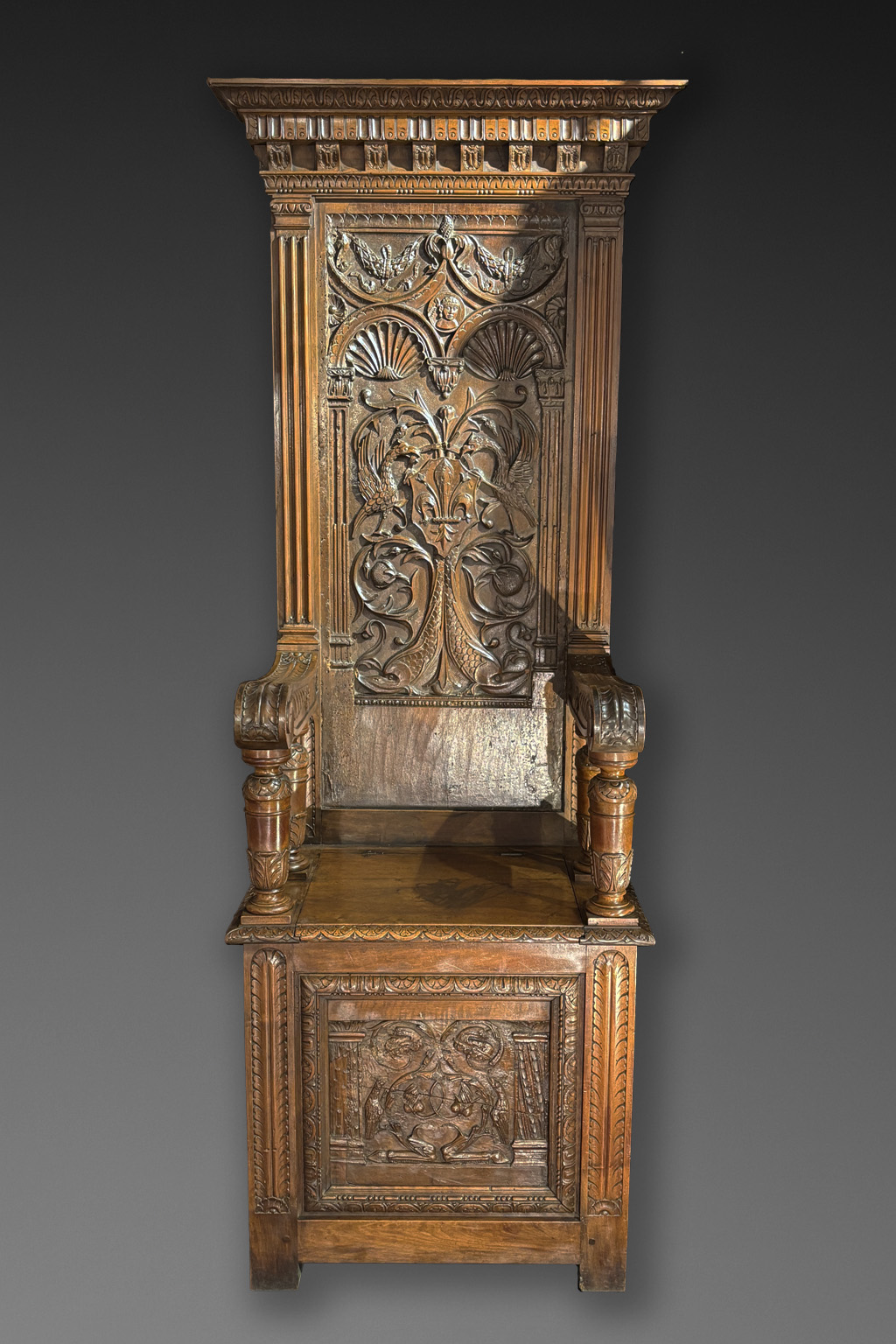
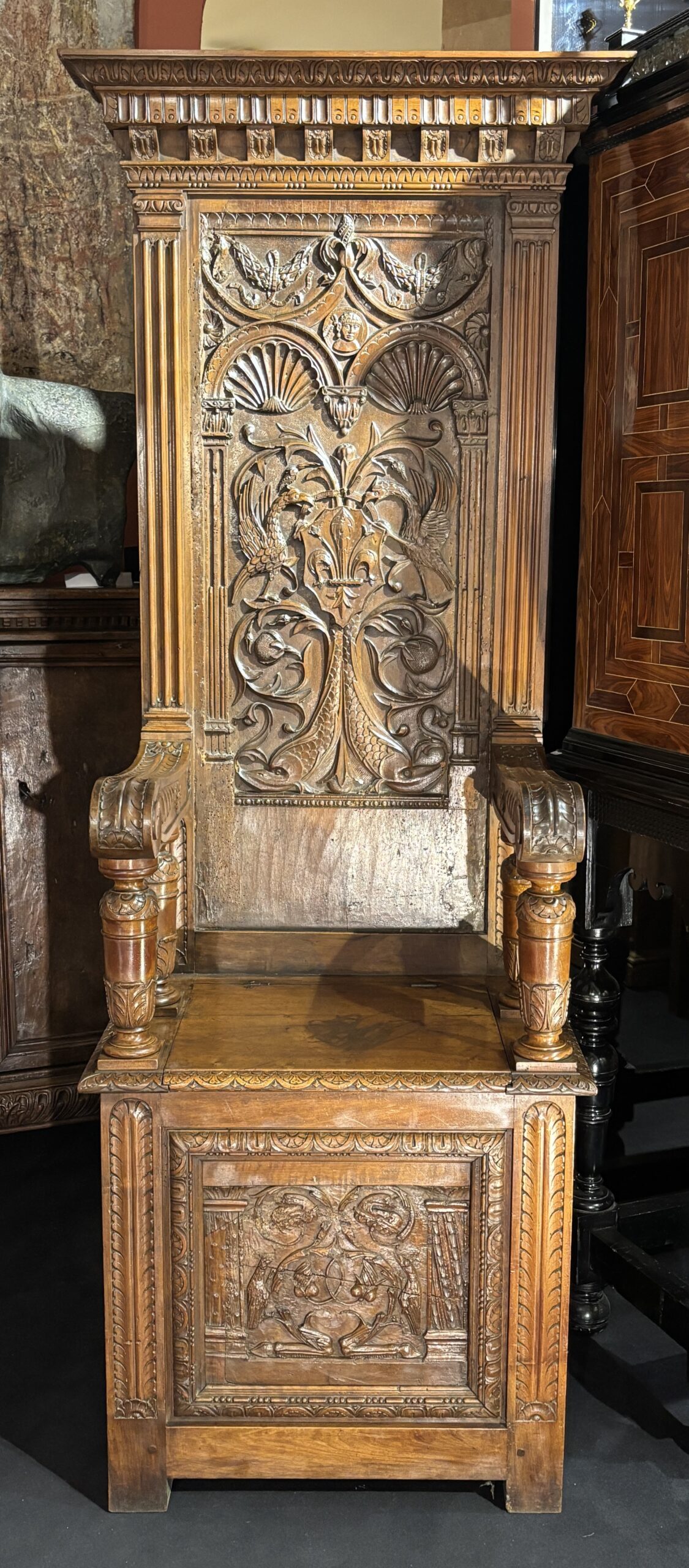
This imposing high-backed chair is a particularly fine example of the transformation of the medieval chaire during the first half of the 16th century. While retaining its traditional construction, notably the box-like compartment beneath the seat, the chair is enriched throughout with the newly fashionable architectural vocabulary of the Renaissance. On the upper back, the Gothic tracery of the earlier tradition has given way to fluted pilasters surmounted by Ionic capitals.
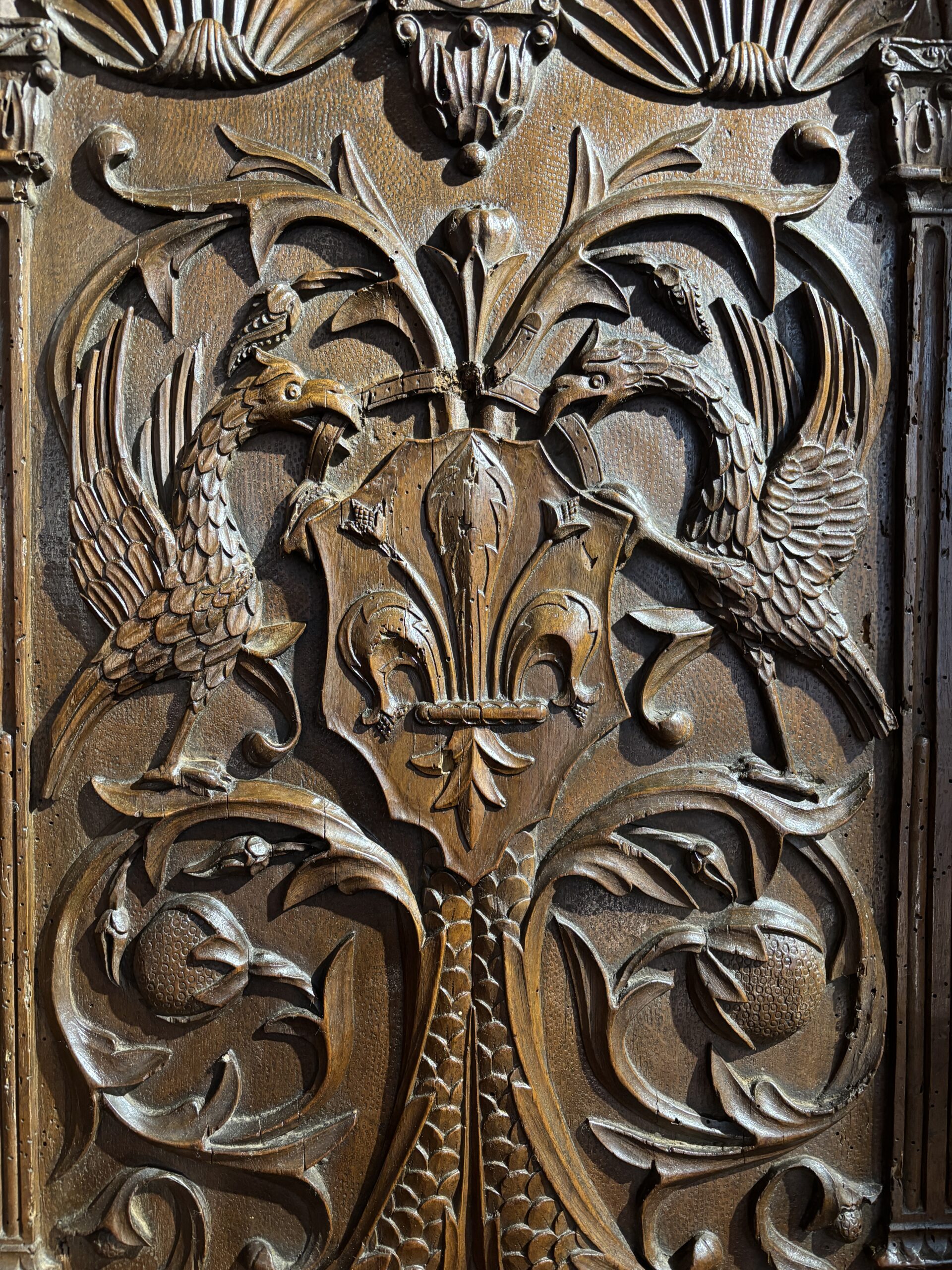
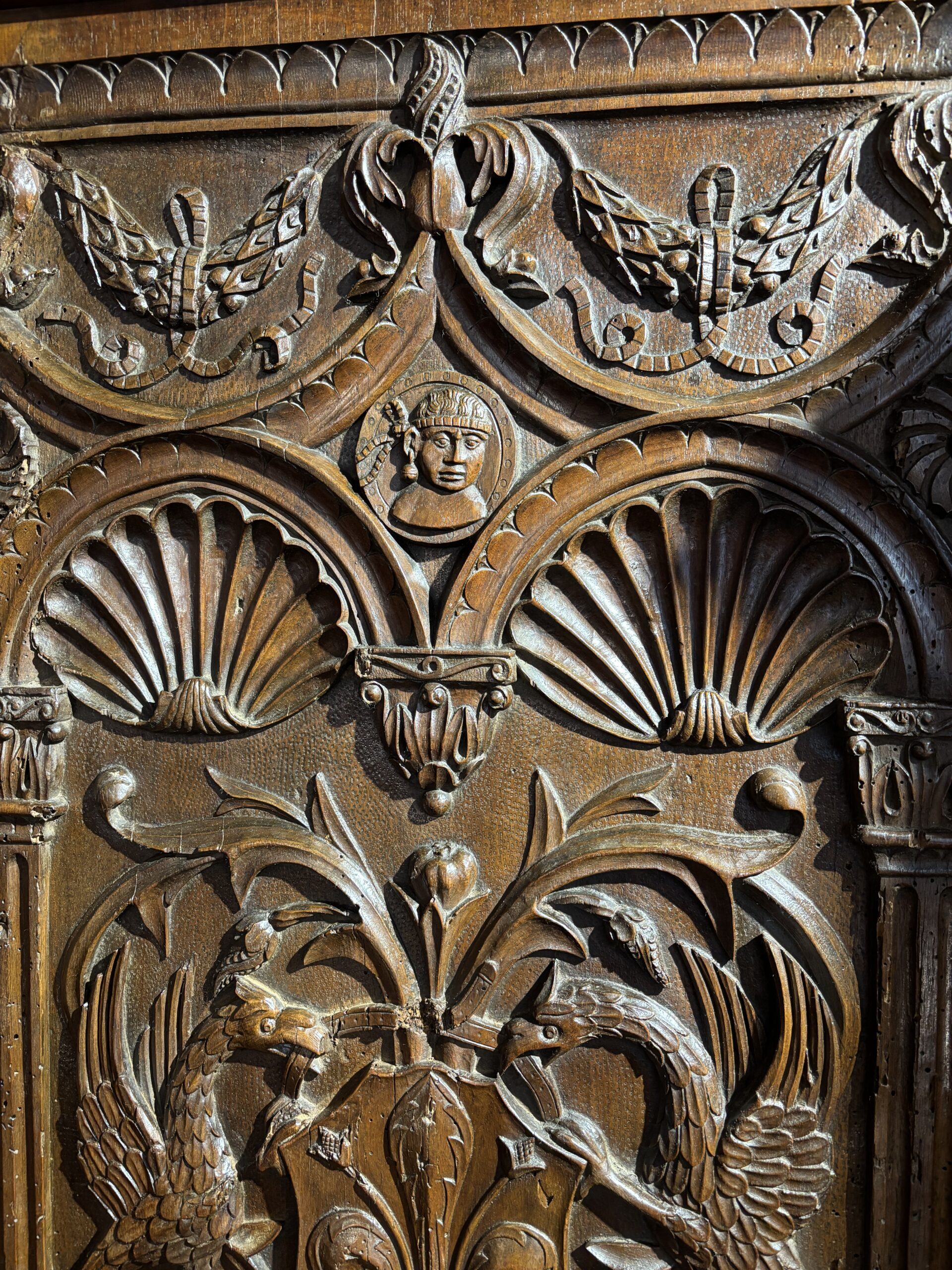
The central panel of the back is surmounted by a dentilled cornice supported on a series of brackets and displays a particularly rich repertoire of Renaissance ornament. Framed by two slender fluted pilasters and set amidst scrolling foliage, a pair of confronted birds supports an armorial shield charged with a finely carved fleur-de-lys, the shield itself resting upon a pair of opposed dolphins.
Above, a delicately carved portrait medallion stands out between two ribbon-tied floral garlands, flanked by prominent shell motifs.
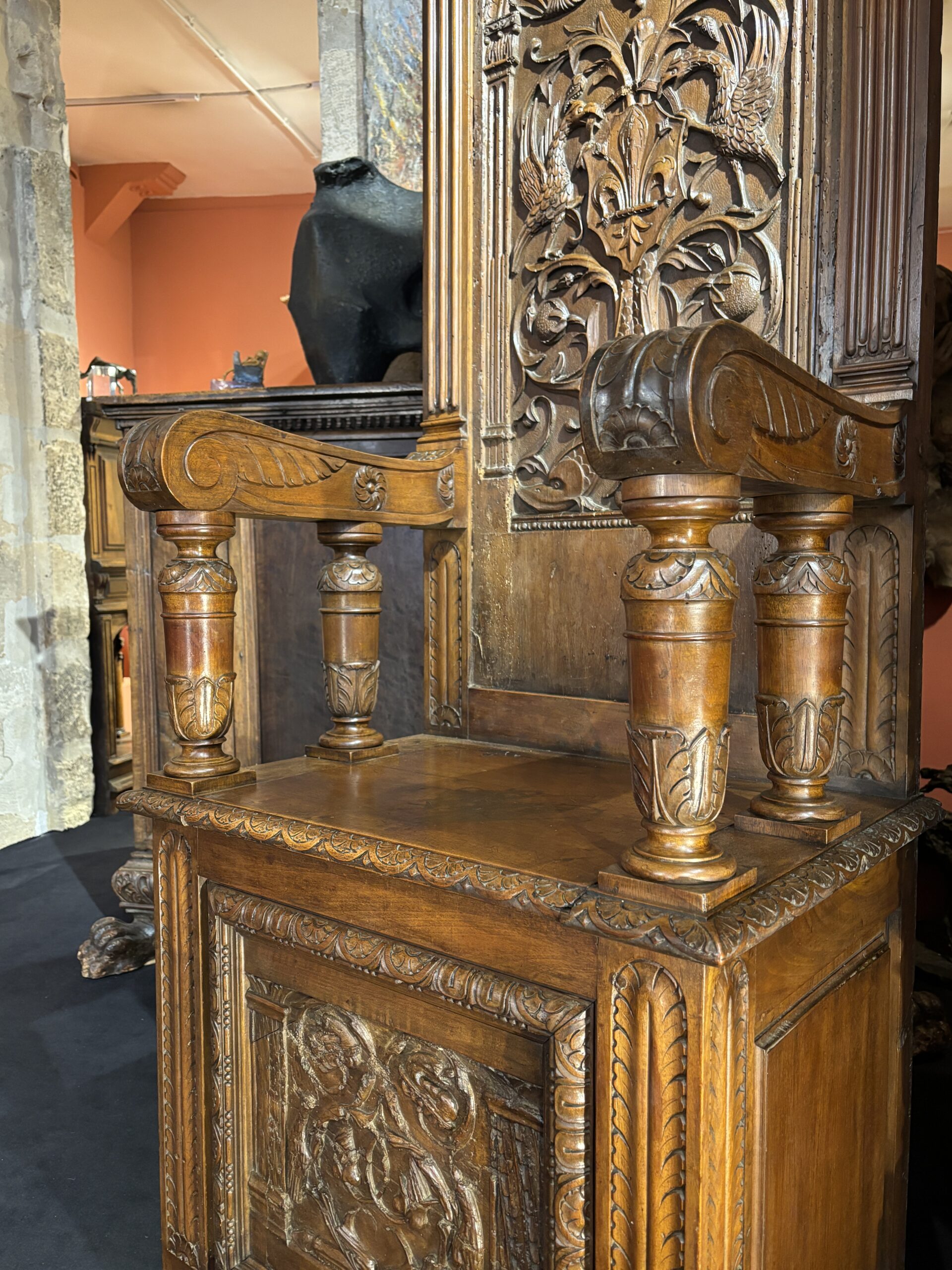
The scrolling armrests, carved with palmettes, are each supported by two substantial baluster-form uprights richly ornamented with shell motifs and acanthus leaves. The seat rail is similarly embellished with a continuous scheme of carved shells.
The box-form base is framed by two pilasters carved with feather motifs and centred by a moulded panel set into the surrounding framework. Within an exuberant composition of scrolling foliage appear an array of fantastical and zoomorphic motifs, including dragons, birds and rams’ legs.
The chair thus combines the robust construction inherited from late medieval furniture with an increasingly sophisticated Renaissance decorative vocabulary, illustrating the gradual assimilation of classical architectural and ornamental forms into French furniture during the first half of the 16th century.