



Description
During the Renaissance, the chest was the quintessential wedding gift and was used to hold the bride’s trousseau
In the middle of the 16th century chests are decisively transformed, their conception now favouring architecture, sculpture and images.
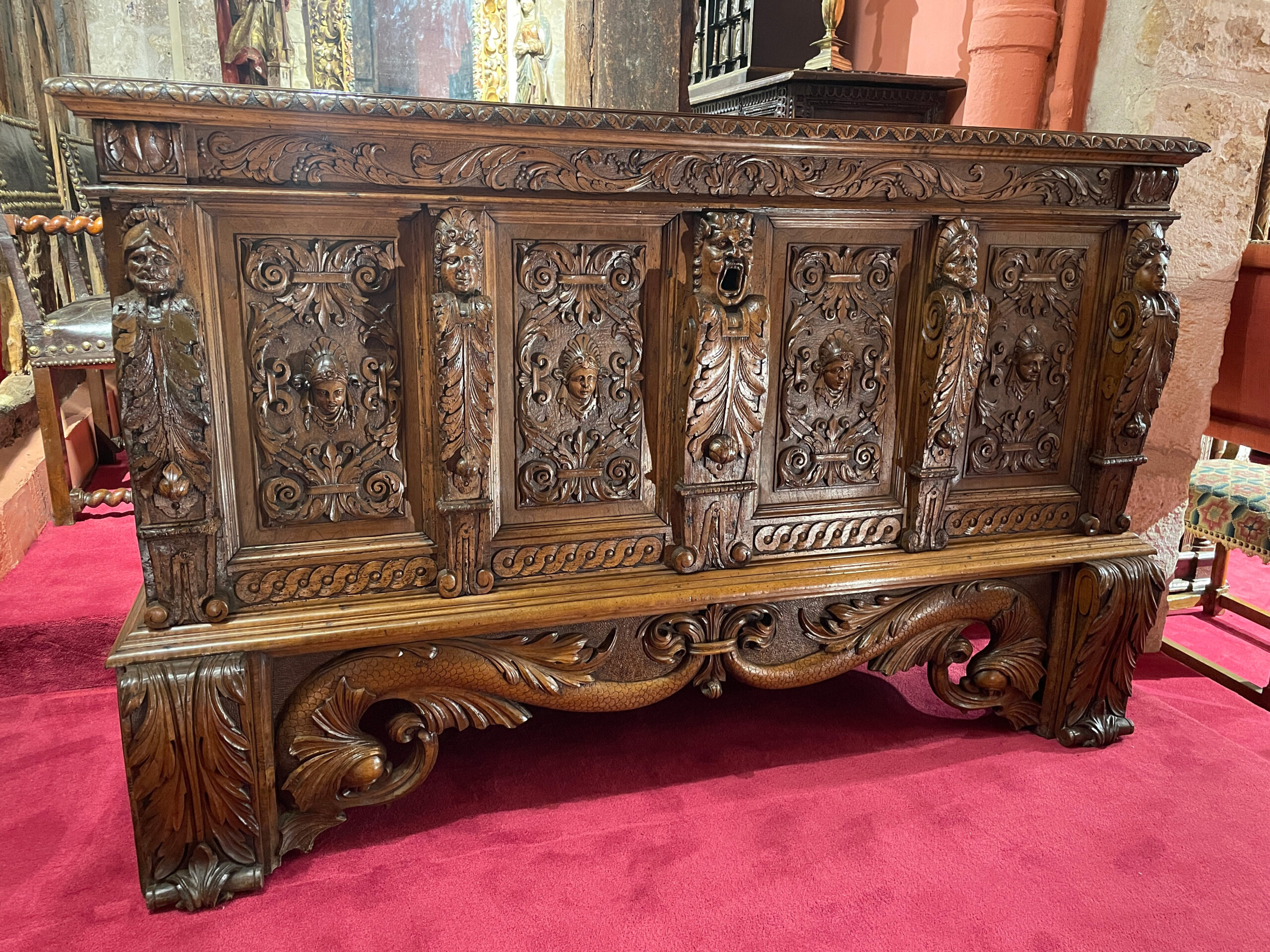
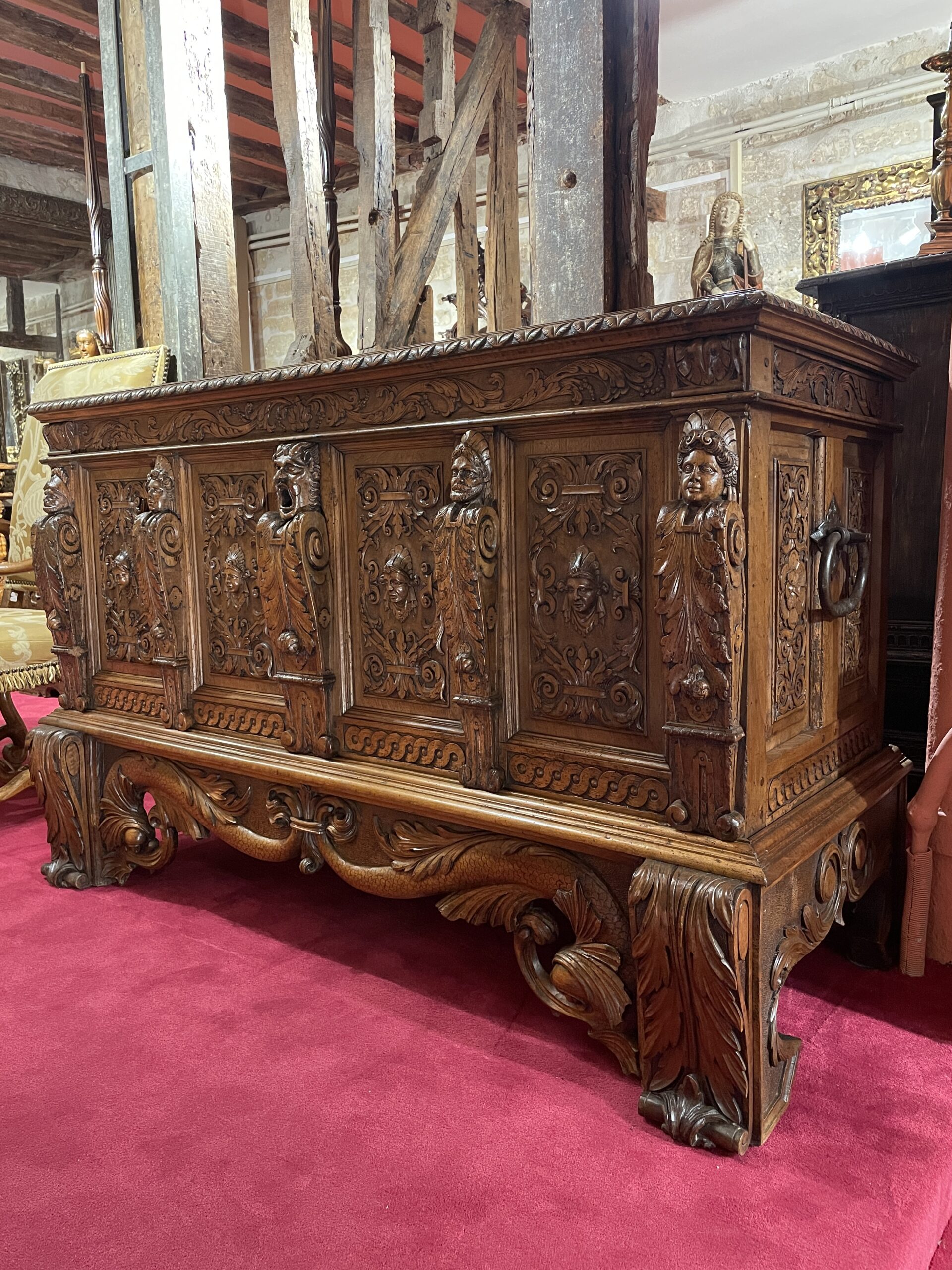
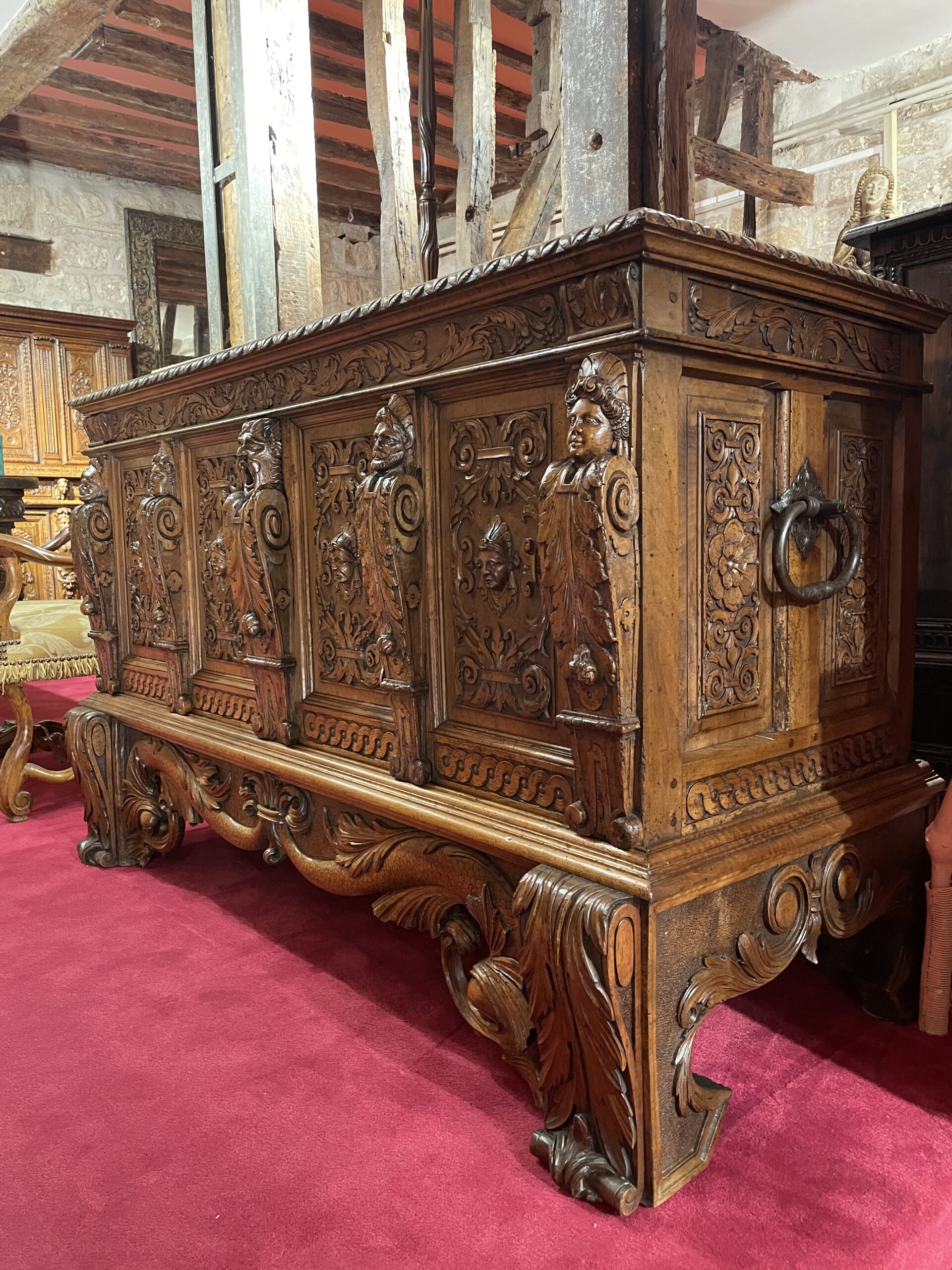
This chest, crafted from walnut wood and of imposing proportions, features a solid framework composed of large stiles and rails joined with mortise and tenon joints, into which four carved panels are set.
On the front, a wide and striking base consists of two scroll-shaped, foliage-carved brackets flanking a pair of confronting dolphins, adorned with scales and branching foliage, intricately entwined.
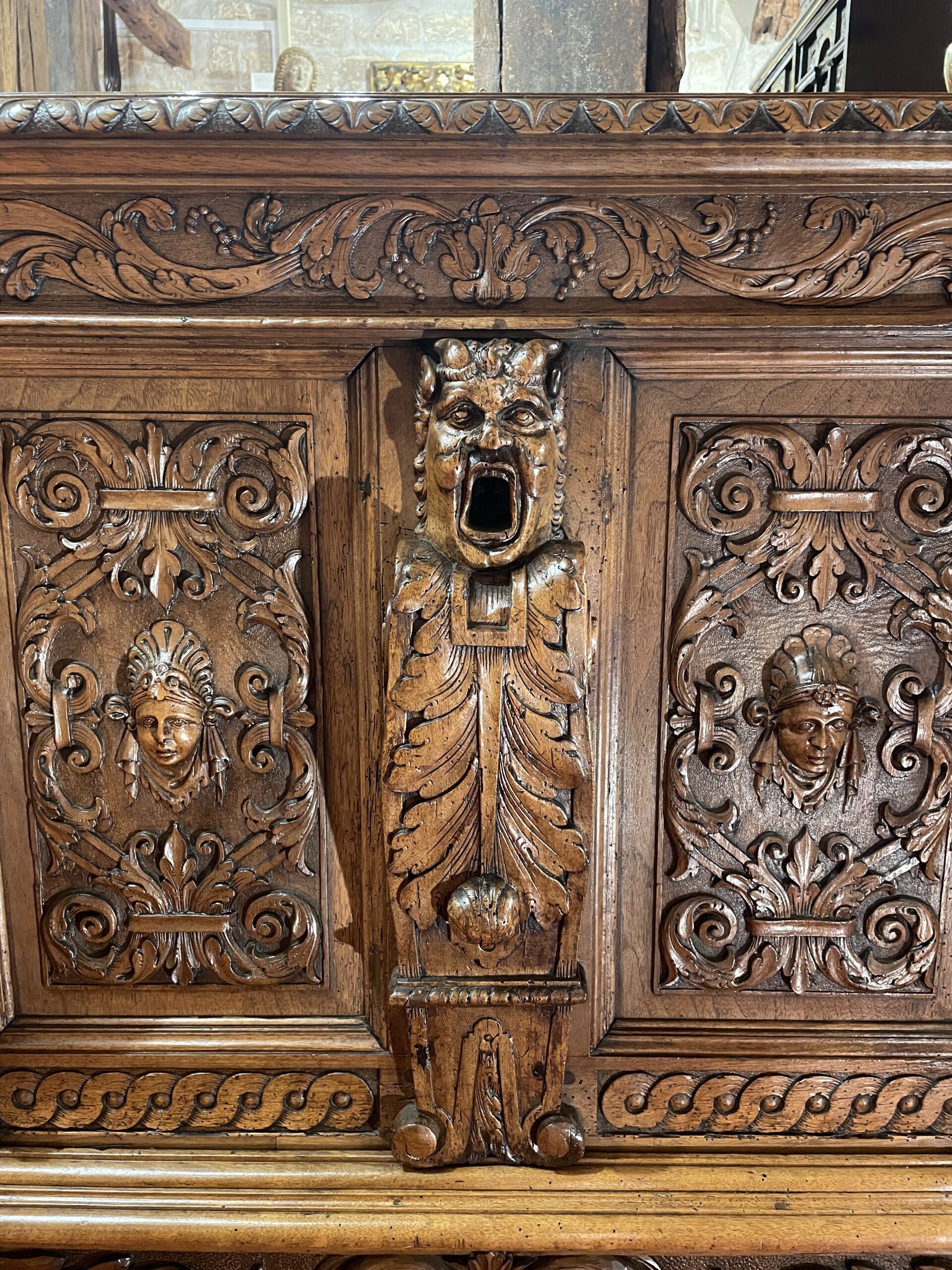
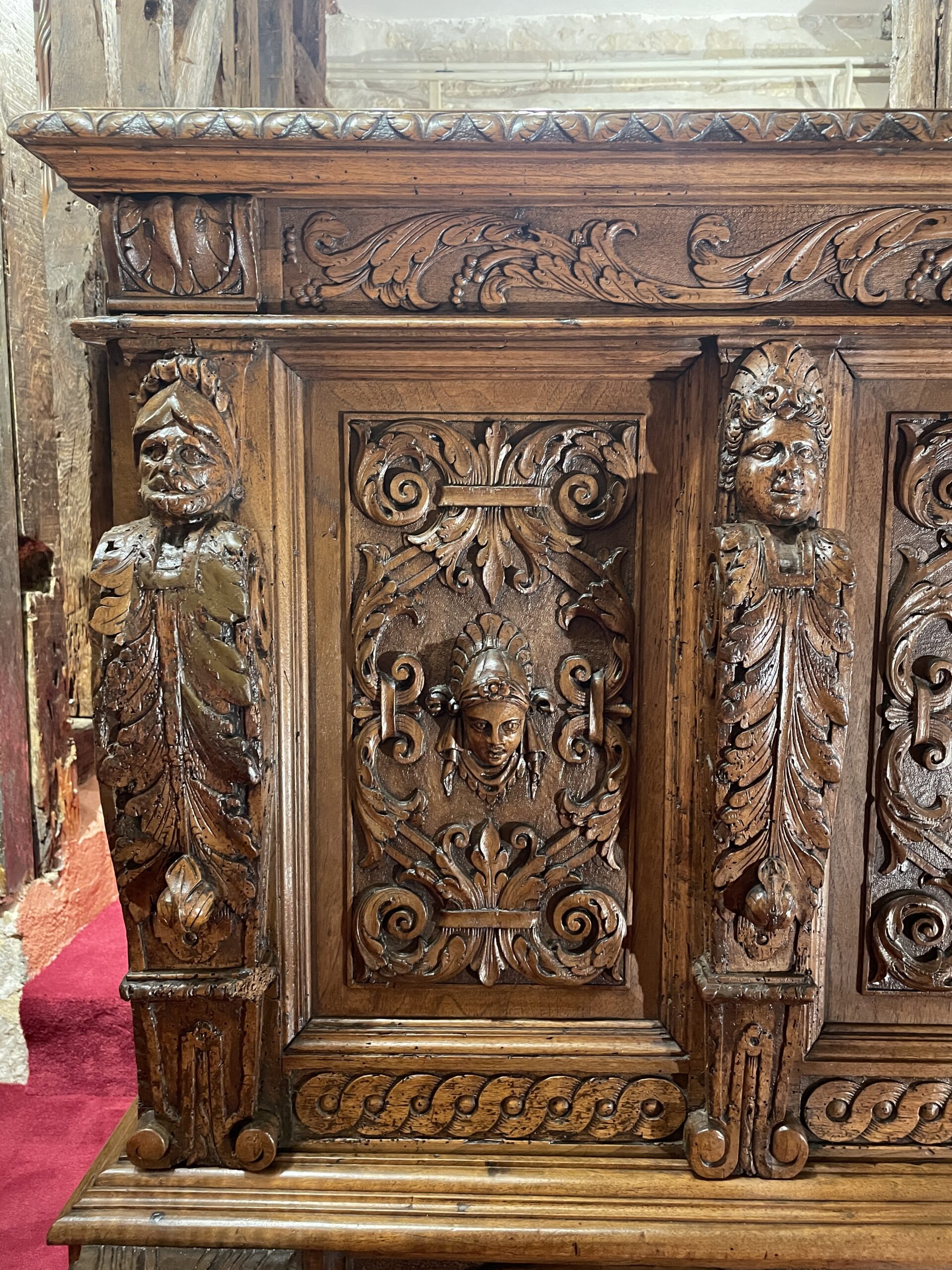
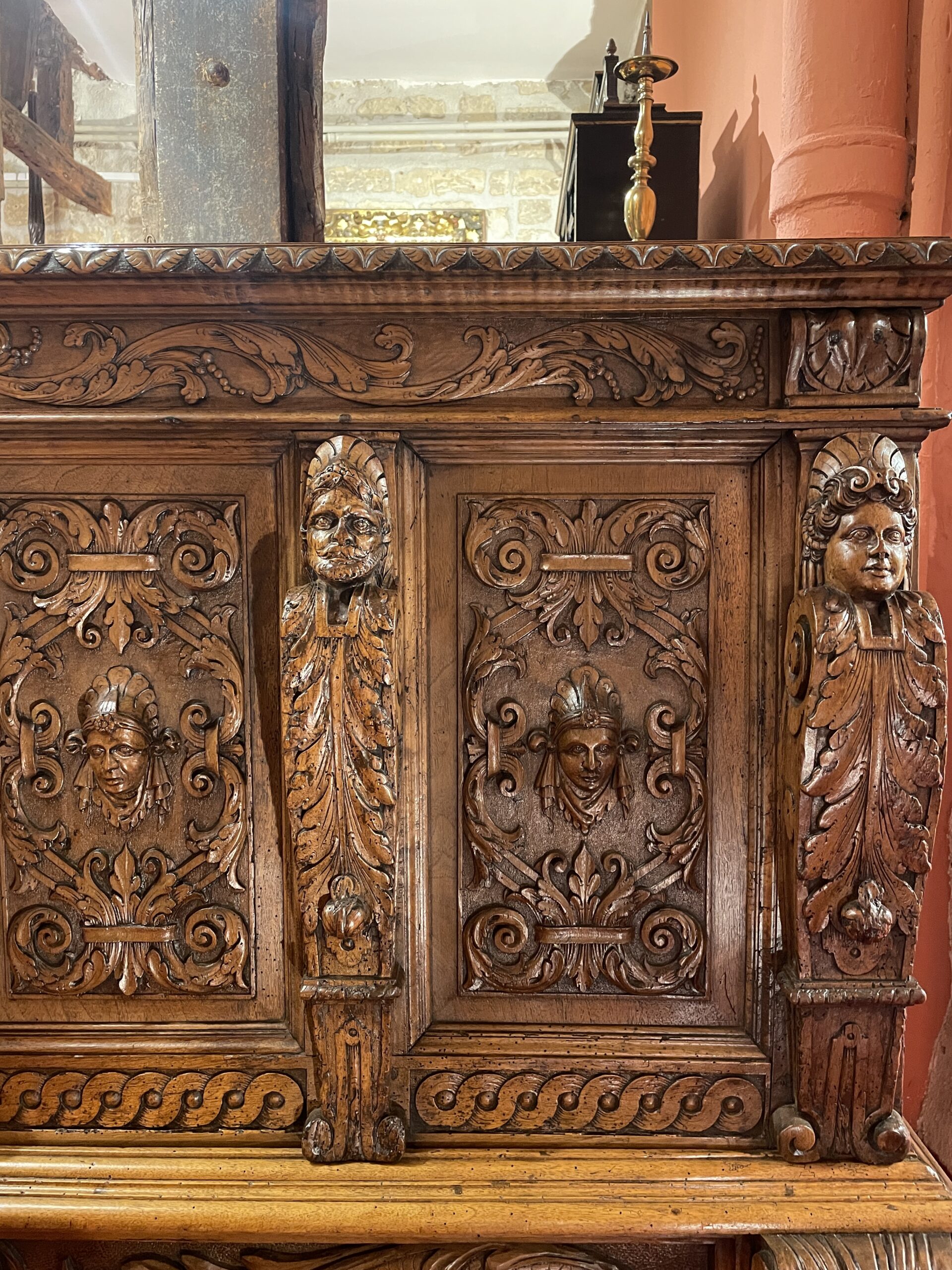
The carved decoration spreads across the entire front of the chest, emphasizing its structure. Along the rails, four male herm figures frame a central mascaron with pointed ears, whose open mouth cleverly houses the chest’s lock. Their console-like bodies, carved with foliage, echo the scroll-shaped supports of the base. These five herms form a framework around four rectangular panels.
Each panel, molded and set into the framework, features a carved Native American head at its center, surrounded by richly detailed vegetal scrollwork. The faces are topped with various headdresses—some feathered, others adorned with tied ribbons—each unique in design. A frieze of carnations decorates the lower edge of the panels, harmonizing with the upper longitudinal rail, which is embellished with elegant leafy scrolls between two side brackets.
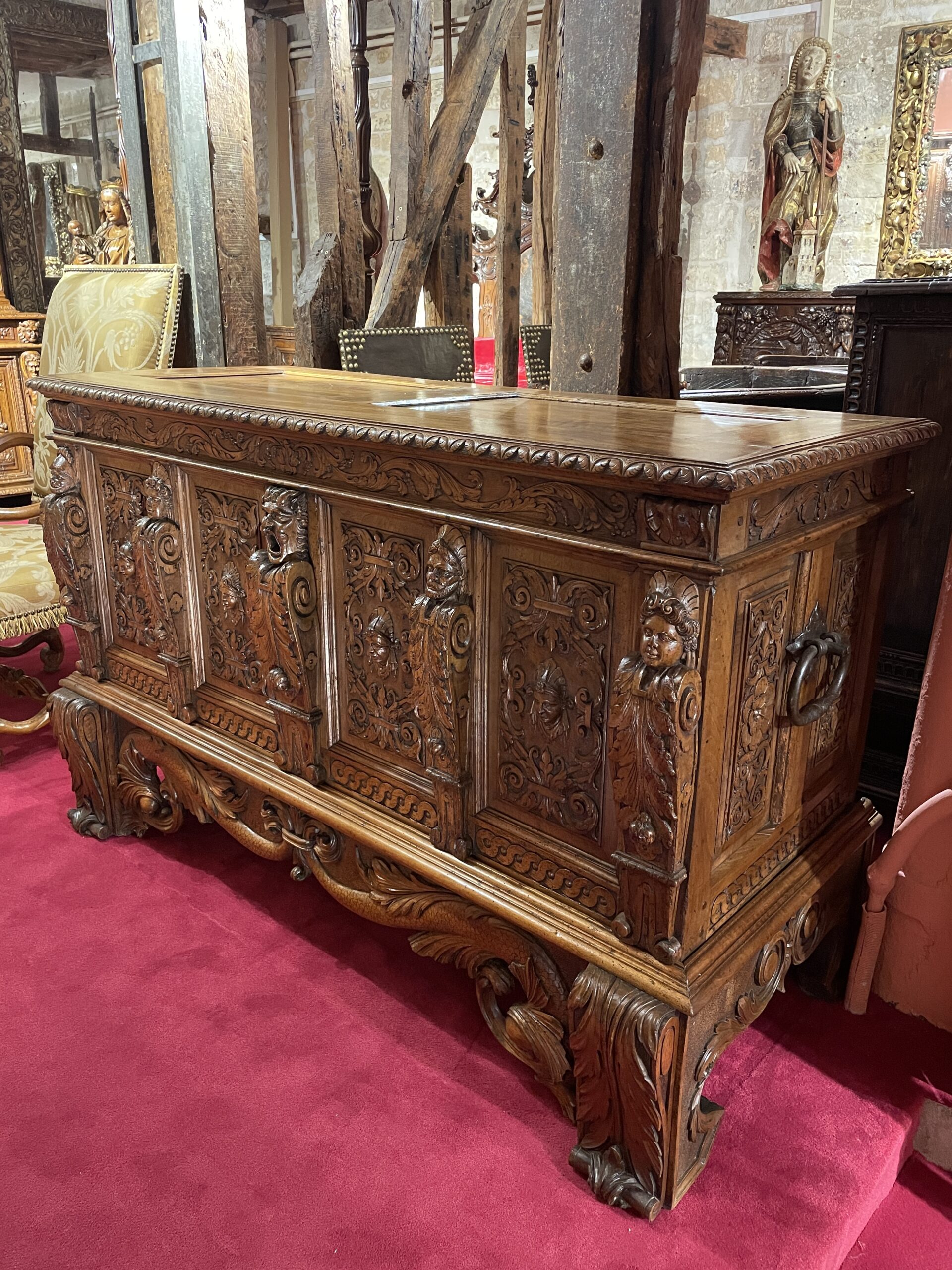
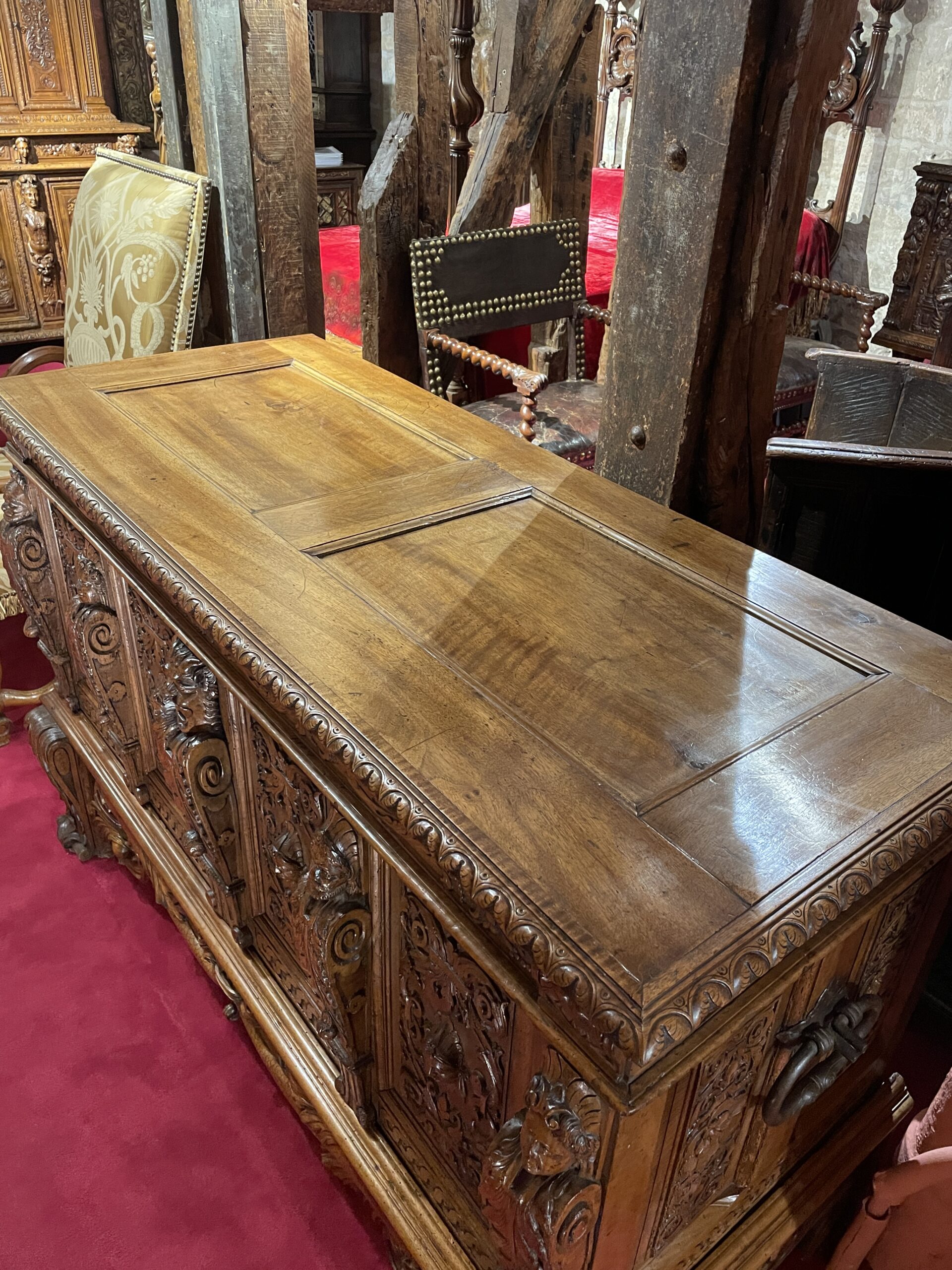
The chest’s lid, bordered with a frieze of rosettes, is composed of two beautifully molded panels. When opened, it reveals on the right side a ‘clothet’—a small internal compartment intended for storing personal belongings. The hinges joining the back and the lid are finely chiseled.
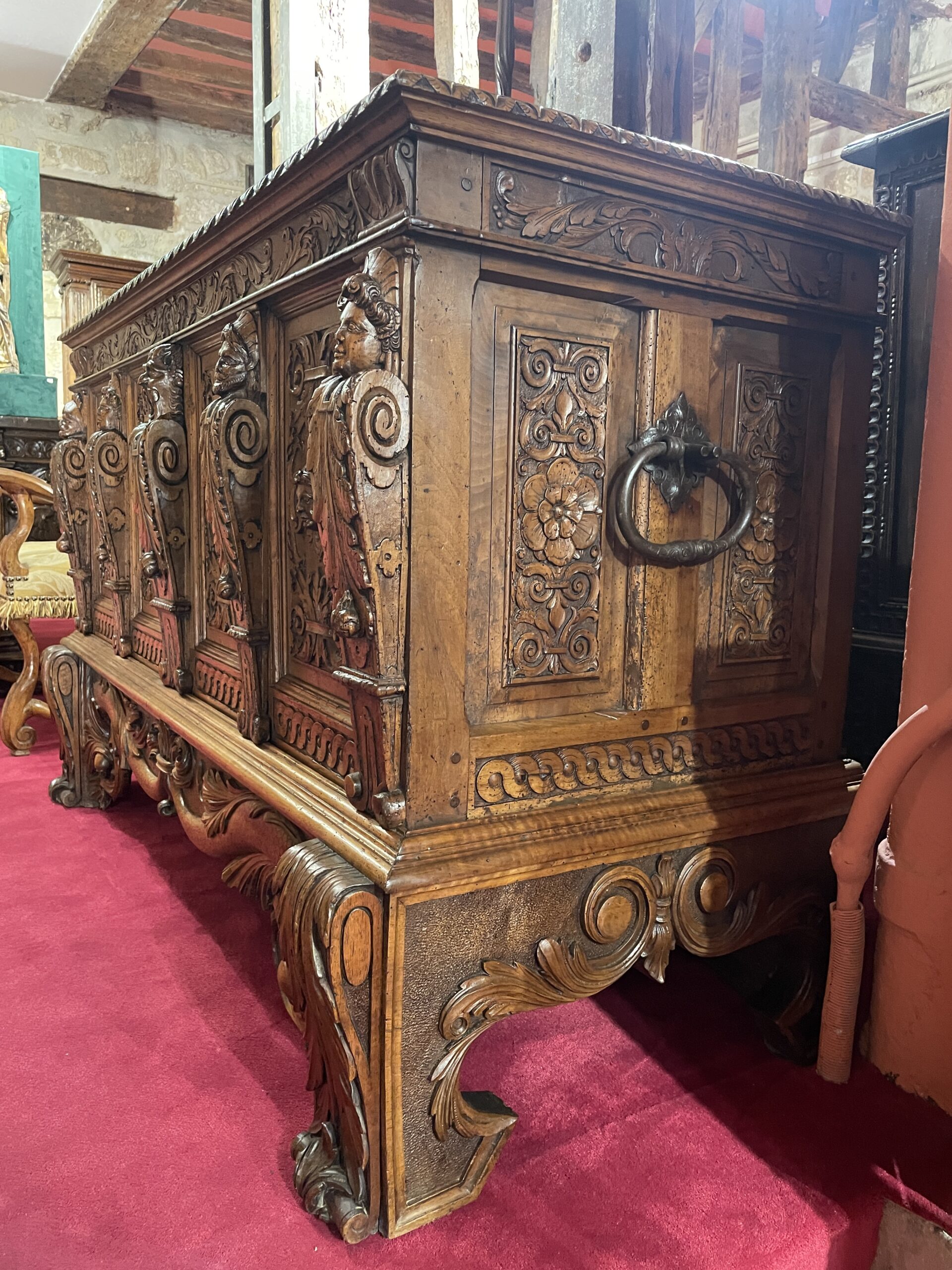
The sides are as elaborately carved as the front, featuring central molded panels each with a carved rosette. On either side, the central rail supports a finely wrought iron handle, recalling the chest’s original purpose as a transportable object—although by the Renaissance, such chests increasingly became stationary and evolved into ceremonial display pieces.
The strength and abundance of the carving suggest an attribution to the Burgundian workshops. The regular layout of the decorative elements is paired with a great freedom of imagination in the treatment of the figures. The iconographic repertoire, rich and varied, draws from both the Fontainebleau school and Ultramontane influences.
The Italian Wars fostered exchanges and stylistic influences between France and the Italian peninsula. The enthusiasm for Italianism championed by Francis I and the rediscovery of classical antiquity had a profound impact on the decorative arts, especially furniture design.
Bibliography :
Jacques Thirion, Le Mobilier français Moyen Age, Renaissance, Faton, 1999