



Description
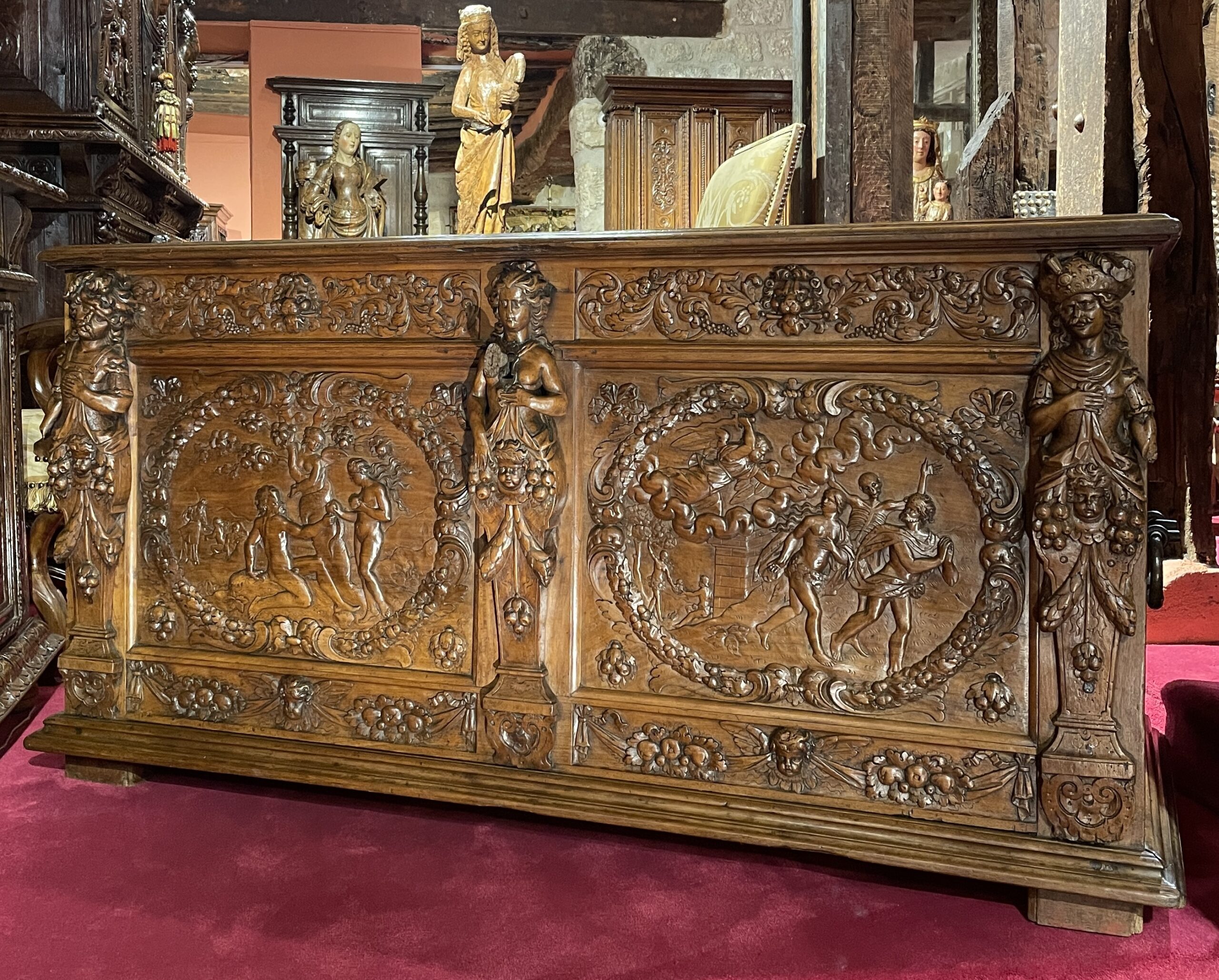
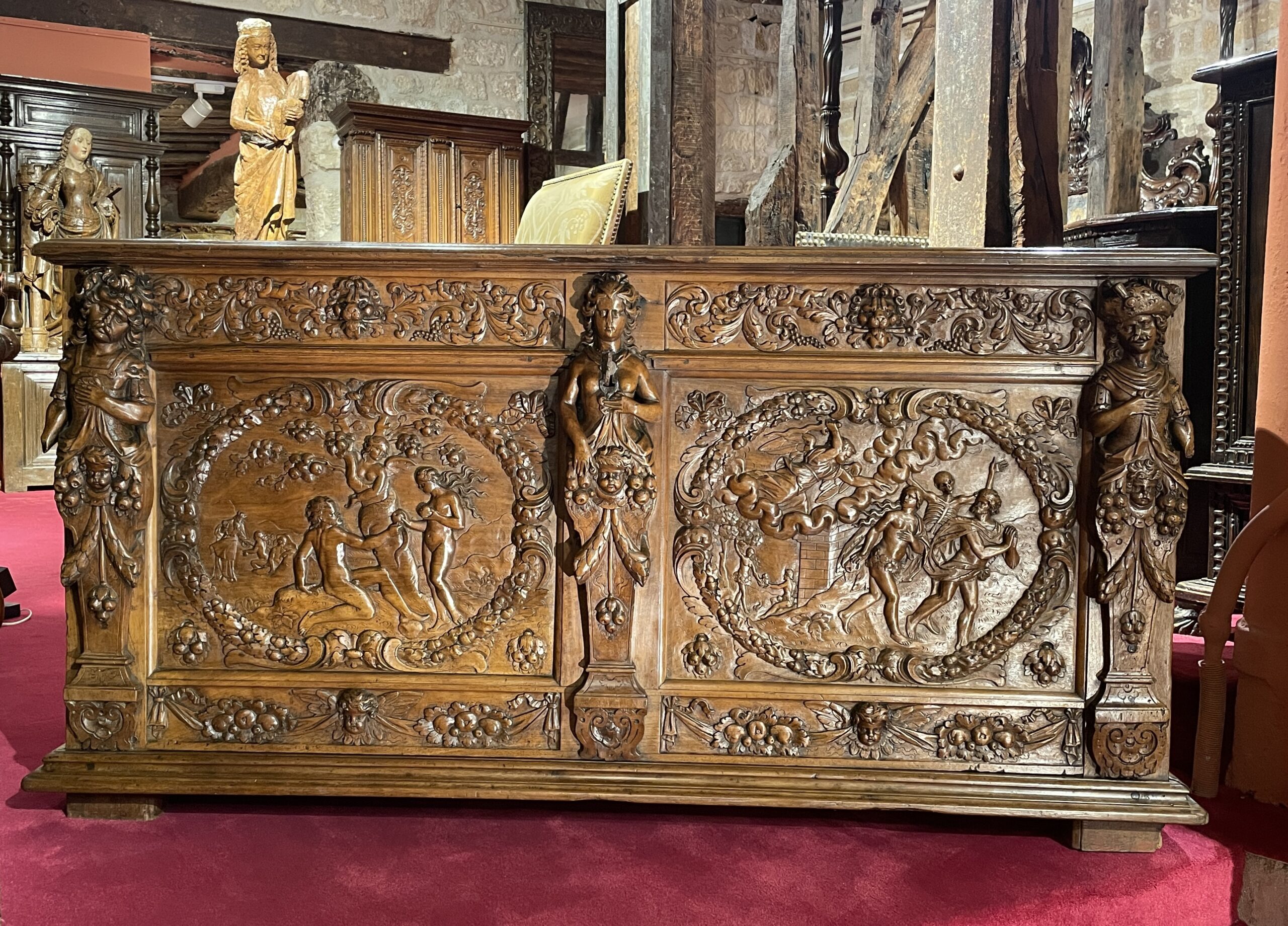
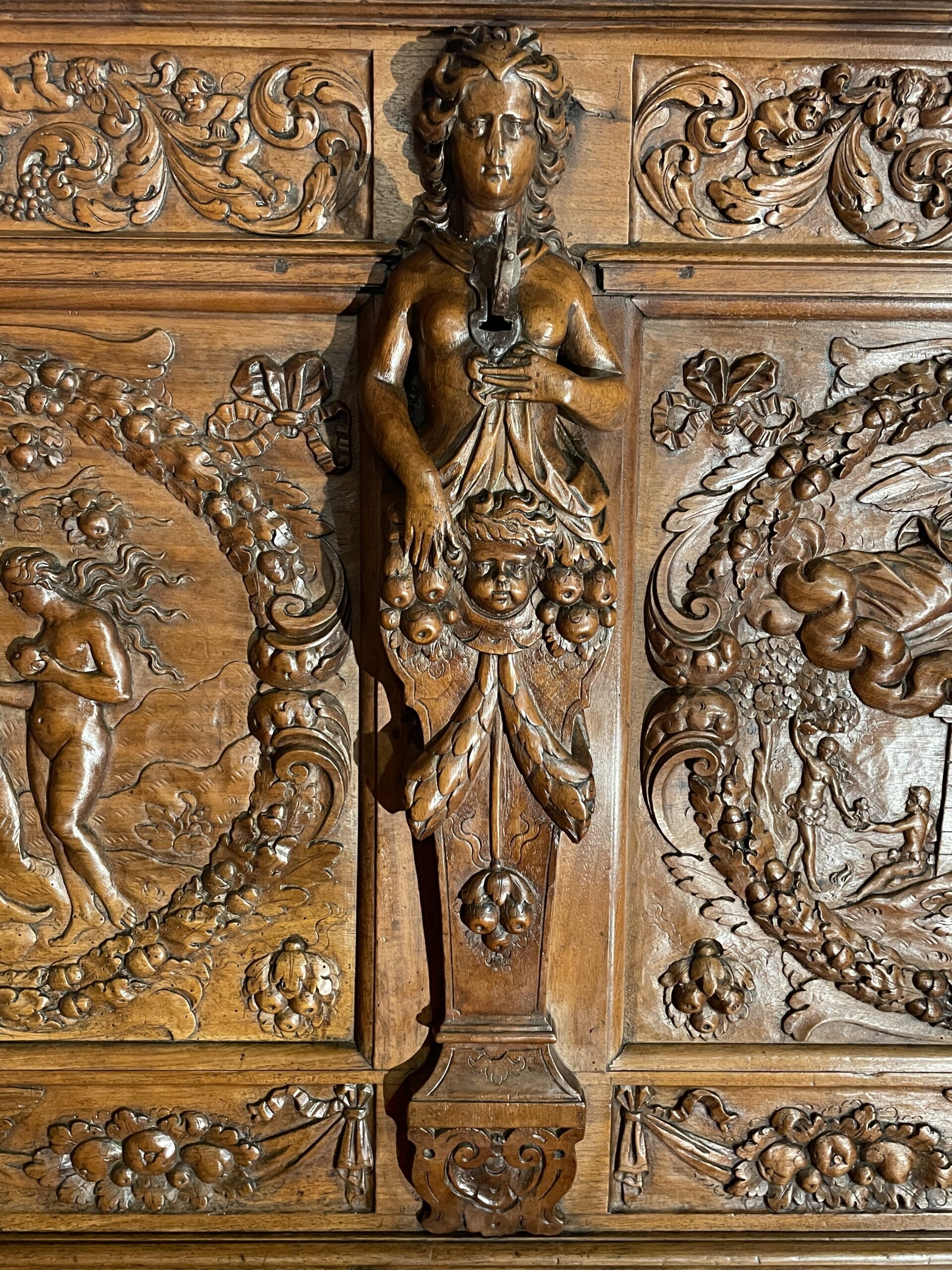
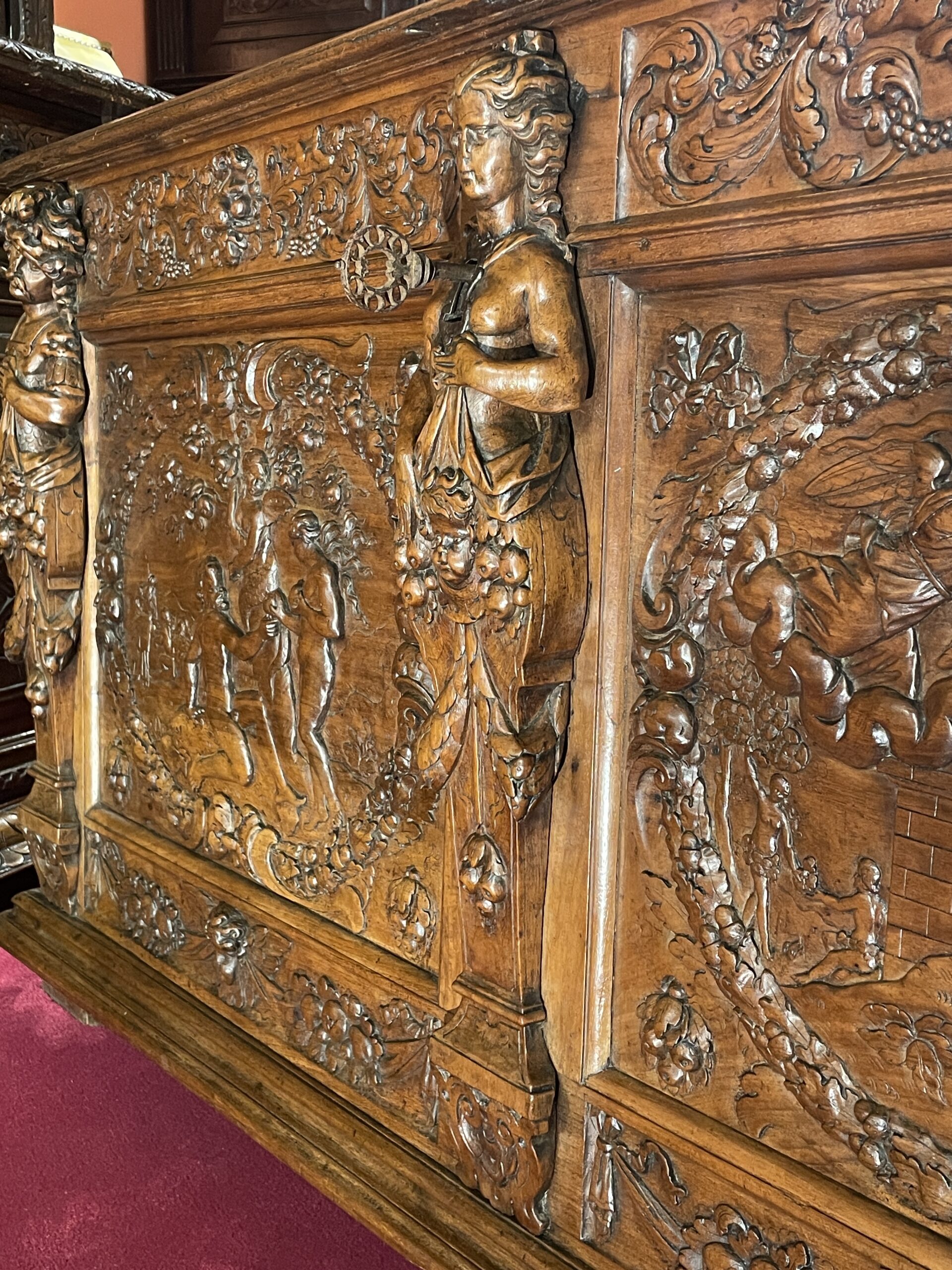
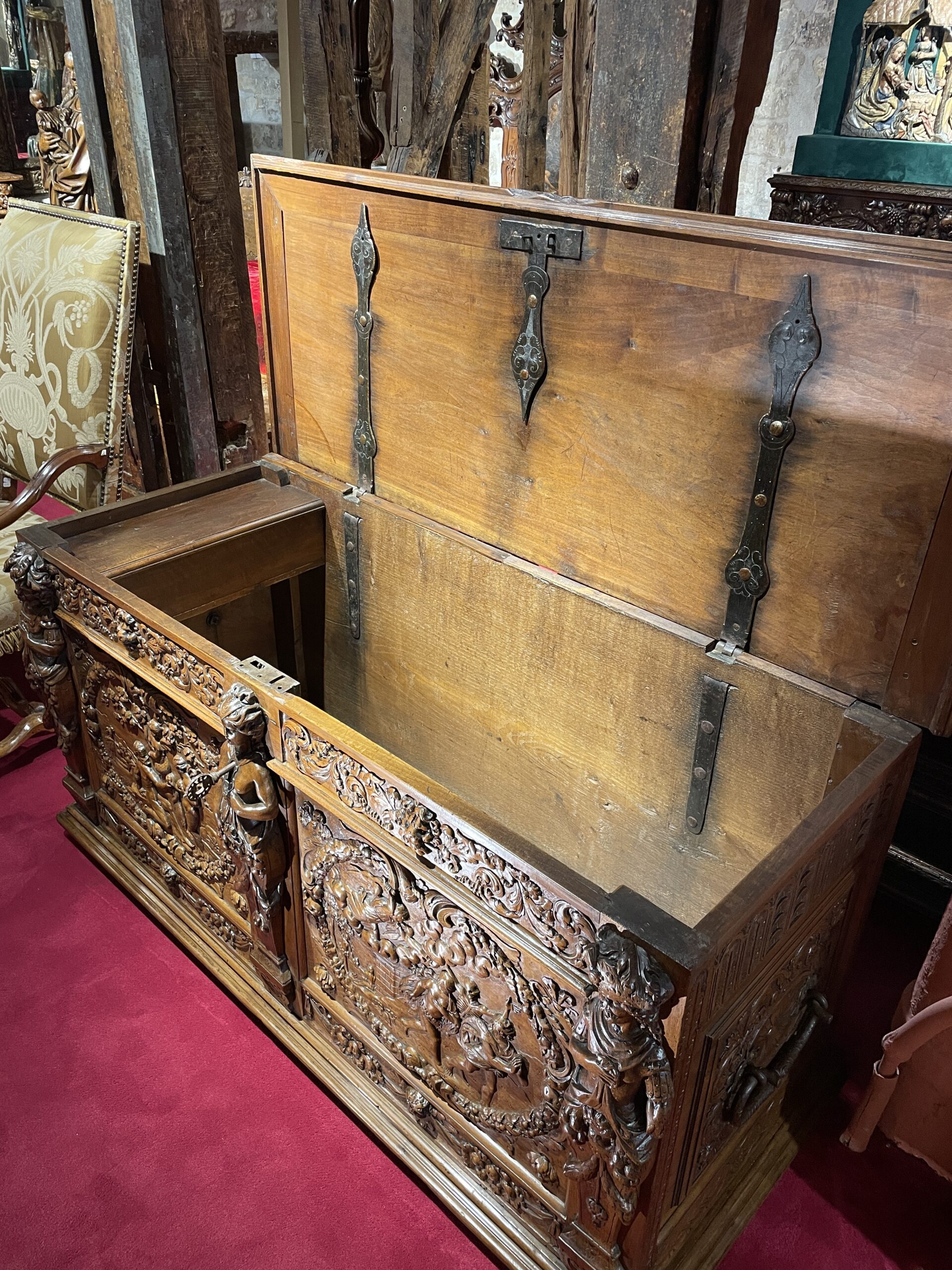
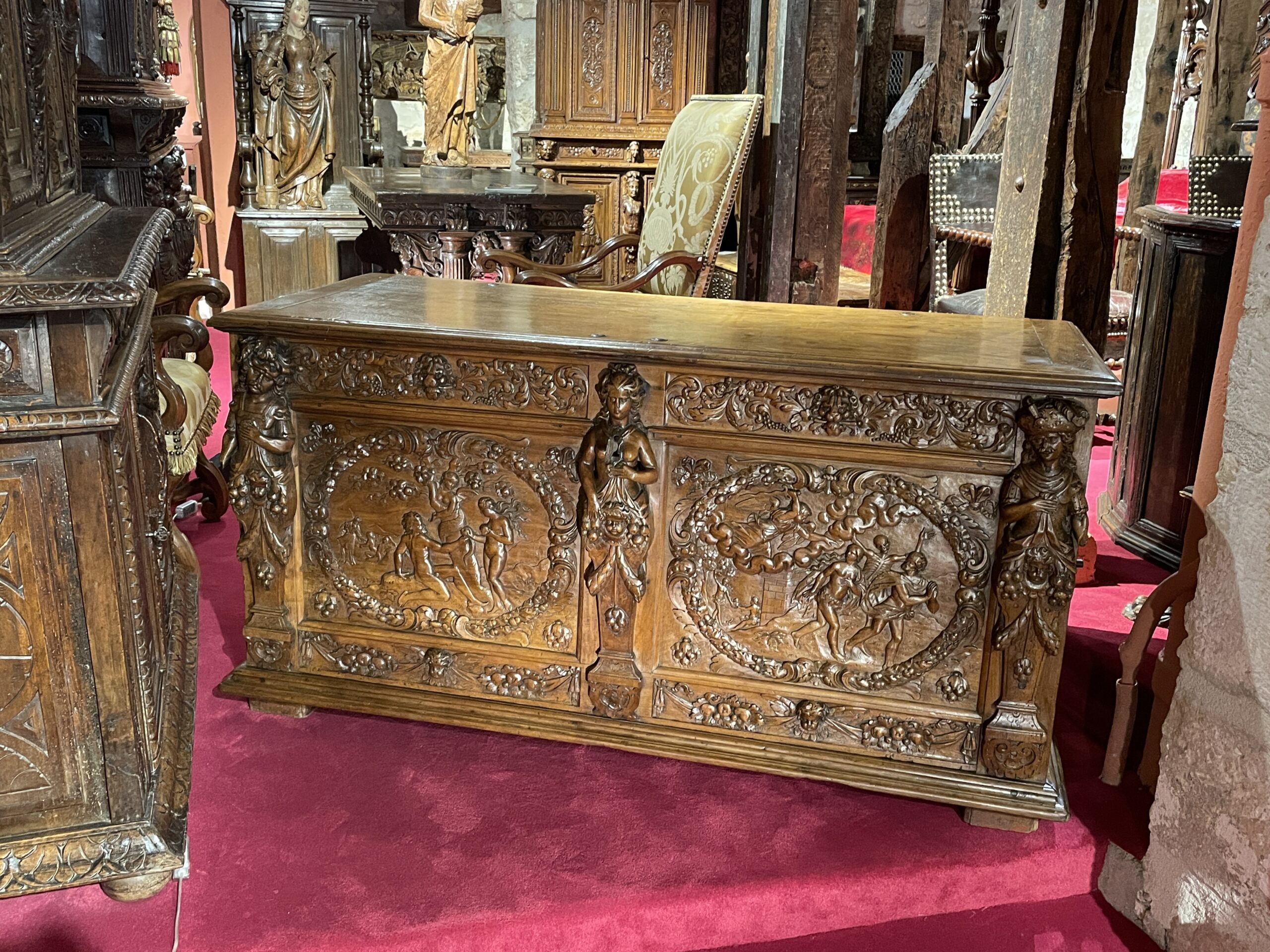
This blond walnut chest, dating from the 16th century and originating from the Loire Valley, bears witness to the refined art of the French Second Renaissance. Its solid construction is distinguished by its exuberant ornamentation, typical of the period. The main façade presents a synthesis of the story of the Creation of Eve and the Fall, arranged in two panels framed by three caryatids. The key, executed with remarkable goldsmith-like craftsmanship, has been preserved in its original condition.
“Male and female He created them” — Genesis 2:4–25
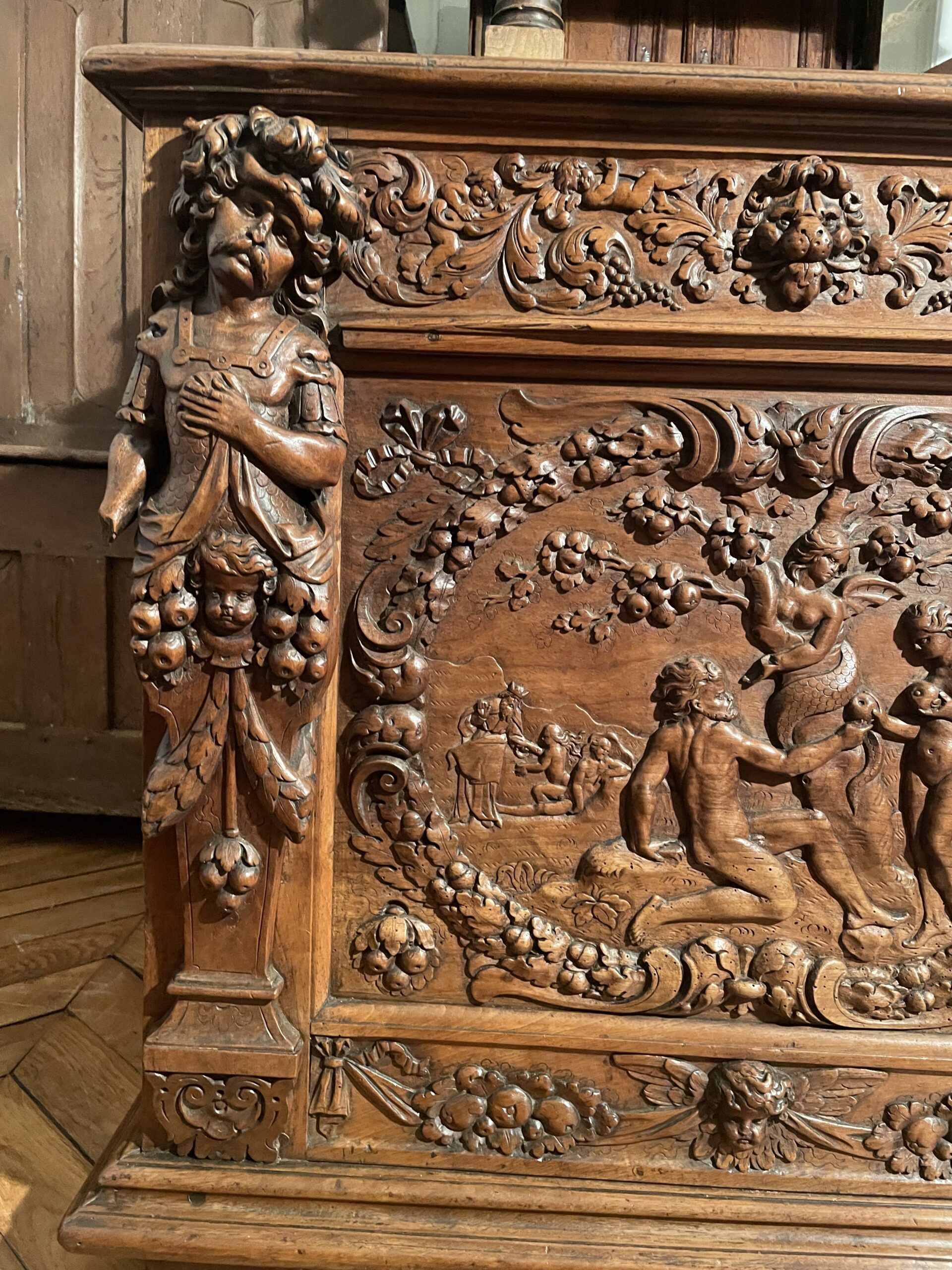
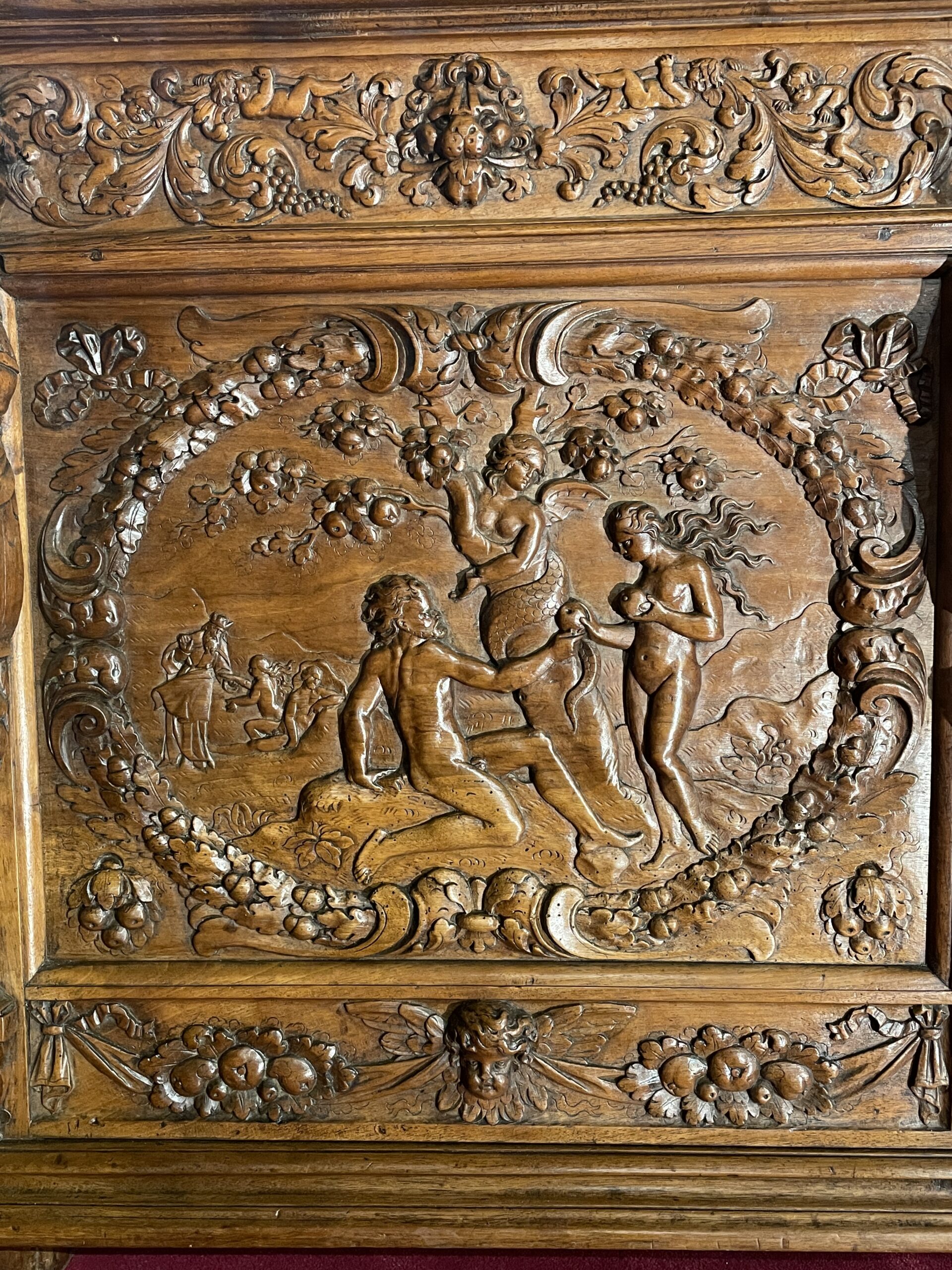
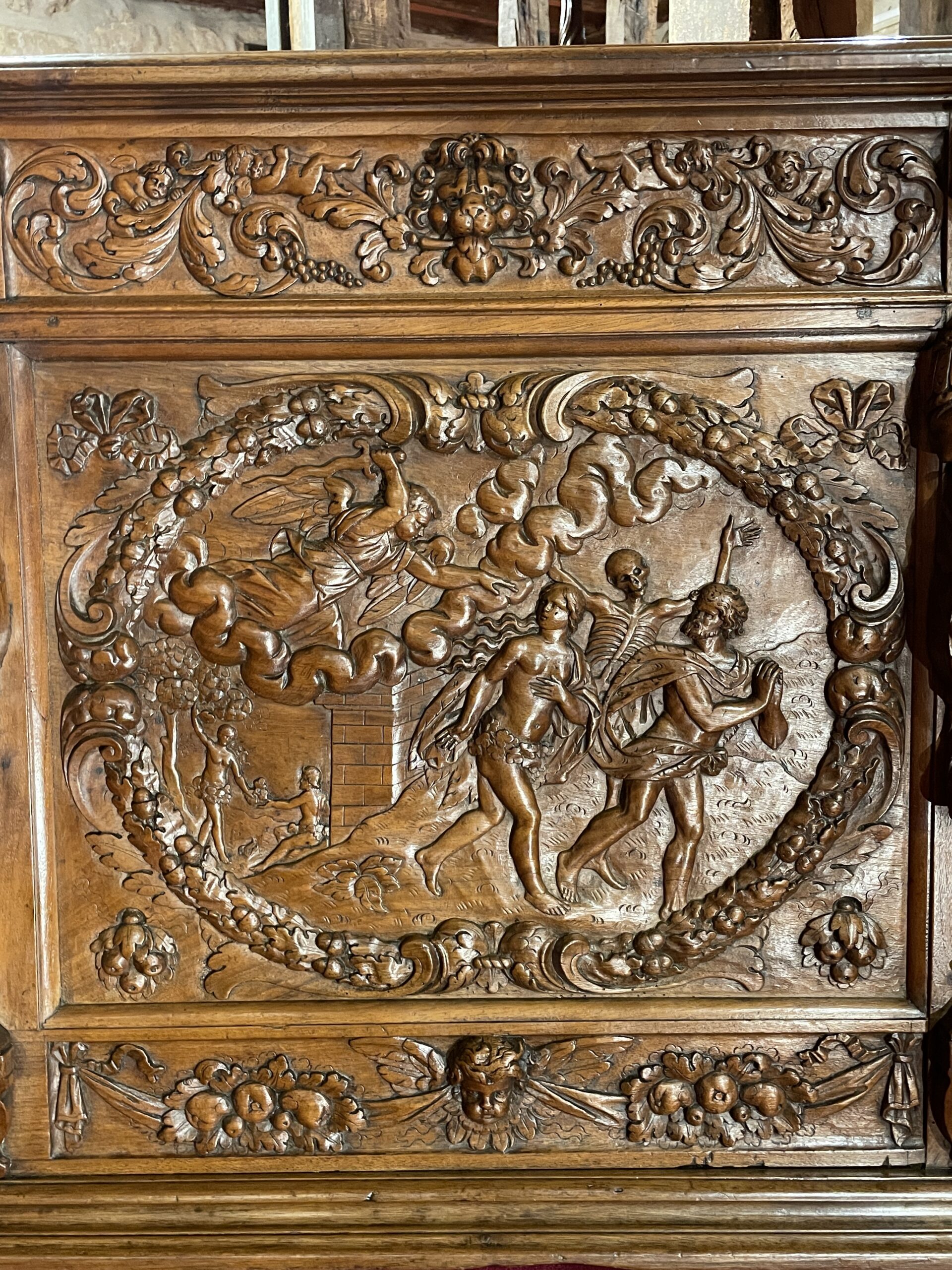
The narrative is organized into four distinct scenes, distributed across two medallions enclosed by garlands of oak leaves and acorns, delicately adorned with decorative knots.
First medallion :
The story opens with the scene in the background, on the left :
God, depicted as a bearded king, draws from Adam’s sleeping side the body of Eve. At the center of the composition unfolds the pivotal moment of the narrative : Eve offers Adam the forbidden fruit from the Tree of Life. The Tempter, a hybrid serpent-woman, coils her body around the trunk and urges the woman with a gesture of the hand.
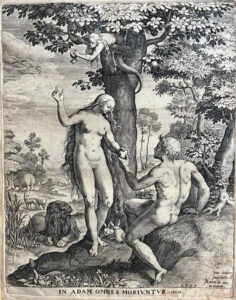
Eve’s nudity, delicately rendered, evokes the grace of an antique Venus. Adam’s posture recalls an engraving by Jean Sadeler after Martin de Vos (circa 1550–1600), whose extensive body of work inspired many craftsmen (In Adam omnes moriuntur).
Second medallion :
Here unfolds the dramatic consequence of the first episode. The forbidden fruit has opened the couple’s eyes to their nakedness: Eve hands Adam foliage to conceal the bodies of which they are now ashamed.
“Then the eyes of both of them were opened, and they realized that they were naked; so they sewed fig leaves together and made themselves loincloths.” — Genesis 3:1–7
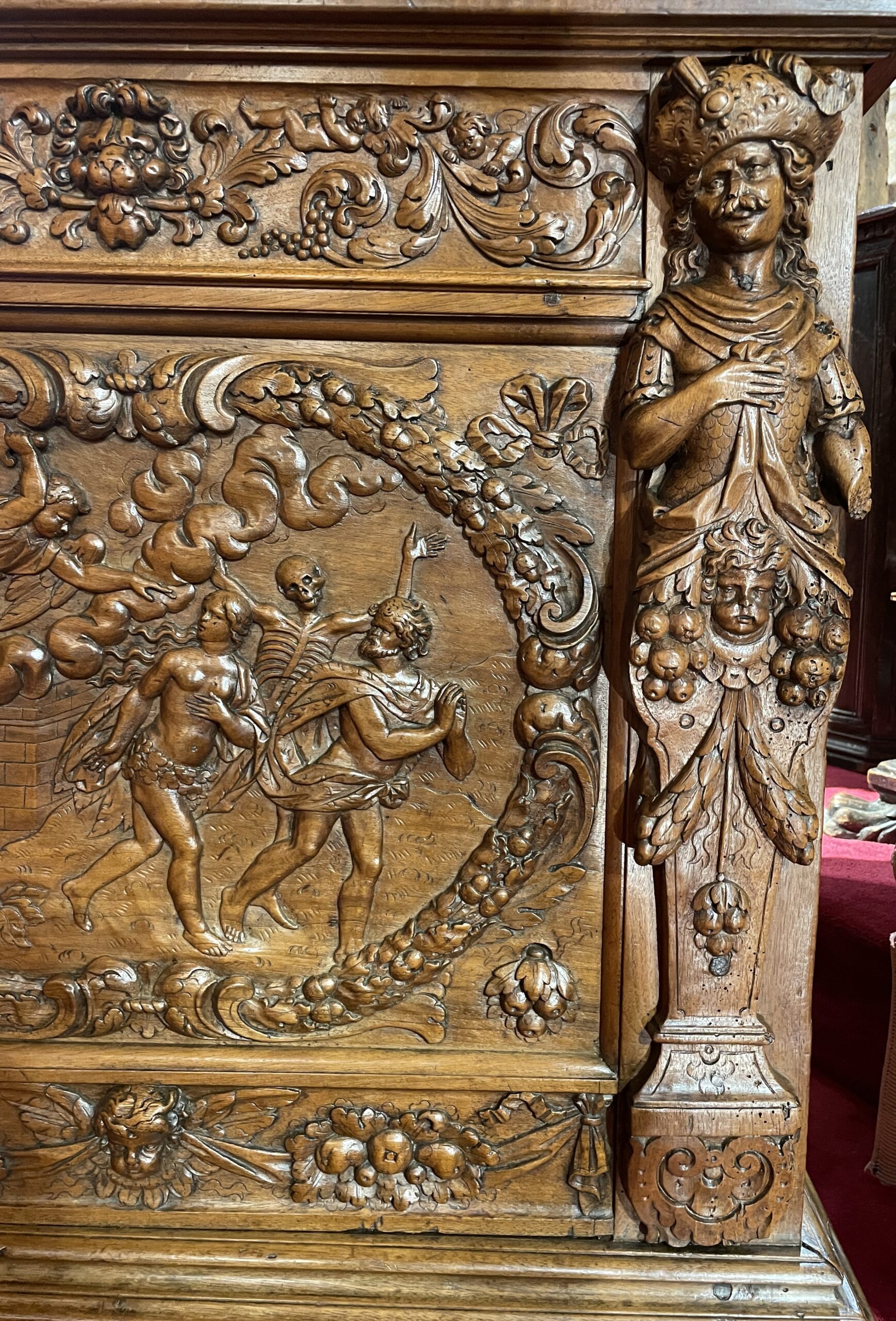
According to divine will, an angel descends from the heavens, sword in hand, driving the damned couple from the gates of Paradise. Between the man and the woman stands a skeleton: death now shares their exile.
“Because you listened to the voice of your wife and ate from the tree about which I commanded you, saying, ‘You shall not eat of it,’ cursed is the ground because of you.” — Genesis 3:17
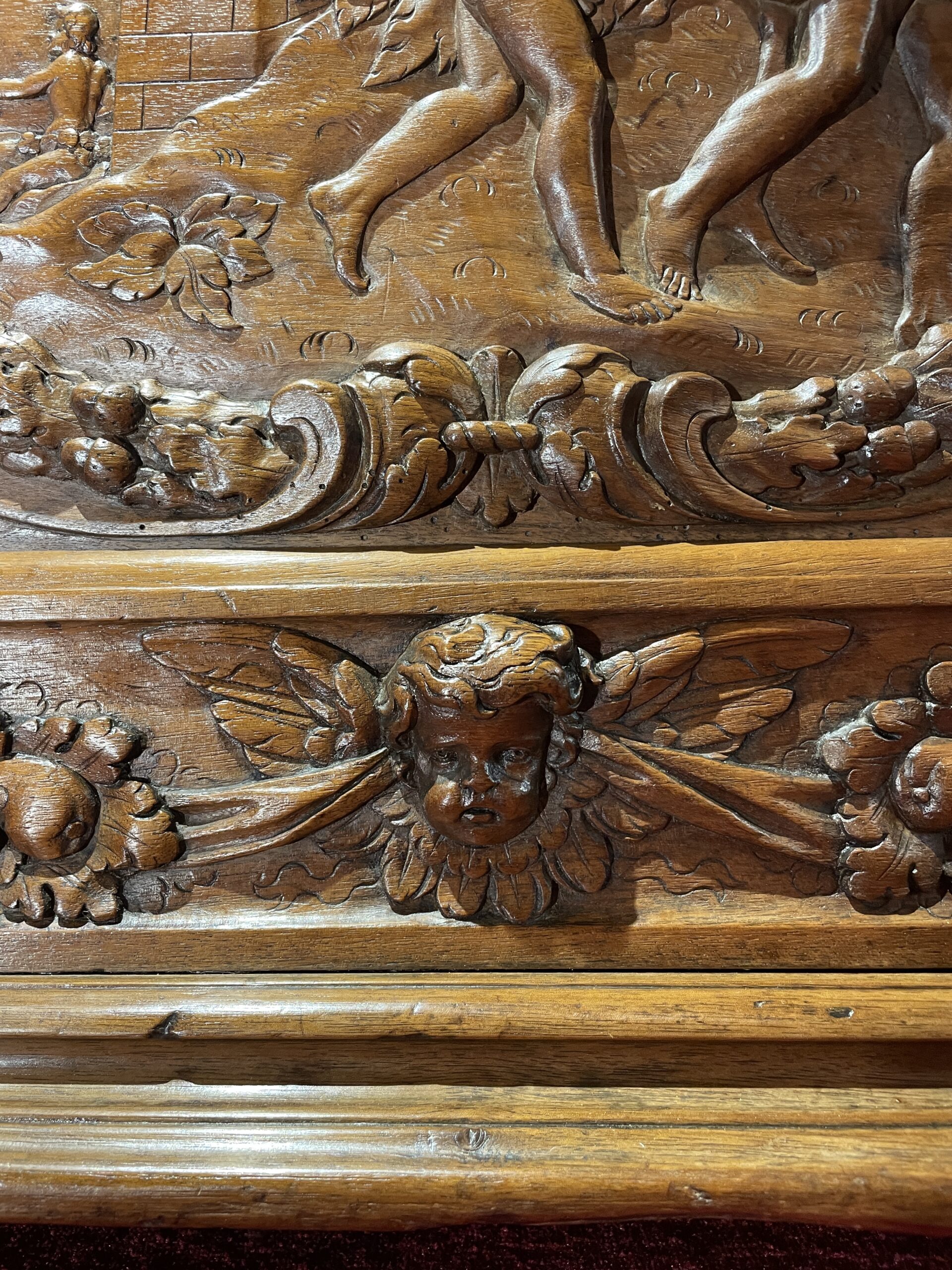
The three caryatids follow a unified composition: draped terms gracefully lifting their garments with one hand, topped by a putto’s head from which garlands of apples—the symbol of the forbidden fruit—unfold. They are refined and meticulously detailed, with finely carved ornaments and expressively rendered faces.
On the left, a mustachioed man, crowned with feathers and wearing a Roman-style tunic, conceals lions’ heads on his shoulders and forehead. On the right, his counterpart wears an “Oriental” headdress; his thick, wavy hair departs from Italian models.
For while the French Renaissance drew heavily upon engravings and transalpine masters, it adapted their ornamental vocabulary to its own sensibility. These distinctive figures, along with the architectural organization of the piece, testify to this synthesis: an art nourished by multiple influences, imbued with an international spirit yet faithful to French individuality. At the center, a nude female figure with exposed chest serves as the keyhole—the receptacle of the key.
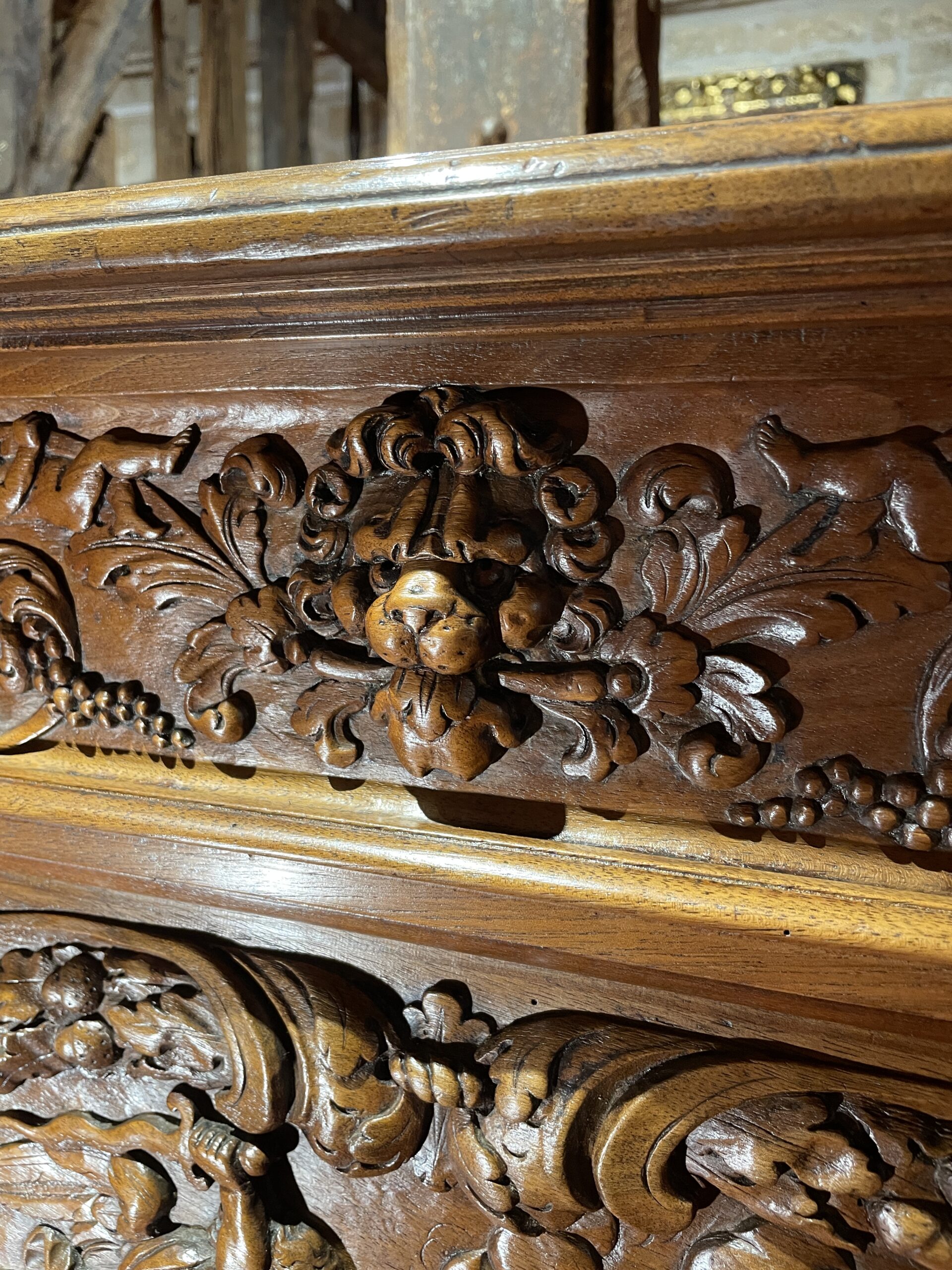
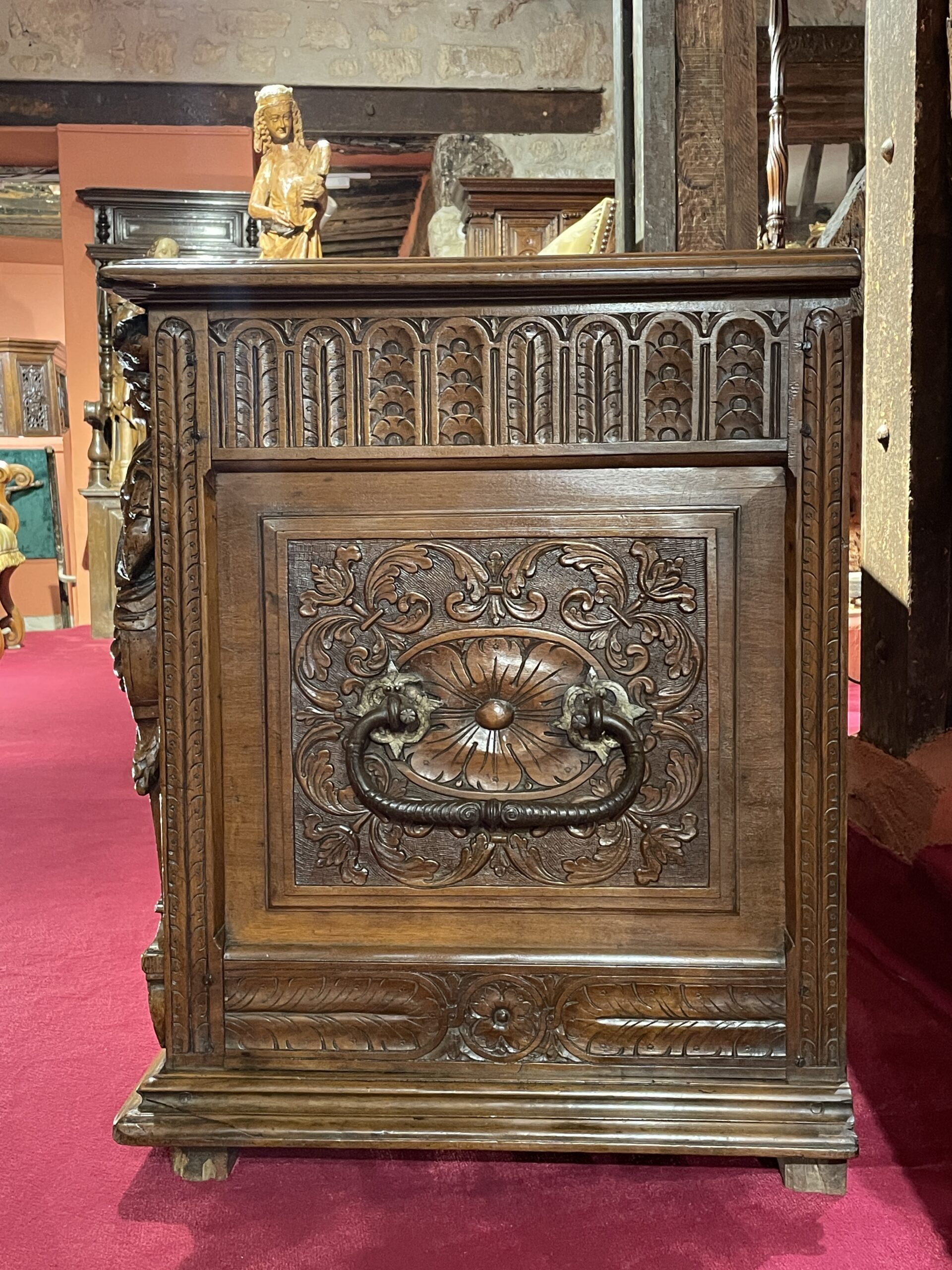
The ornamentation of this chest fully embraces the Italianate taste, enriched with motifs borrowed from Antiquity. Two friezes run along the panels, animated with sacrificial garlands intertwined with vines, putti, and lions’ heads. The sides, designed with raised panels, feature a central rosette surrounded by acanthus leaves and fitted with a drop handle. The whole is surmounted by a sequence of bird feathers and geometric patterns, while large plumes frame the rosette, emphasizing the richness and coherence of the decoration.
This chest, adorned with an exuberant and exquisitely delicate decoration, brilliantly exemplifies the art of the Loire Valley in the second half of the 16th century. Heir to the tradition of French huchiers (master joiners), it elegantly integrates Italian motifs popularized by engravings from the Fontainebleau workshops. The exceptional preservation of its original key further enhances its prestige.
Bibliography:
Adam and Eve: From Dürer to Chagall, Engravings from the Bibliothèque nationale.