



Description
Présentation :
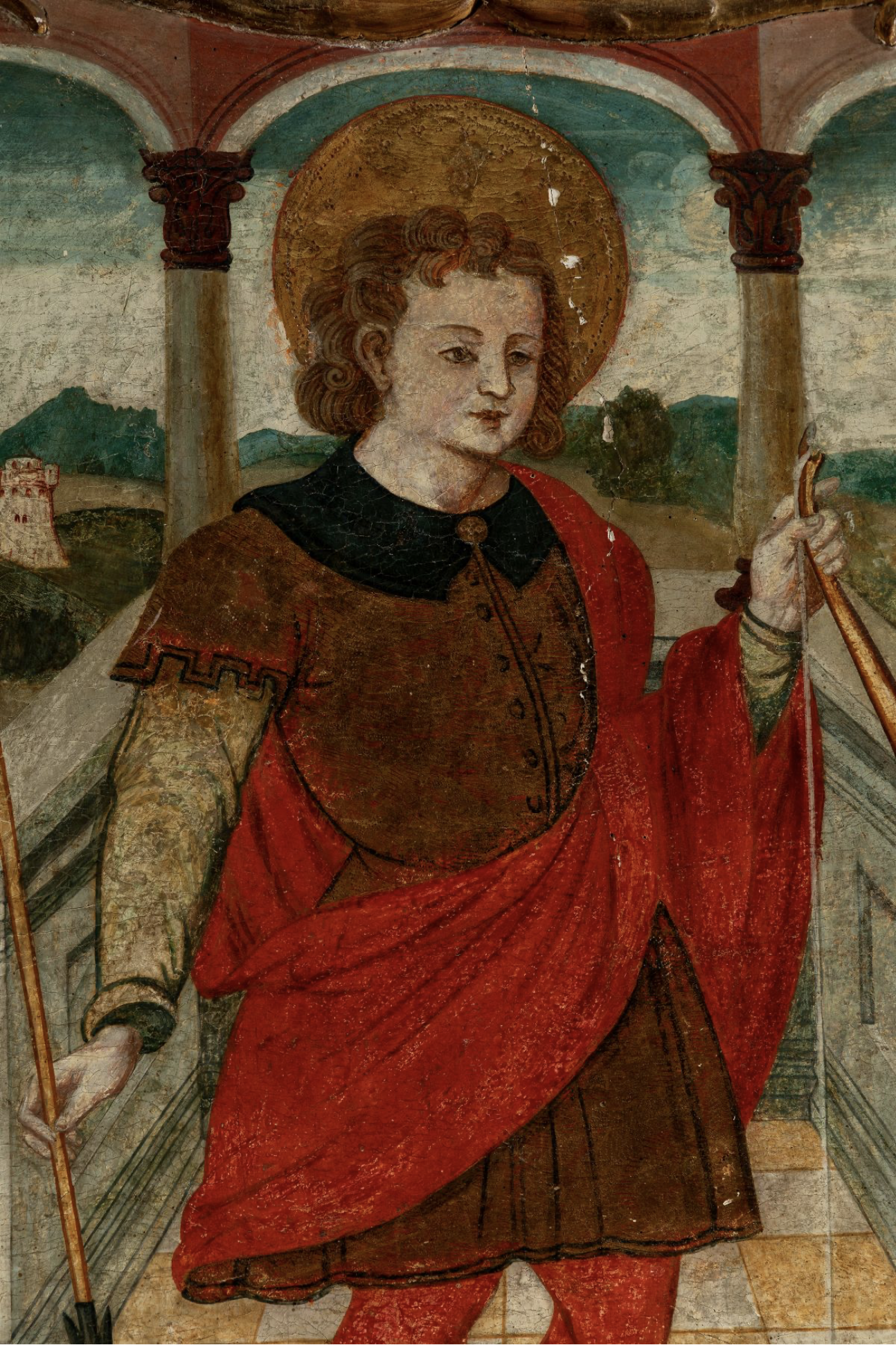
Main register :
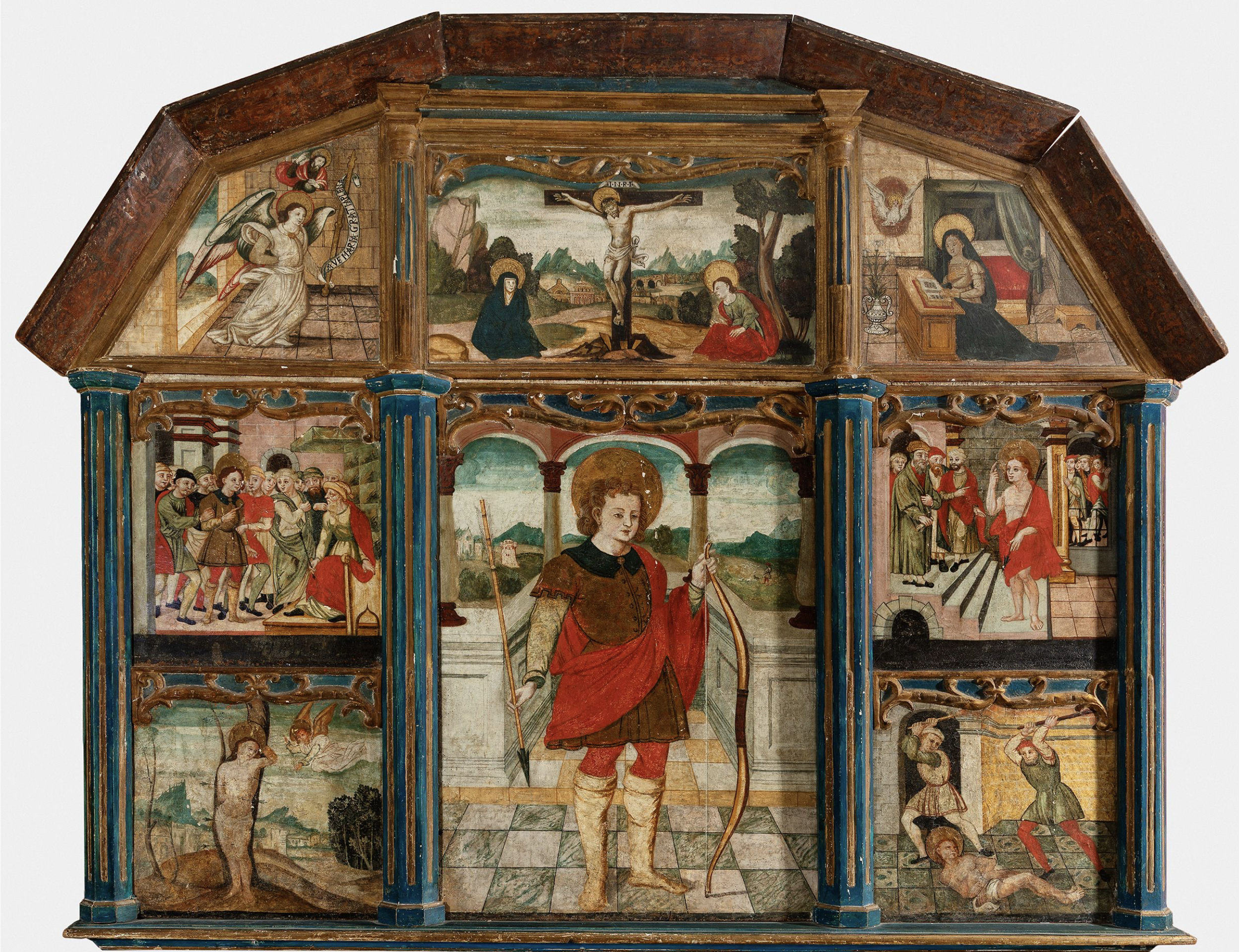
Center: Saint Sebastian standing, holding a bow and an arrow
89.5 × 63.5 cm
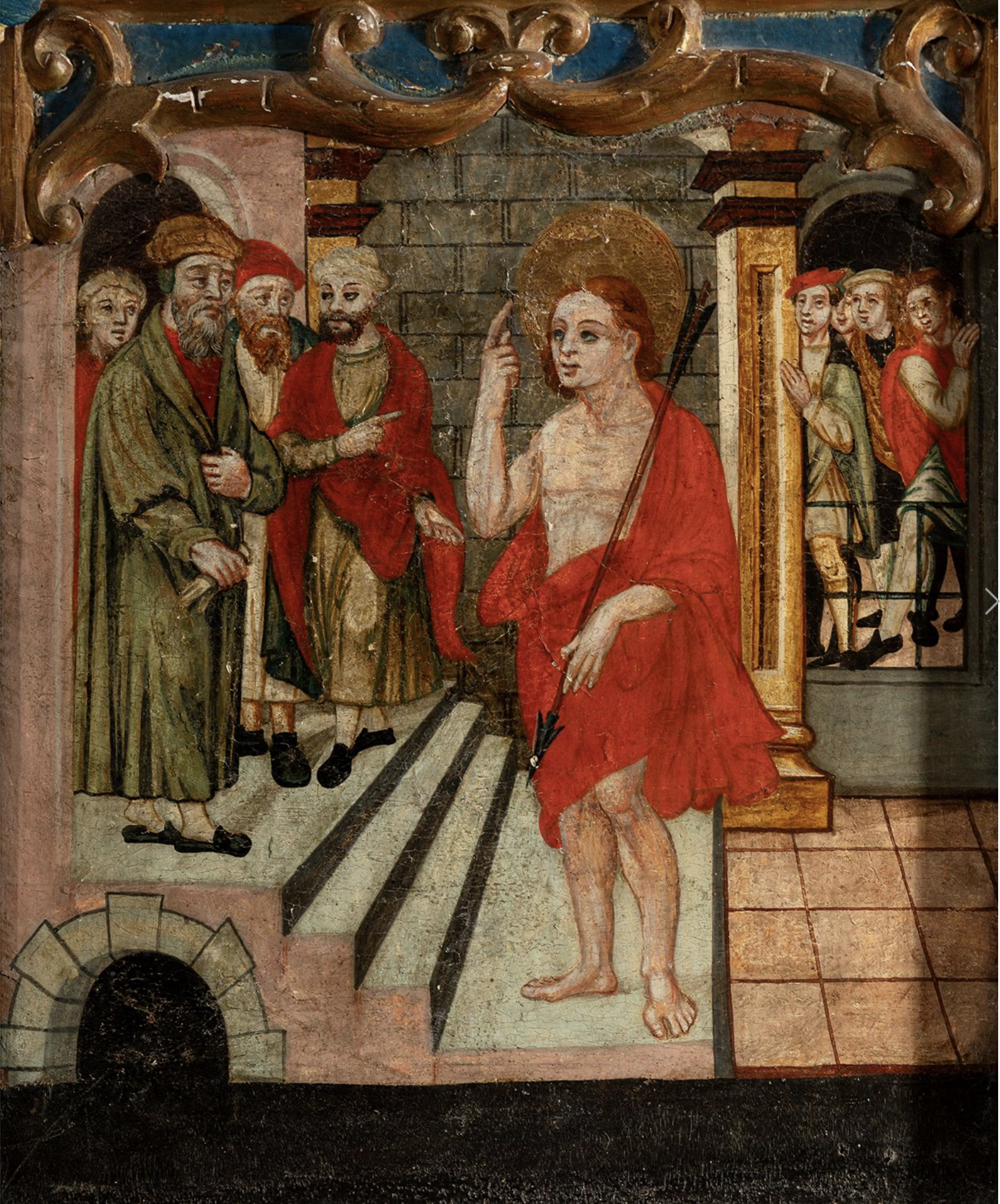
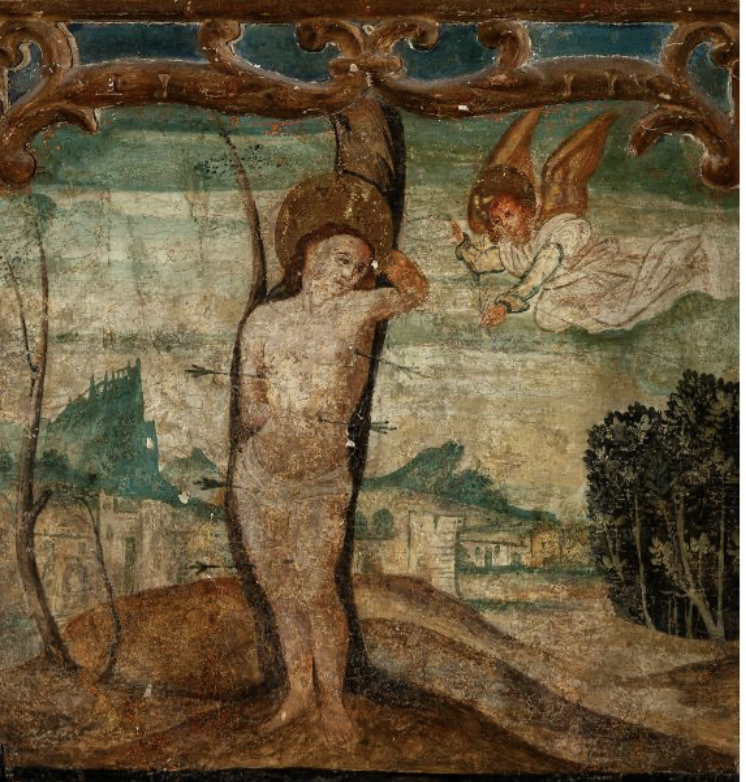
Lateral sections : four scenes from the life of Saint Sebastian, arranged in two superimposed registers
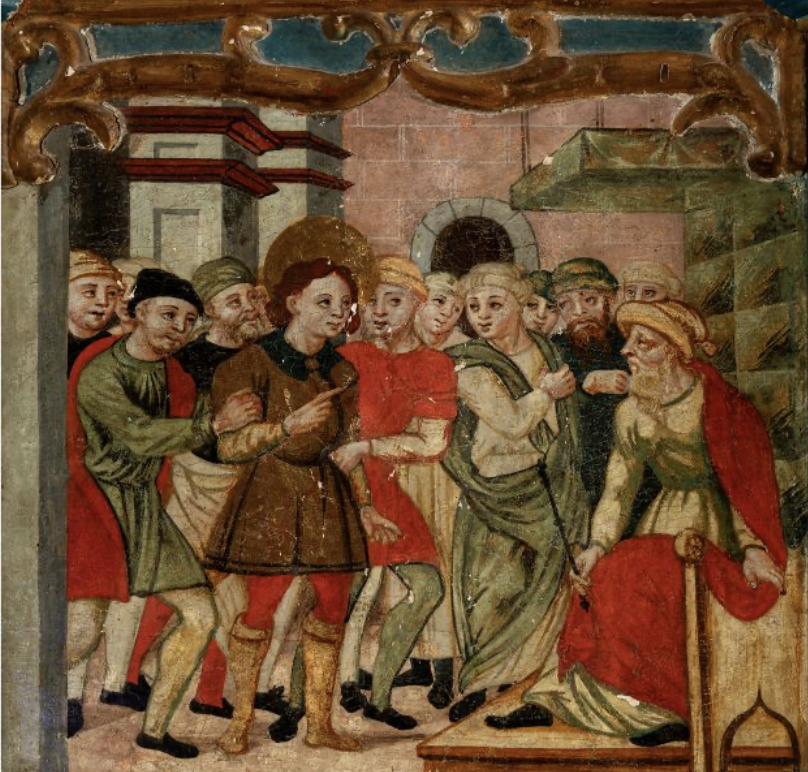
Left: Martyrdom of Saint Sebastian; above: Saint Sebastian led before Diocletian
89.5 × 42 cm
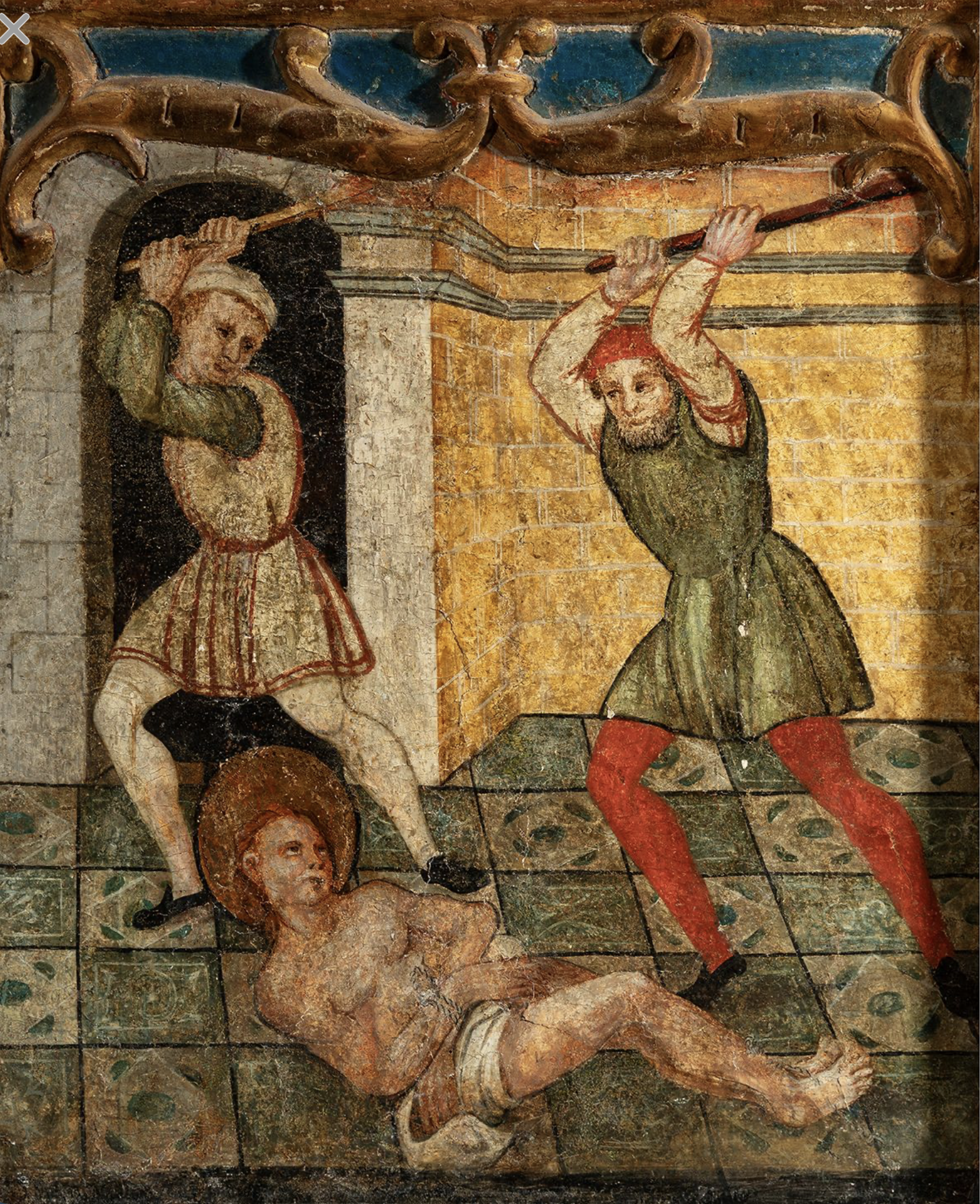
Right: Saint Sebastian beaten; above: Saint Sebastian reassures the parents of Marcellian and Marcus at the time of their condemnation to death
89.5 × 42 cm
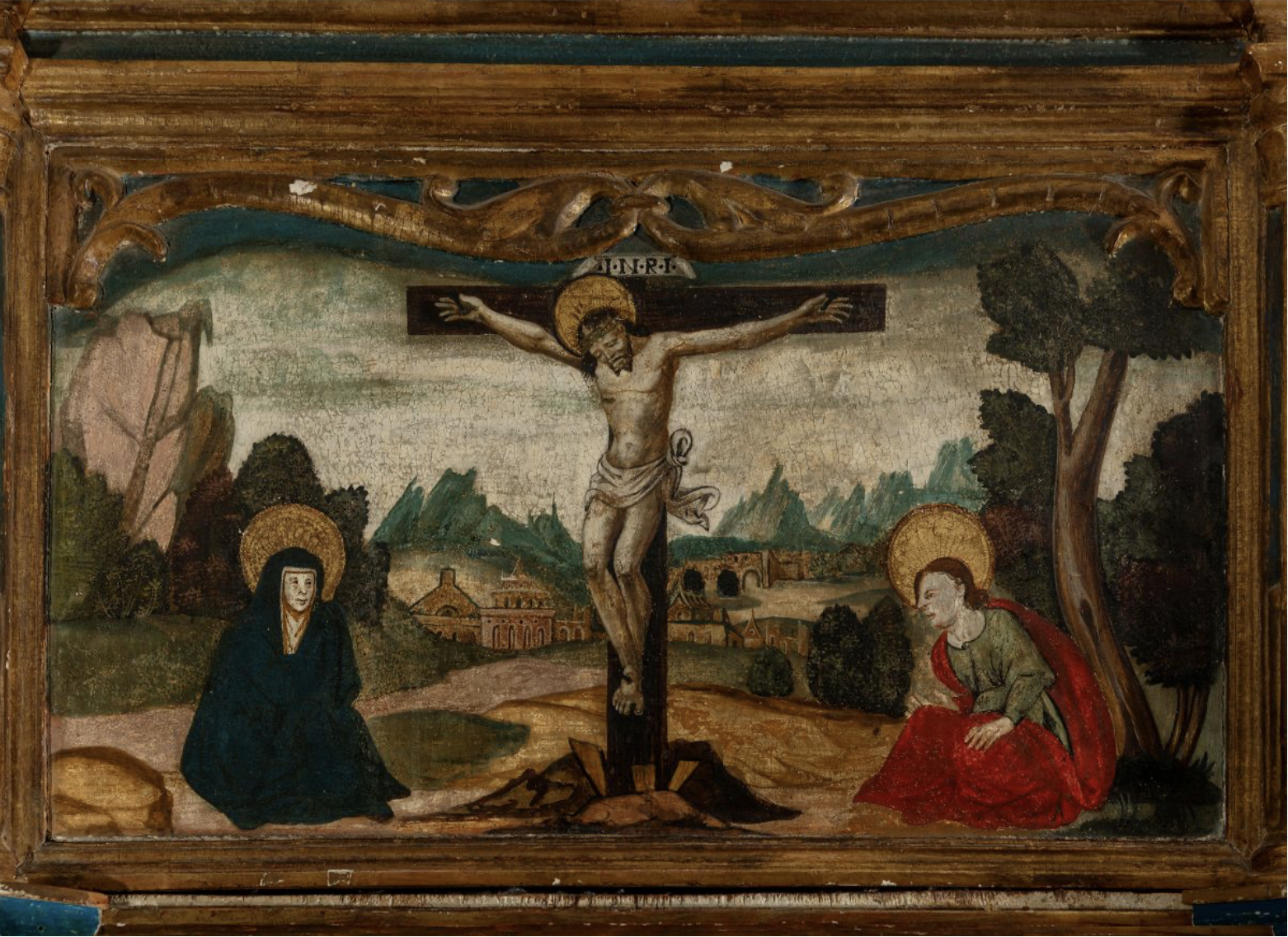
Upper register :
47.7 × 136 cm
Center: Christ on the Cross between the Virgin and Saint John the Evangelist
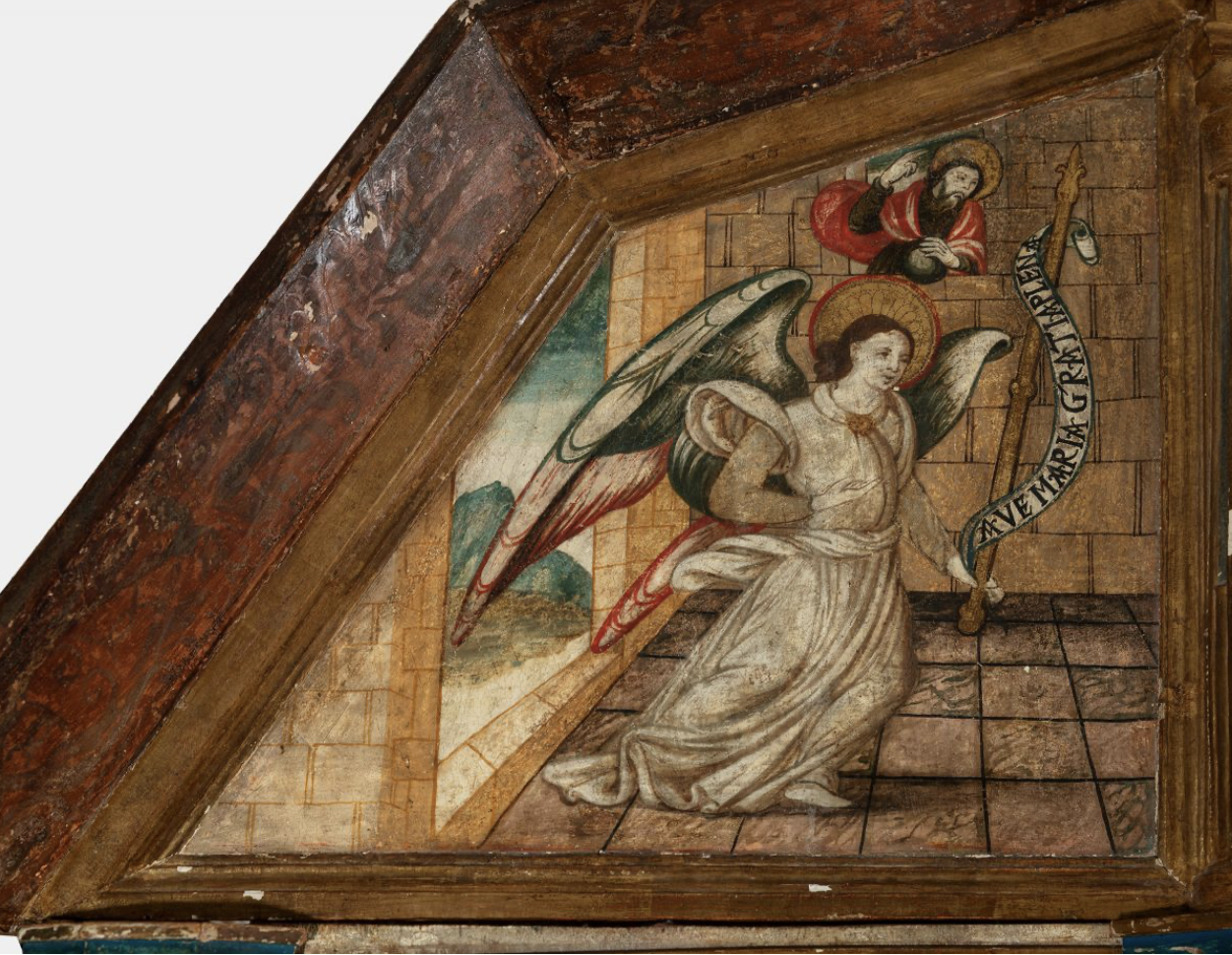
Left: The Angel of the Annunciation
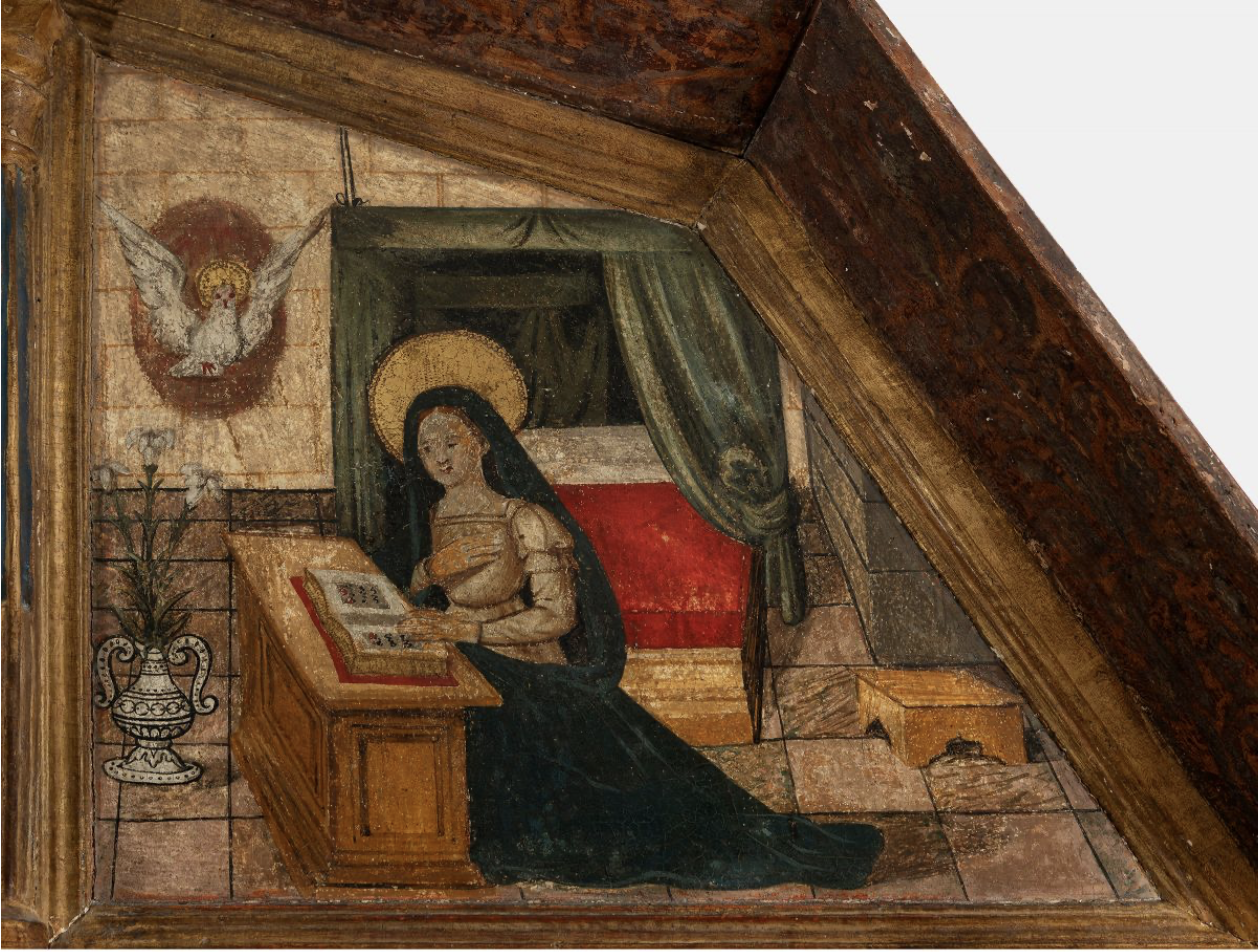
Right: The Virgin of the Annunciation
Old restorations and wear; the lower columns and the plinth are later additions
Technique :
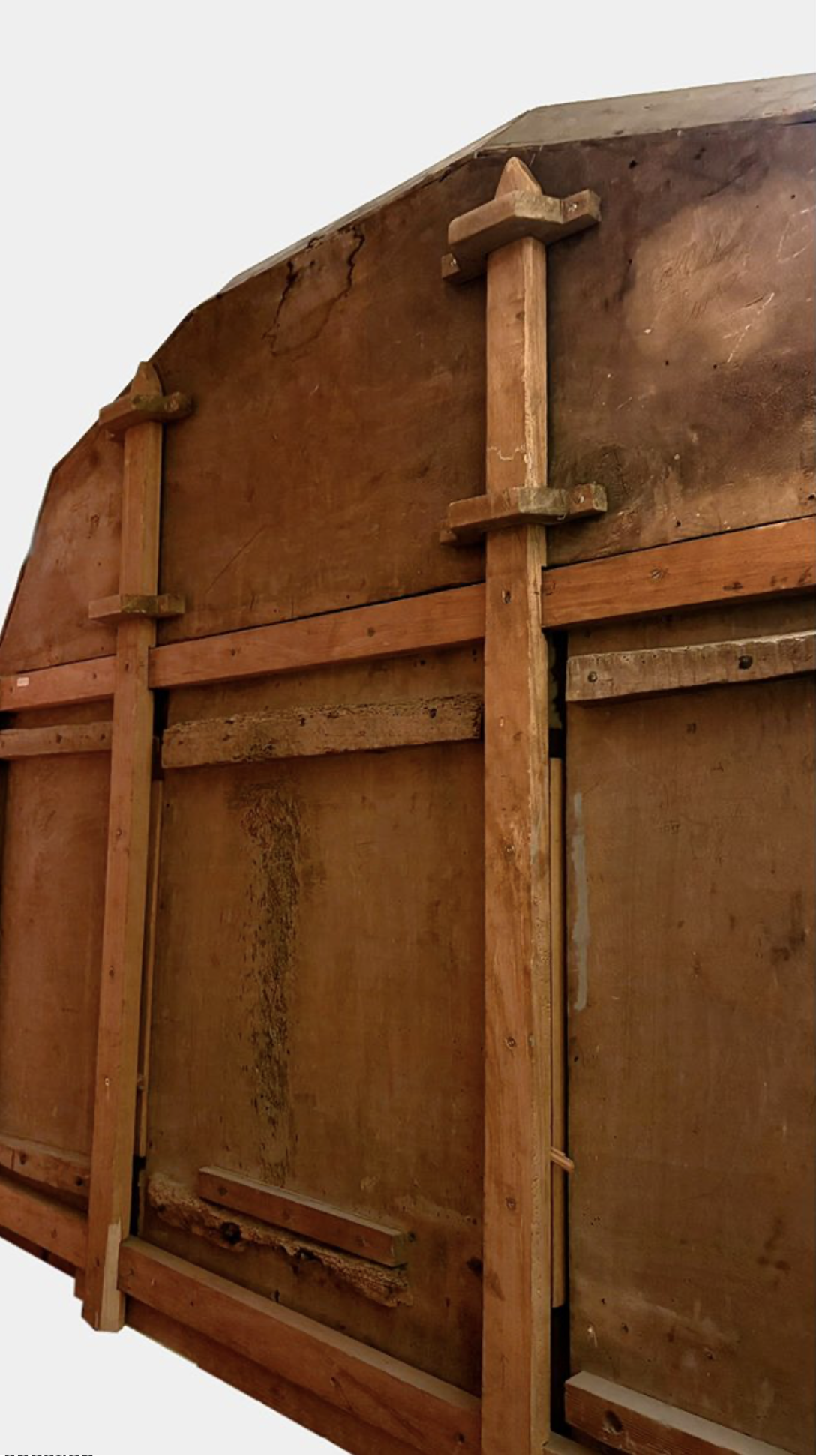
The altarpiece consists of two tiers of superimposed panels, crowned by a superstructure. Following a dismantling that took place at an unknown date, the three rectangular wooden boards with vertical grain forming the main register were reassembled and secured on the reverse by a large modern wooden frame. On the front, the boards are separated by four fluted columns in painted and gilded wood resting on a base, all of which are not original.
On the reverse of each panel, old wooden crossbars 6.5 cm thick were intended to reinforce the original assembly. The central panel, partially damaged by wood-boring insects, shows a slight crack. The upper section, polygonal in shape and surmounted by a superstructure composed of five elements measuring 13 cm in height, is made from a single long board with horizontal grain, fitted on the reverse with modern wooden notches allowing this section to slot into the one beneath it.
The three scenes decorating it are separated by small fluted columns in painted and gilded wood, which are original.
Description :
With the exception of the Annunciation, all the narrative scenes are surmounted by a cusped arcade adorned with gilded wooden finials. The Calvary, in which Christ on the cross is attended by the Virgin and Saint John the Evangelist in a posture of humility, unfolds in the light of a wooded village landscape, whereas the scene of the Annunciation takes place inside the Virgin’s house. In the main register, in the central panel, Saint Sebastian, dressed in military attire, holds in his hands the bow and arrow, the instruments of his martyrdom. He stands in a colonnaded gallery opening onto a broad landscape.
The lateral scenes recount several episodes from the life of the saint as narrated in the Golden Legend by Jacobus de Voragine. The anonymous author of this ensemble, in a familiar, popular style strongly tinged with Italianate influence, undoubtedly belonged to groups of itinerant artists originating from the regions of Nice, Piedmont, or Liguria, who in the fifteenth and sixteenth centuries decorated the chapels lining the valleys of the upper hinterland of Nice and the Var. These votive chapels, often with a single nave, with timber roofs or barrel vaults, were mainly dedicated to the anti-plague saints Saint Roch and Saint Sebastian, whose life scenes adorned the walls or altarpieces. Such are the chapels of Roubion in the Tinée Valley and that of Venanson in the Vésubie Valley. Although these works are most often the result of anonymous labor, at the back of the nave of the chapel of Entraunes in the Var Valley there is an altarpiece painted in fresco and dedicated to Saint Sebastian, signed by the Ligurian Andrea de Cella in 1516. Our altarpiece adopts the same format and the same distribution of scenes, which allows it to be dated to the same period.
Reference bibliography :
L. Thévenon, L’art du Moyen Âge dans les Alpes méridionales, Nice, 1983
Expert :
Cabinet Turquin