



Description
HISTORICAL CONTEXT
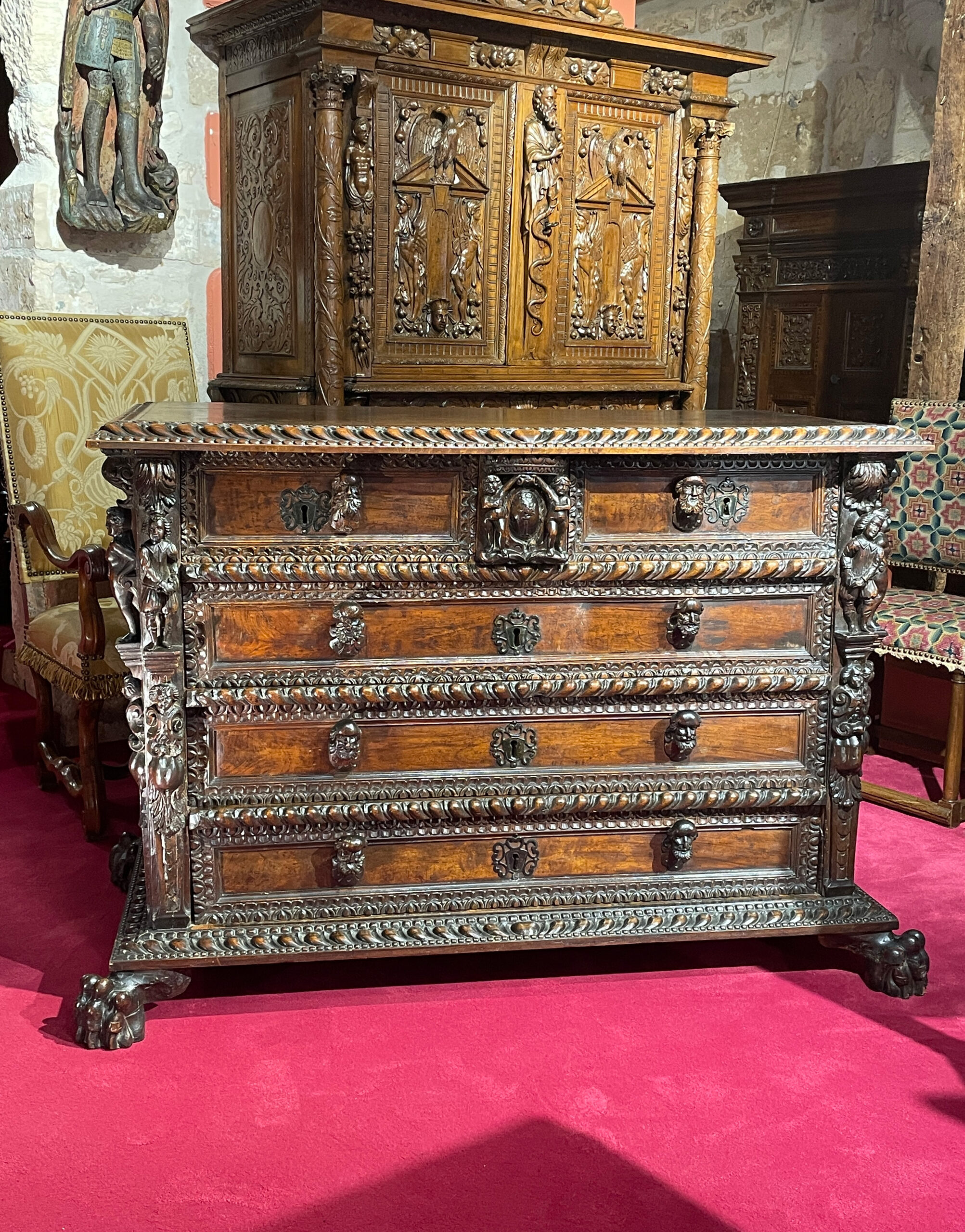
This walnut cassettone is a remarkable example of Mannerist art applied to the decorative arts at the end of the 16th century.
Indeed, although the Mannerist movement was born and matured in Florence before acquiring an international character, it flourished particularly in Northern Italy at the end of the 16th century and the beginning of the 17th century.
Unlike the rest of Italy, which adopted motifs inspired by classical antiquity at a very early stage, the principal decorative elements specific to the Renaissance persisted very late—and even throughout the entire 17th century—in all regions of the North. Sculpture, now moving away from the austere framework of churches and public buildings, entered private residences and adorned reception rooms and studies.
It was in Liguria, however, that this tendency was most clearly expressed in furniture, and especially in Genoa, where an entire category of furniture appeared, carved with a spectacular world of figures known as “bambocci.”
DESCRIPTION
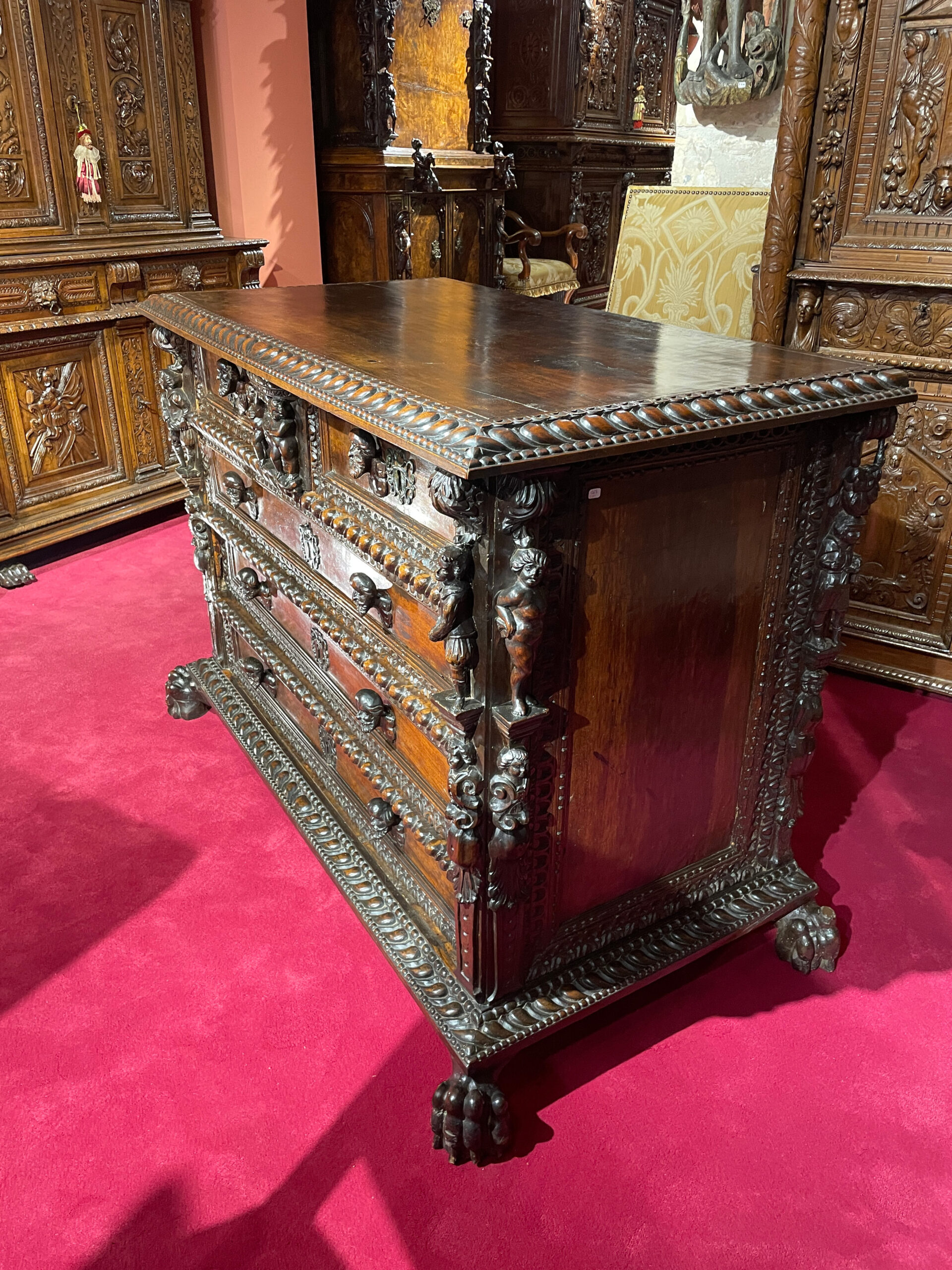
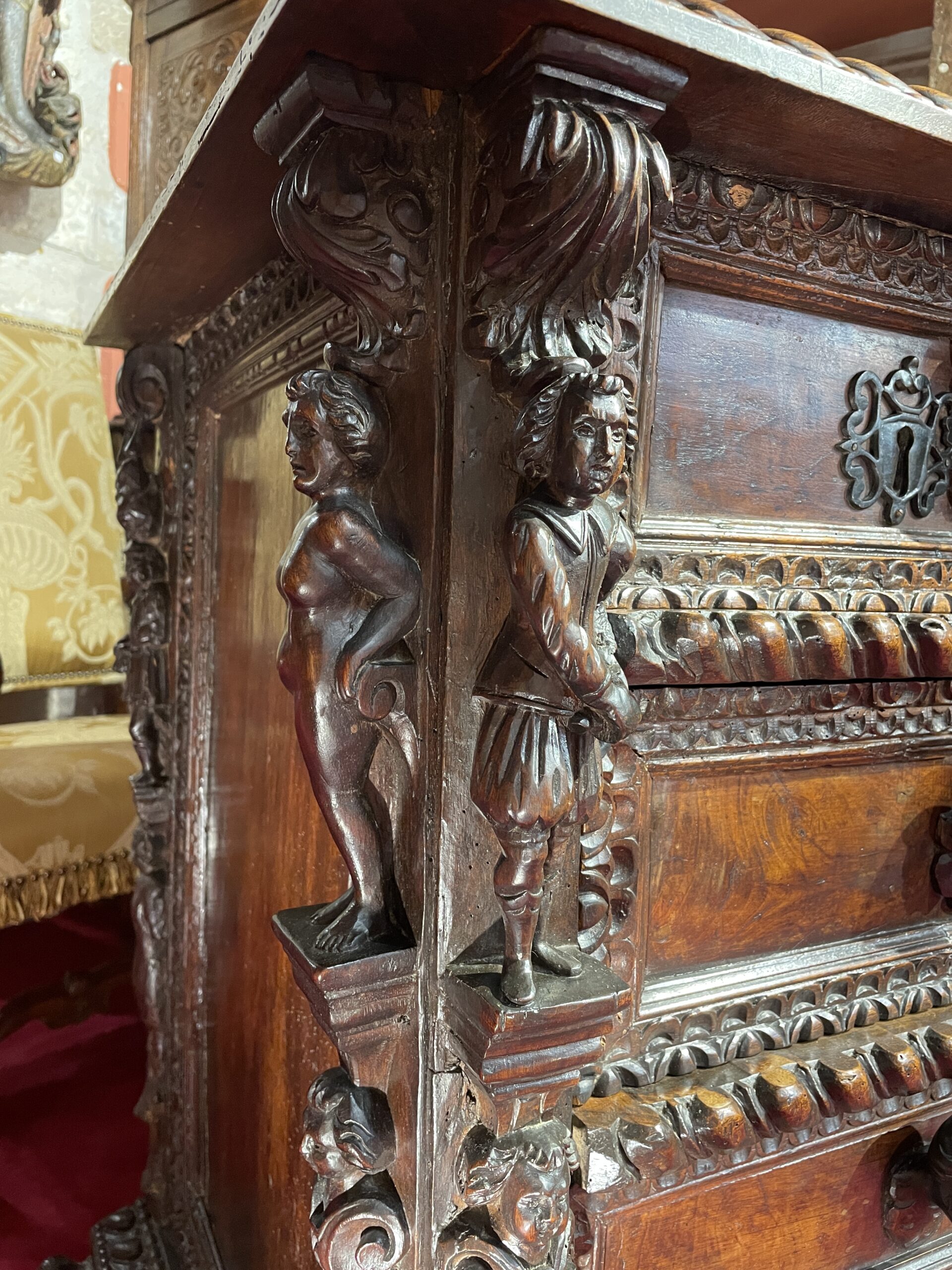
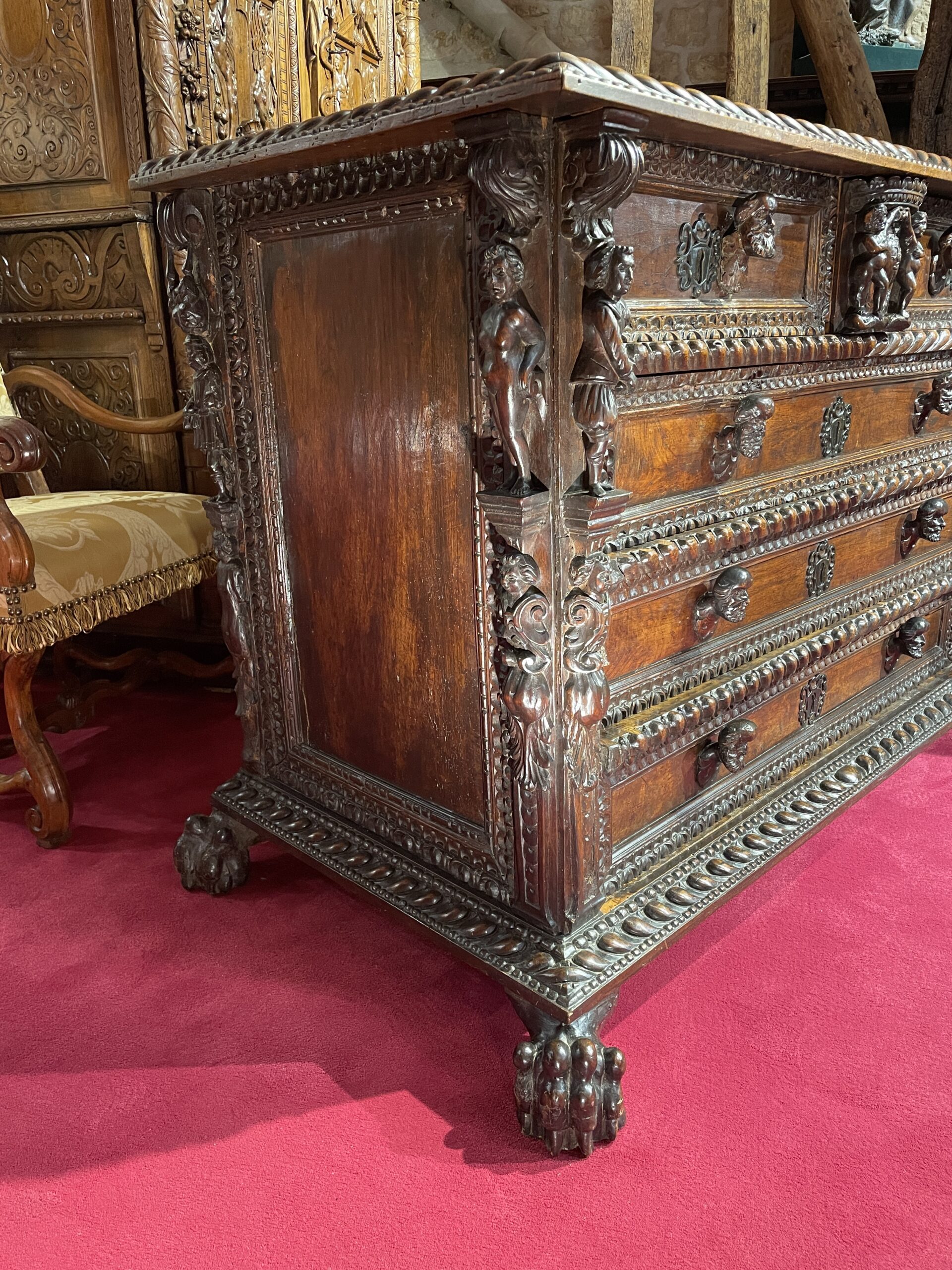
This Genoese commode is flanked on either side by small figurines virtuously carved from a single block of walnut and subsequently applied as veneer to each upright. Inspired by the bambocci, they take the form of caryatids surmounted by nude and clothed figures. Together they form a hymn to life and to the divinities of nature: creatures of water and woodland bearing offerings, and putti acting as atlantes.
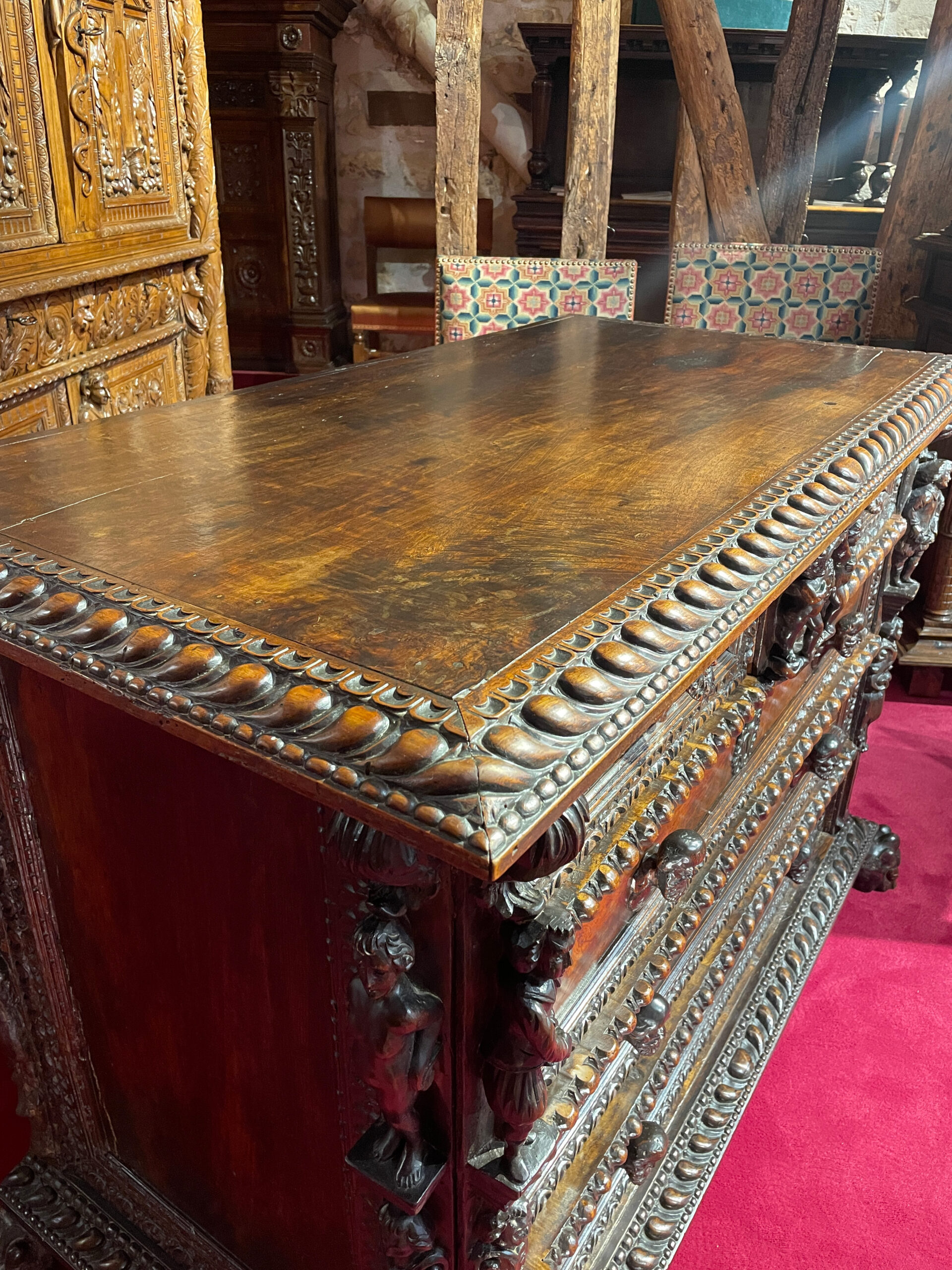
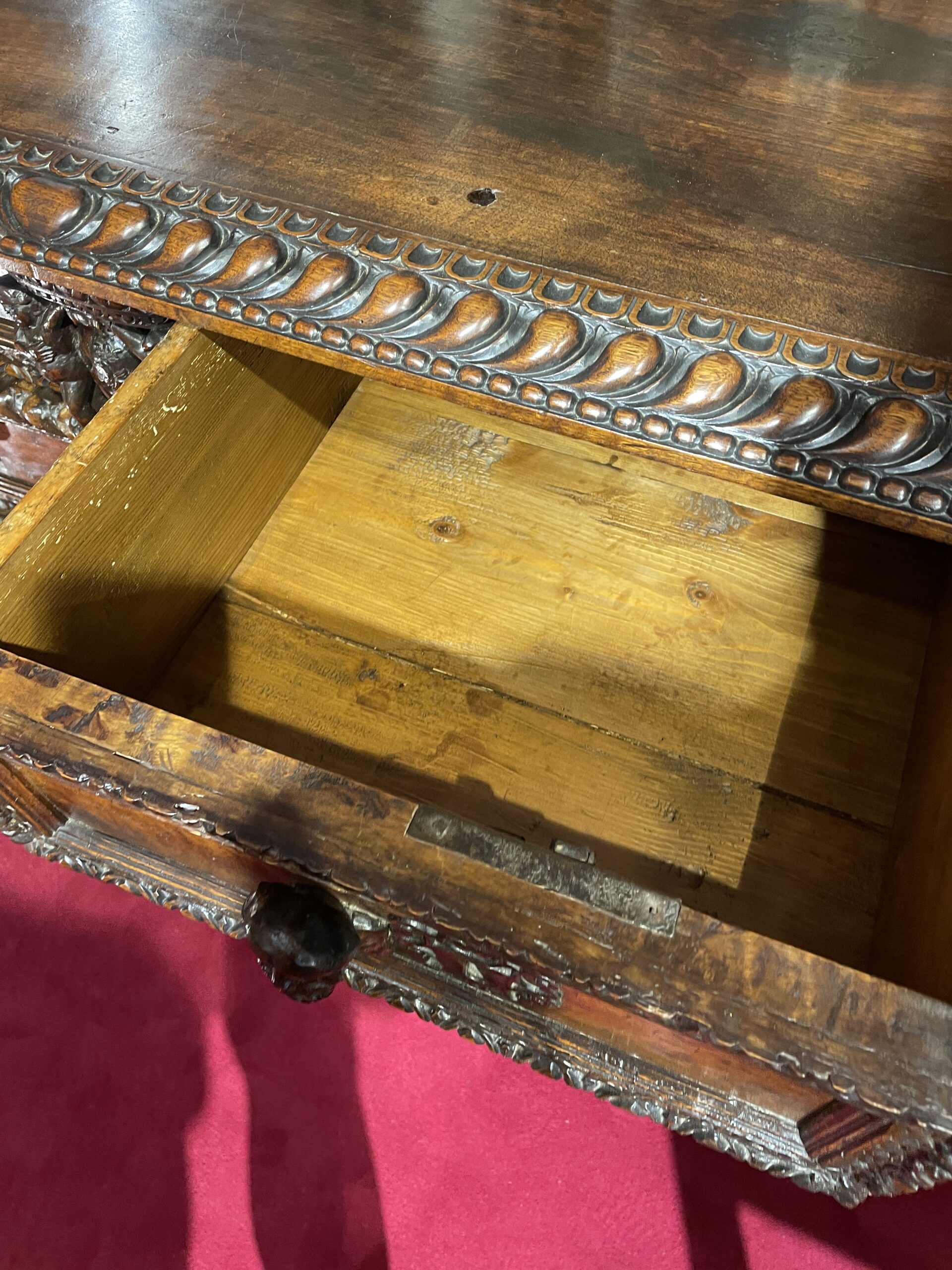
The thick top is crowned with a fine frieze of gadroons, a motif that structures the composition of the commode and is repeated at each level.
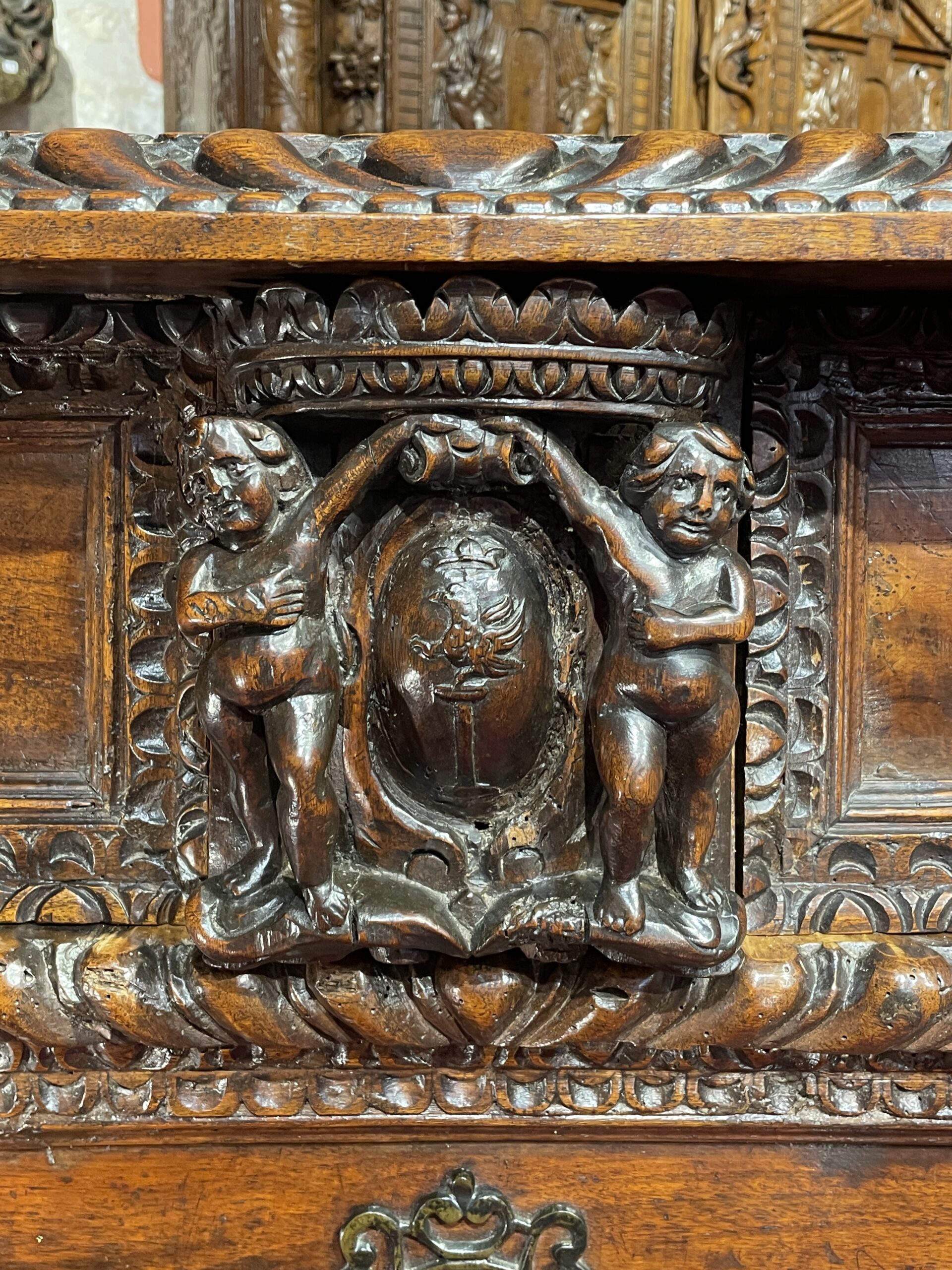
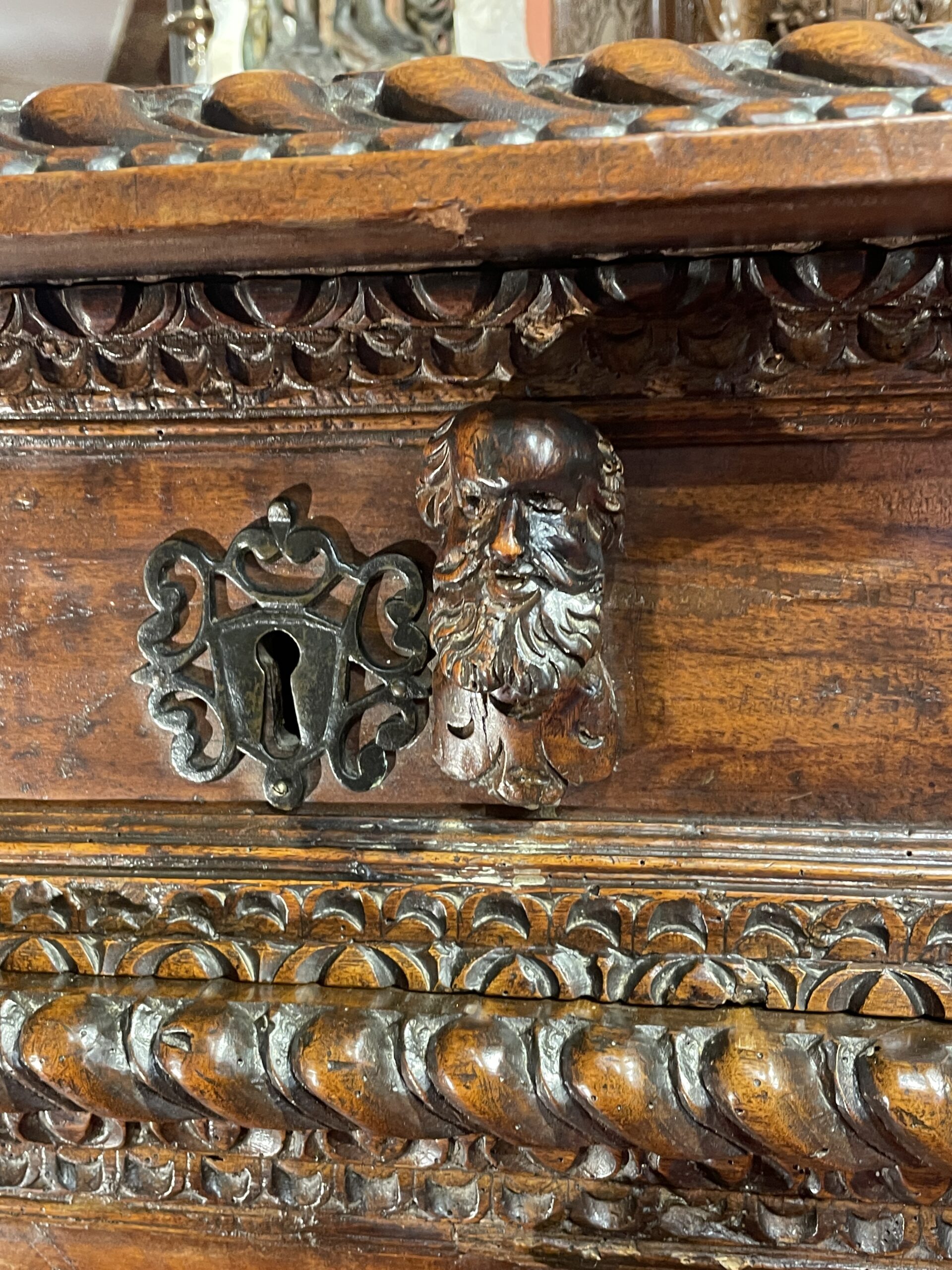
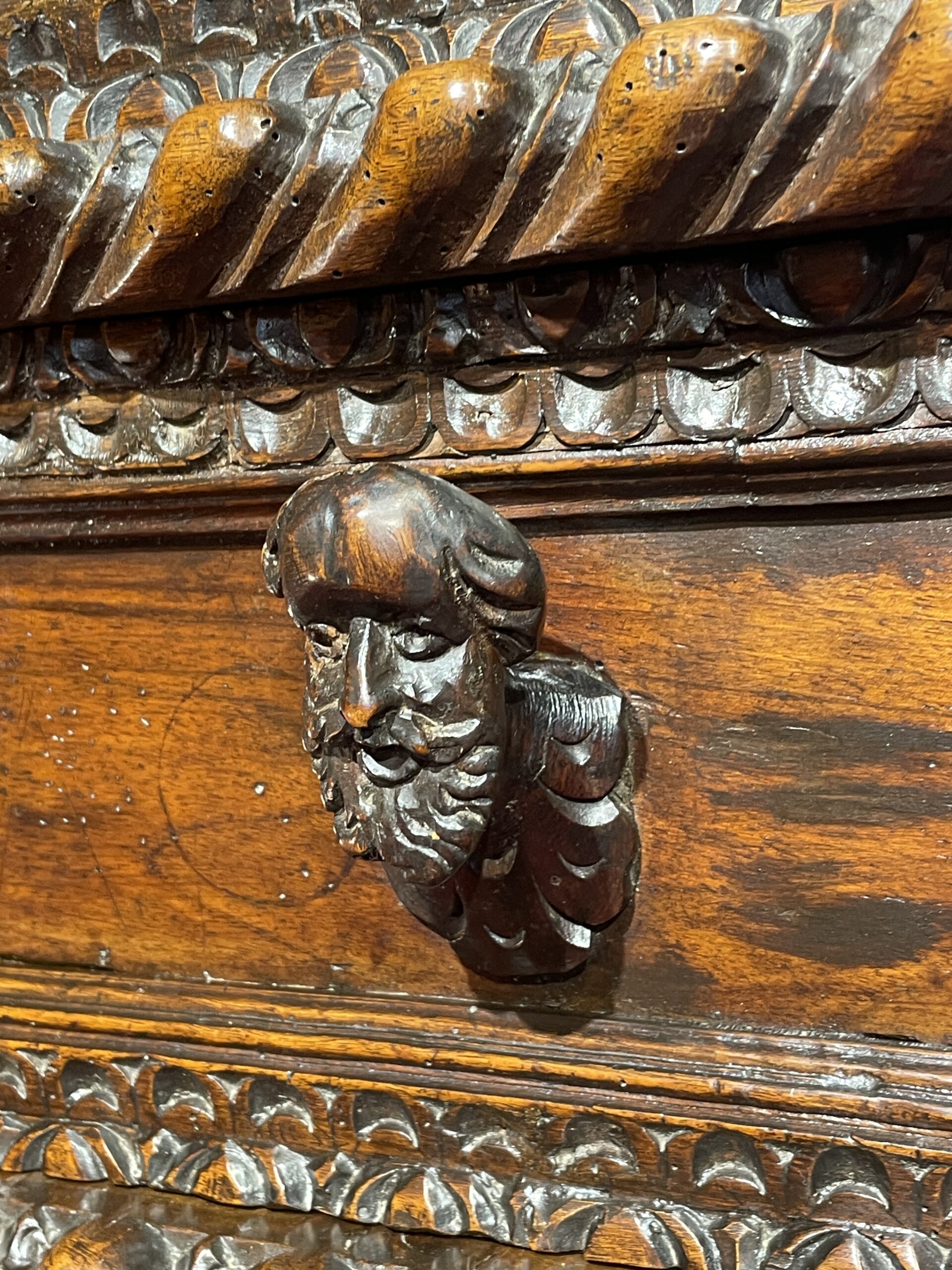
On the façade, six drawers are arranged in four tiers. The handles are carved in high relief with the head of a bearded man. The small central drawer features a specific decoration with two putti flanking a coat of arms surmounted by a crown. Each drawer is framed by an egg-and-dart moulding. The commode rests on a projecting cornice raised on claw feet.
Beyond its decorative richness, this piece displays a harmonious sense of proportion, reflecting a perfect mastery of volume and space. Despite some minor maintenance restorations, it is today in a remarkable state of preservation.
BIBLIOGRAPHY
L’arte del mobile in Italia by Silvanno Colombo
Il Mobilio gli ambiant e le Decorzioni des Rinascimento in Italia by Augusto Padrini
Il mobilio in Ialia by Augusto Pedrini, 1948.