Description
With the Renaissance, chests became some of the finest pieces of furniture, permanently installed in bedrooms and reception rooms to store clothing. Whereas earlier Italian chests were often decorated with painted and gilded scenes, the 16th century favored the beauty of natural wood, with a clear predilection for walnut.
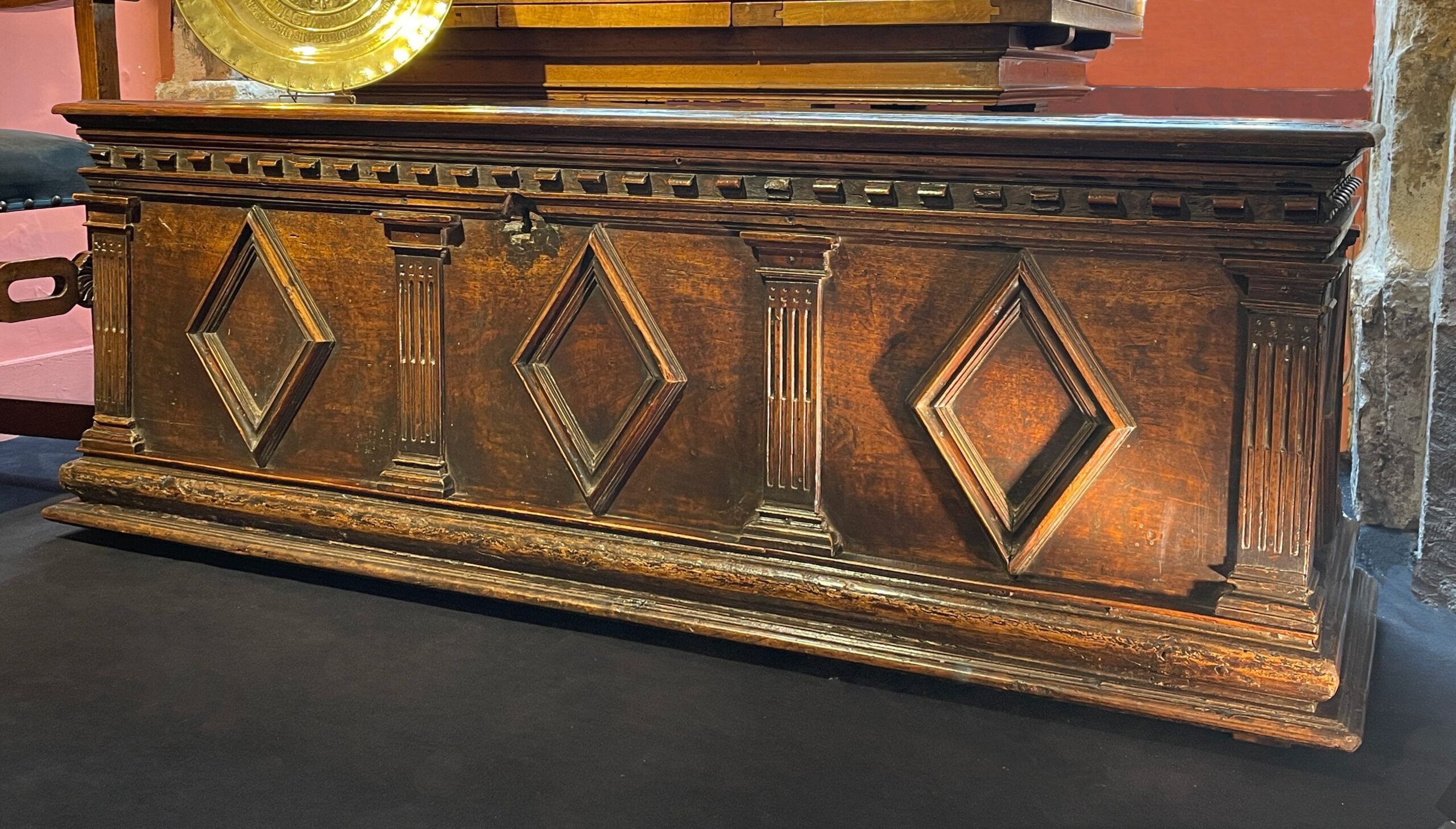
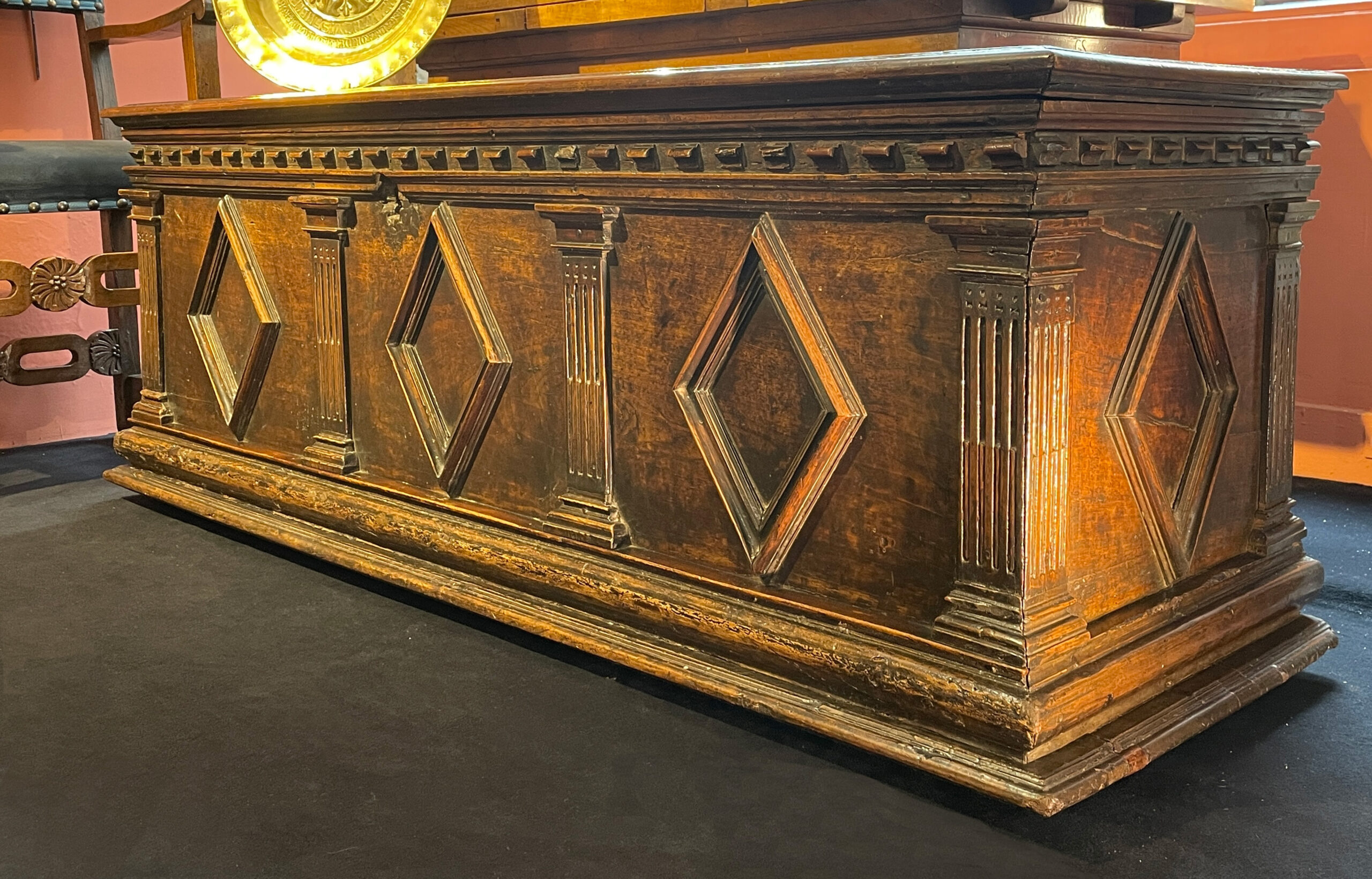
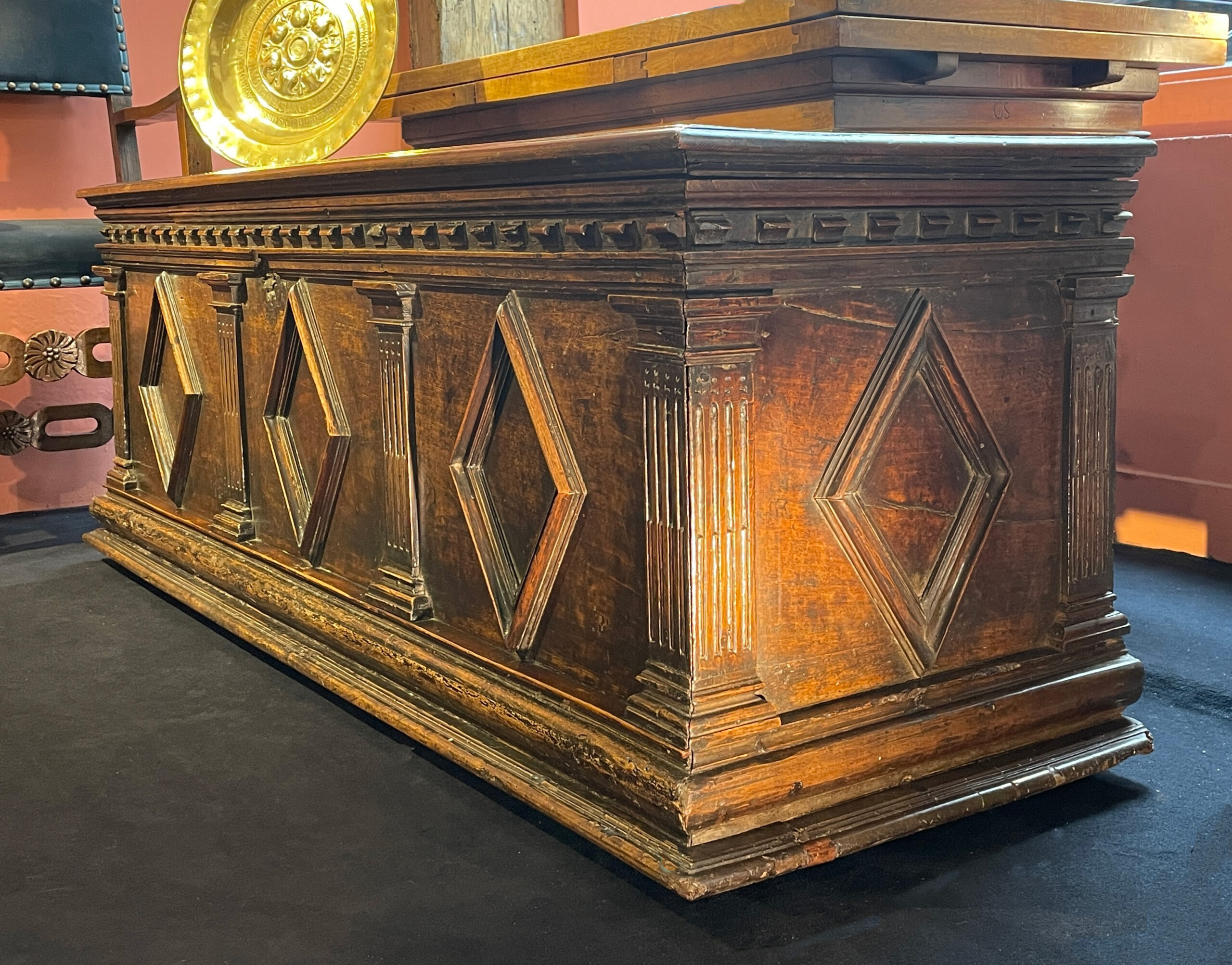
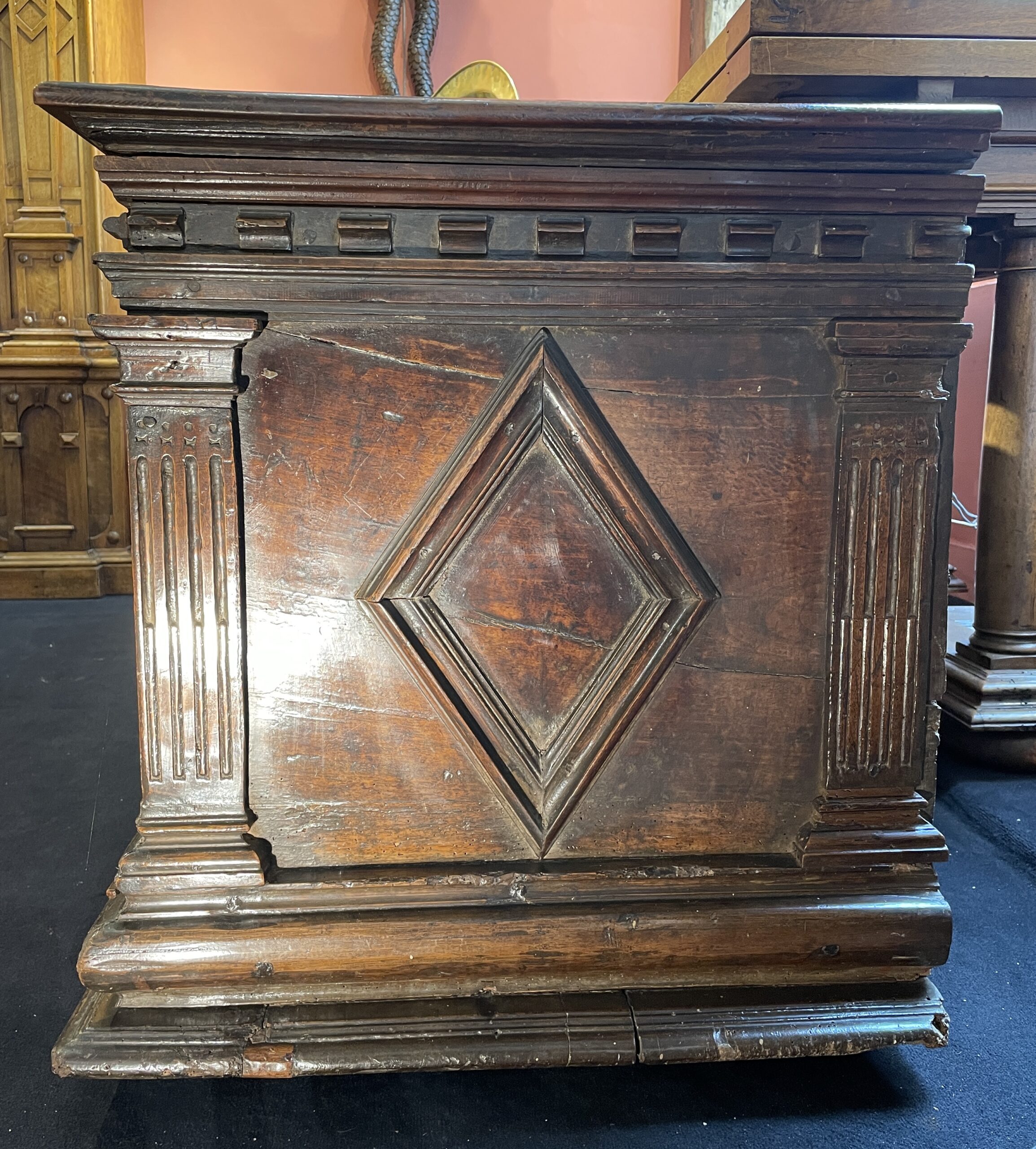
This cassone, harmonious in its proportions, stands out for the sobriety and precision of its ornementation, inspired by the classical world.
It rests on a base adorned with a broad concave and then convex moulded band, giving real depth to the façade. This surface creates a play of light and shadow, enhancing the relief of the diamond motifs.
The front of the cassone is divided into four fluted and reeded pilasters rising halfway up the panel and crowned with Doric capitals. Between each pilaster appears a beautiful raised diamond motif framed by a series of mouldings. The upper rail is decorated with a row of projecting consoles.
The sides mirror the decorative scheme of the front panel.
The top, plain and slightly overhanging, is attached to the chest with two large forged iron hinges set inside.
Simple in structure yet powerful in line, this elegant and sophisticated cassone, with its beautiful patina, is a perfect example of early Italian Renaissance furniture.
Comparative reference:
A similar cassone, particularly close in its ornamentation, is illustrated in : Graziano Manni, Mobili Antichi in Emilia Romagna, Artioli Editore, Modena, p. 33.