Description
The cult of the Virgin Mary lies at the heart of medieval devotion. The Virgin and Child was the most frequently depicted religious subject in fourteenth-century sculpture.
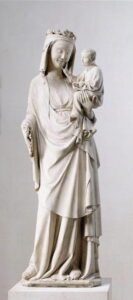
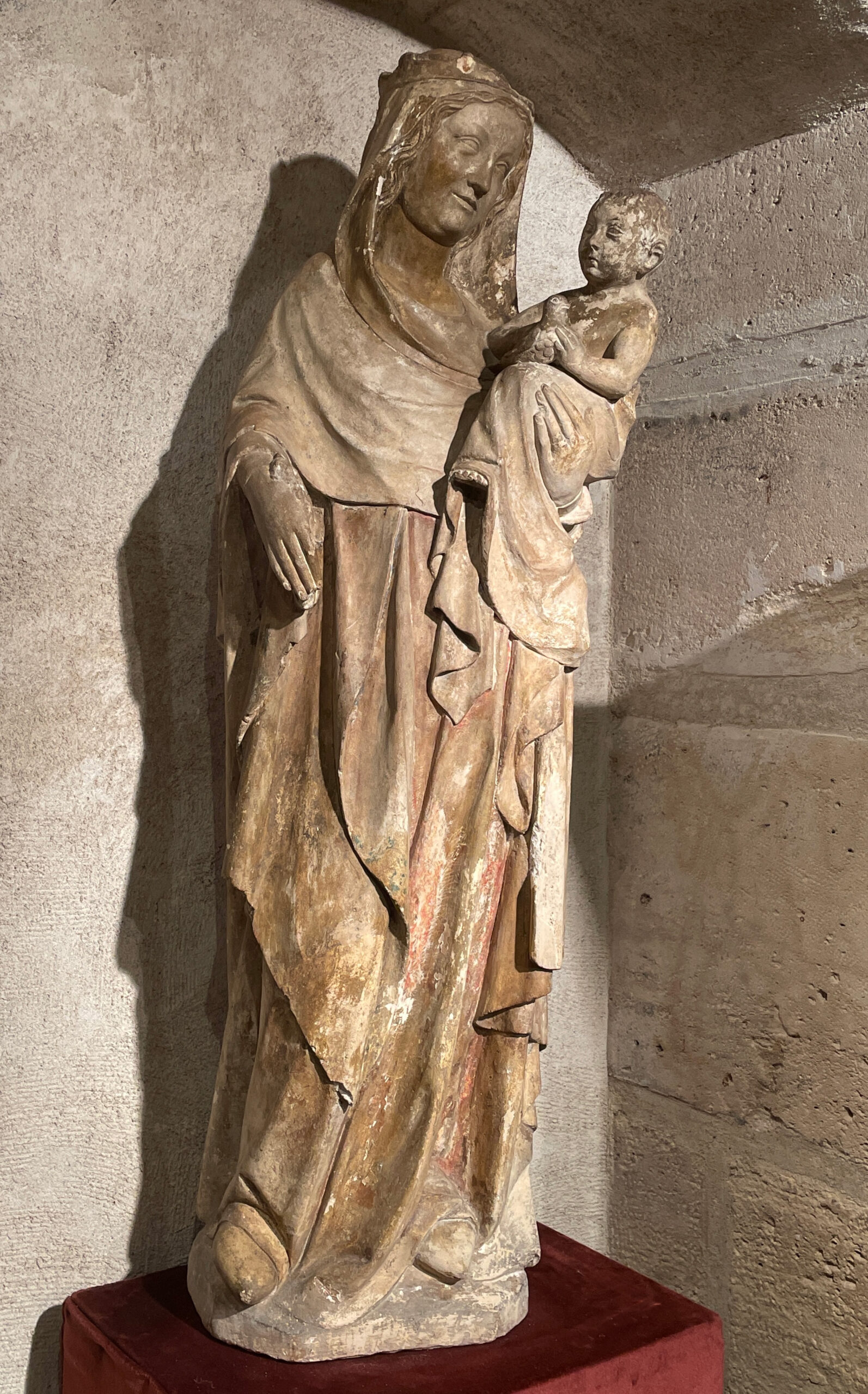
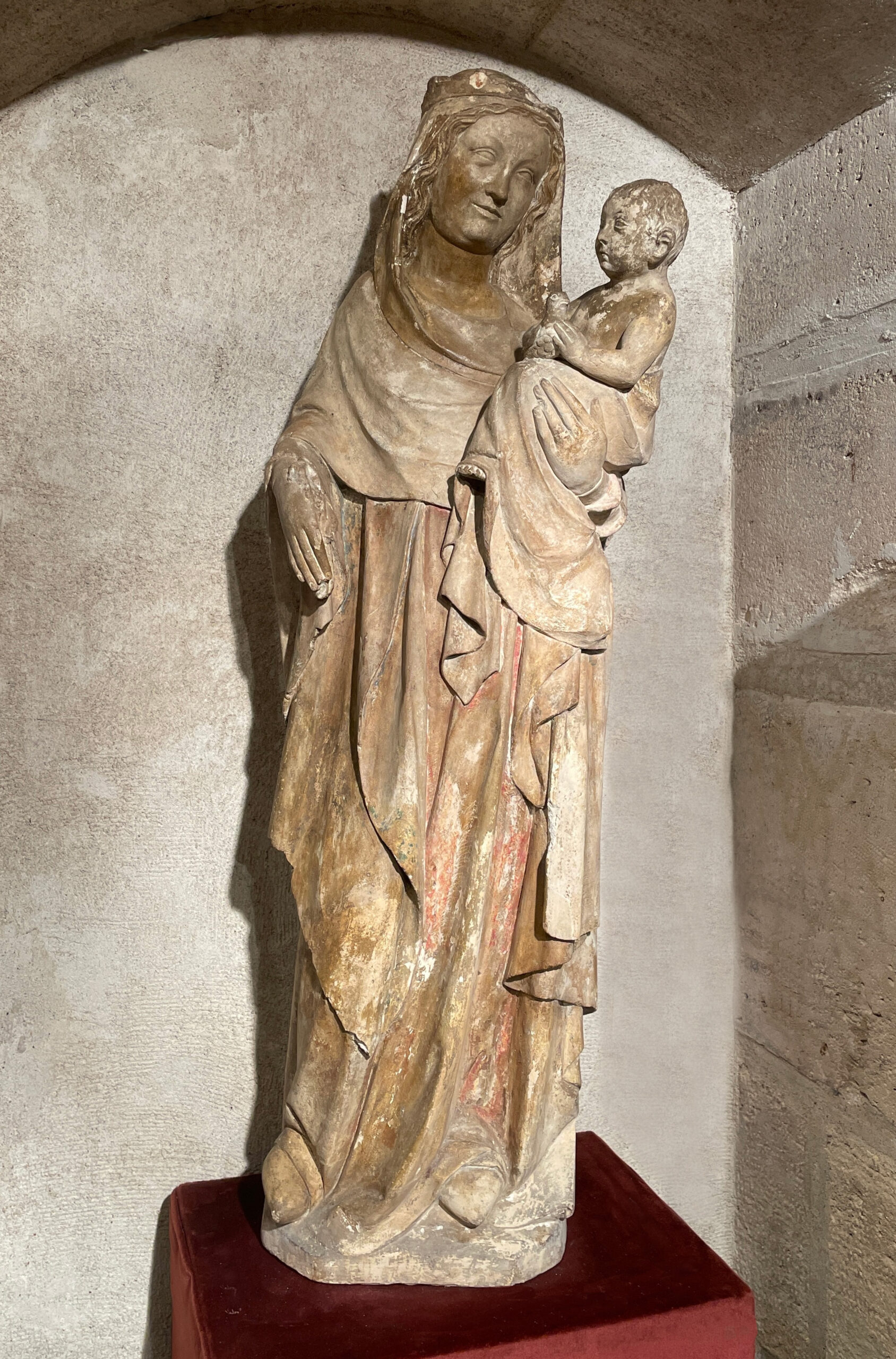
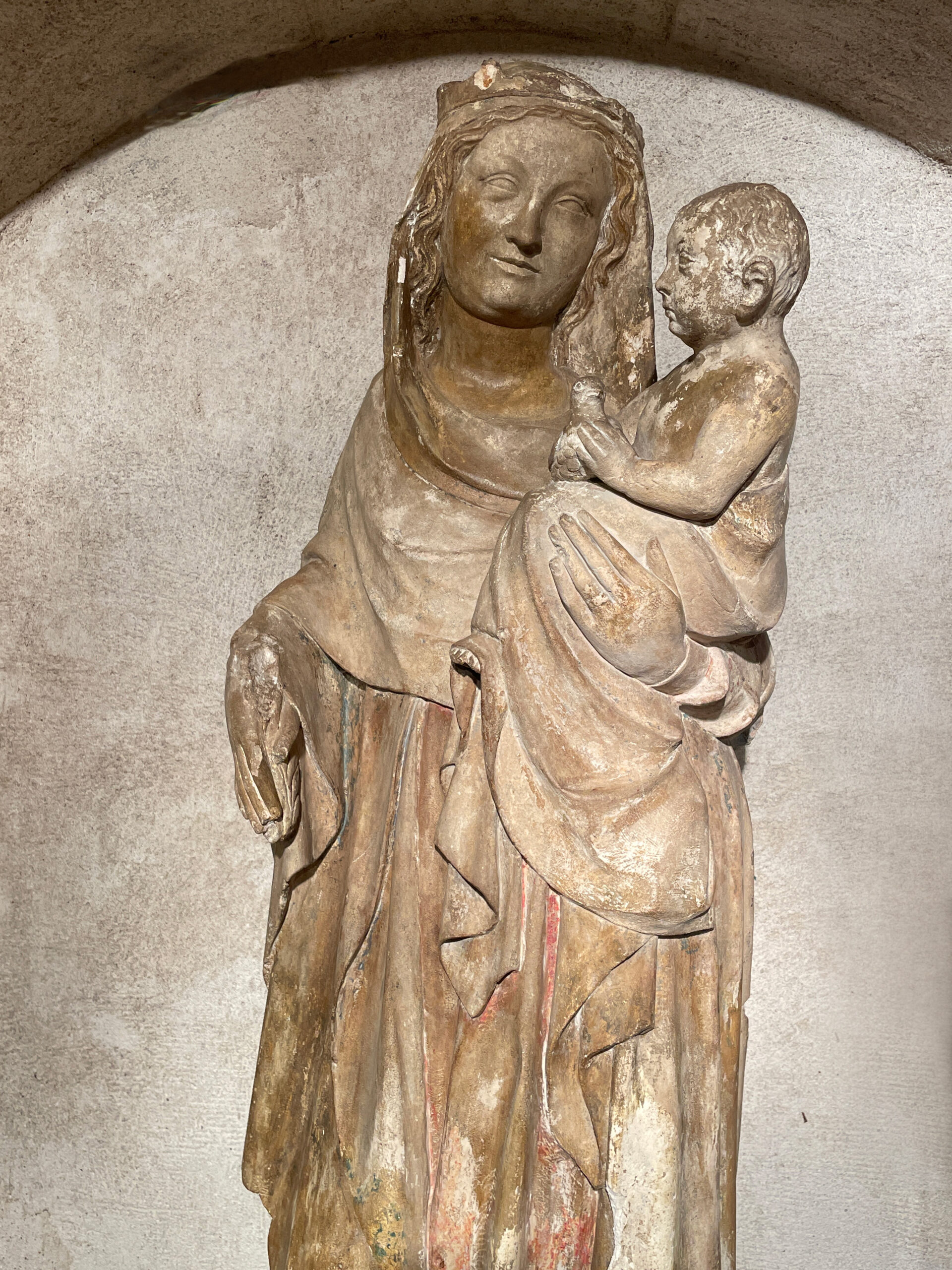
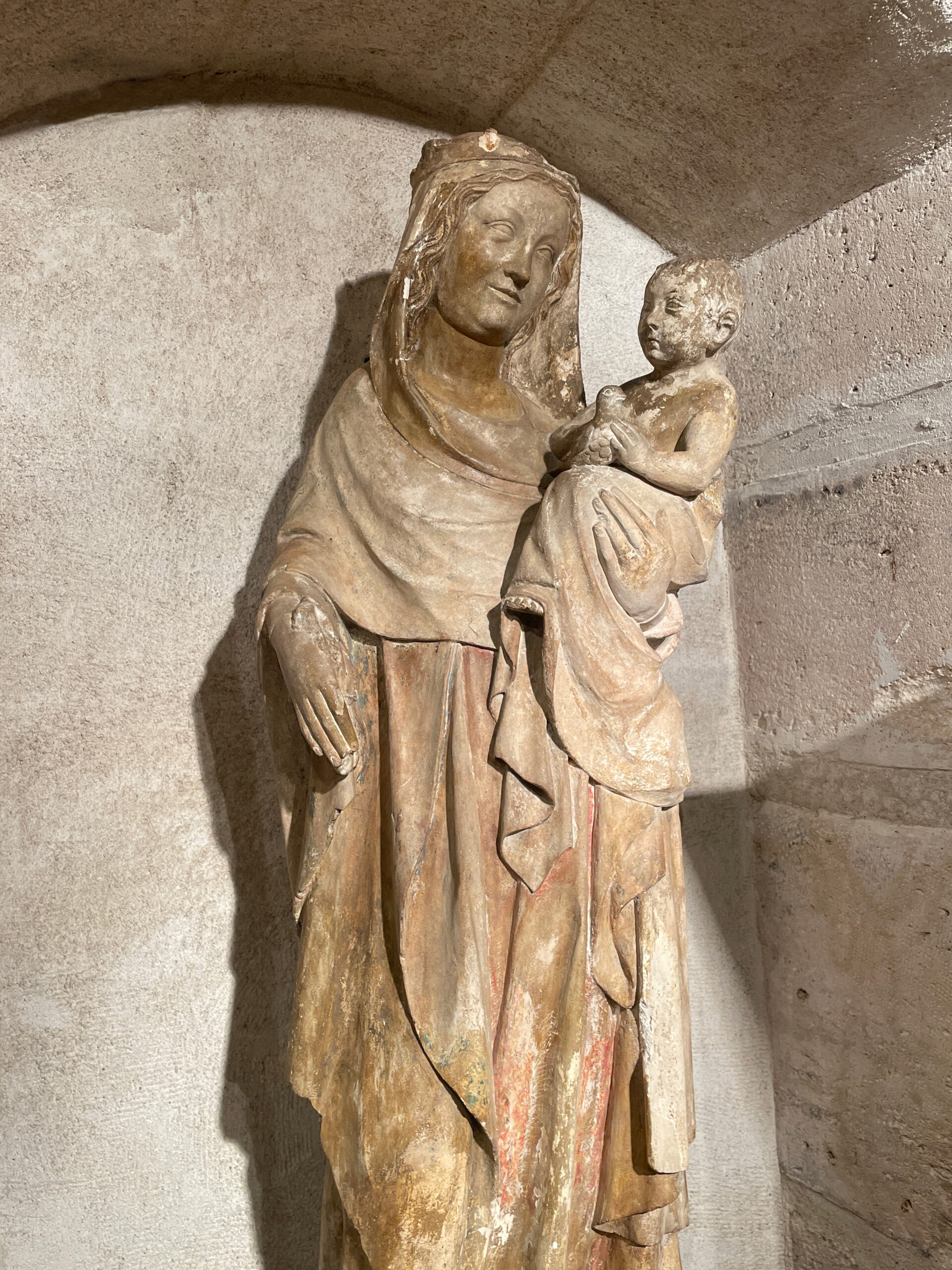
This imposing standing Virgin holds the Christ Child, seated on her left arm, while in her right hand, with its long, slender fingers, she holds a stem that was once adorned with flowers.
The delicately modelled, youthful face, with its distant gaze, reveals a hint of playfulness that is echoed in the expression of the Child. Her head is encircled by a low crown securing a long veil that merges gracefully with the Virgin’s garments.
Her figure is concealed beneath a sumptuous gown with abundant folds, over which she wears a tunic. Carved from limestone, the sculpture was originally painted, as evidenced by traces of red polychromy still visible on the gown.
The cascading folds of the drapery and the elegance of the composition, accentuated by the narrow, gently sloping shoulders, invite comparison with several Norman representations of the Virgin, notably the Virgin and Child from Blanchelande Abbey, in the Manche region, now housed in the Louvre Museum. These works reflect the influence of royal representations of the Virgin.
The Christ Child wears a long, softly flowing swaddling cloth, characteristic of the fourteenth century, which reveals his tiny toes and blends harmoniously with his mother’s mantle. He holds a goldfinch in his hands.
The stylistic characteristics of this sculpture closely associate it with fourteenth-century Norman sculpture. The delicacy and softness of the facial features, the graceful arrangement of the mantle and veil, which extends to envelop the Child, and the low crown all contribute to the subtle elegance of the composition.
The distinctive facial features and cheerful expressions of both Mother and Child, reflecting an increasingly tender and human relationship, further support an attribution to Normandy.
The sculpture exudes a powerful presence, combining simplicity and refinement with a remarkable sense of naturalism, lending it a particularly captivating charm.
Bibliography :
Brigitte Béranger-Menand, La statuaire médiévale en Normandie occidentale : la Vierge à l’Enfant, XIIIe–XVIe siècle, 2004.
Comparative Study :
La Vierge et l’Enfant
Abbaye de Blanchelande – Manche
Musée du Louvre Salle 206, Aile Richelieu, Level 0, N° inv. ML 24 – N 15007