



Description
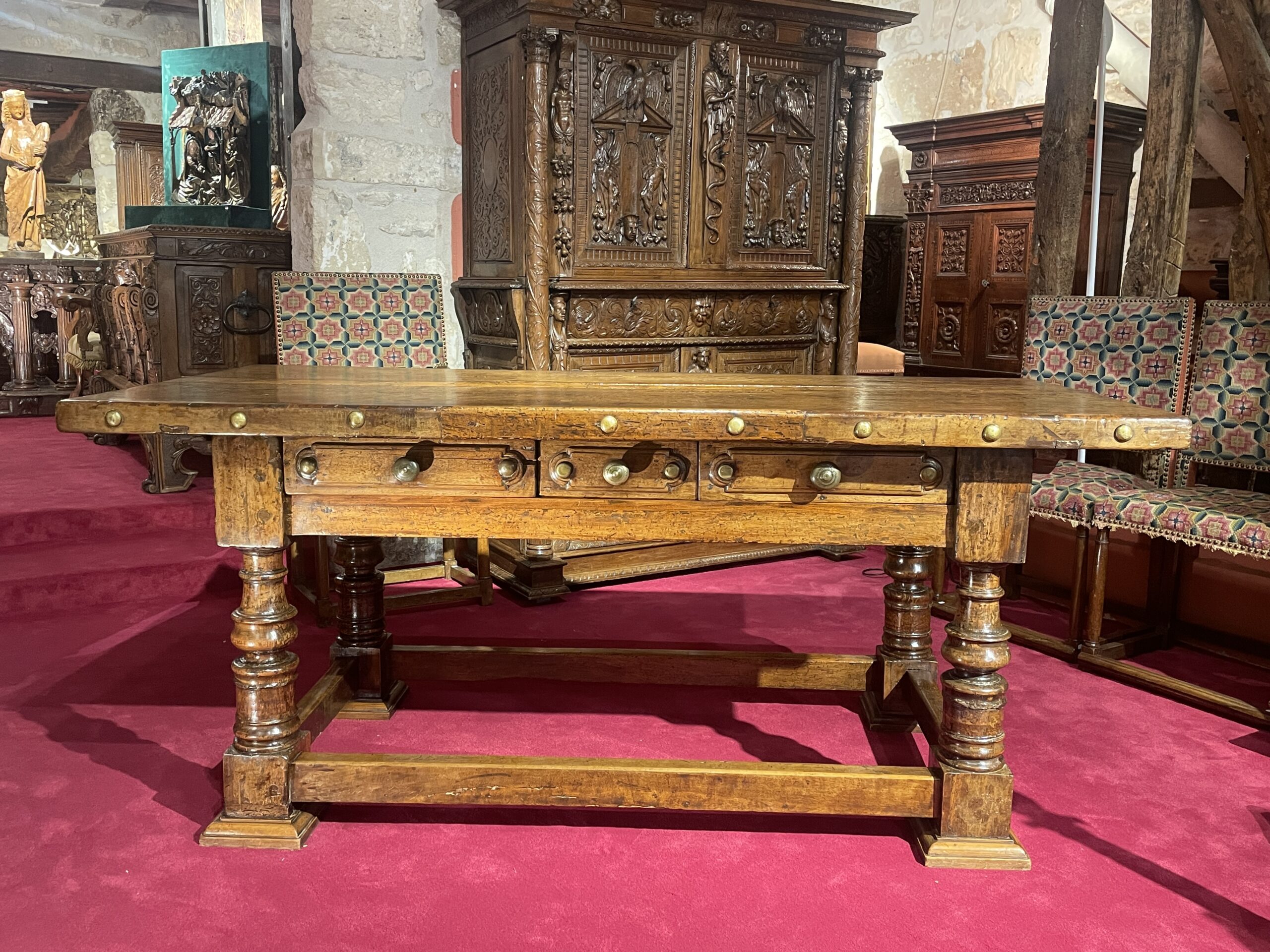
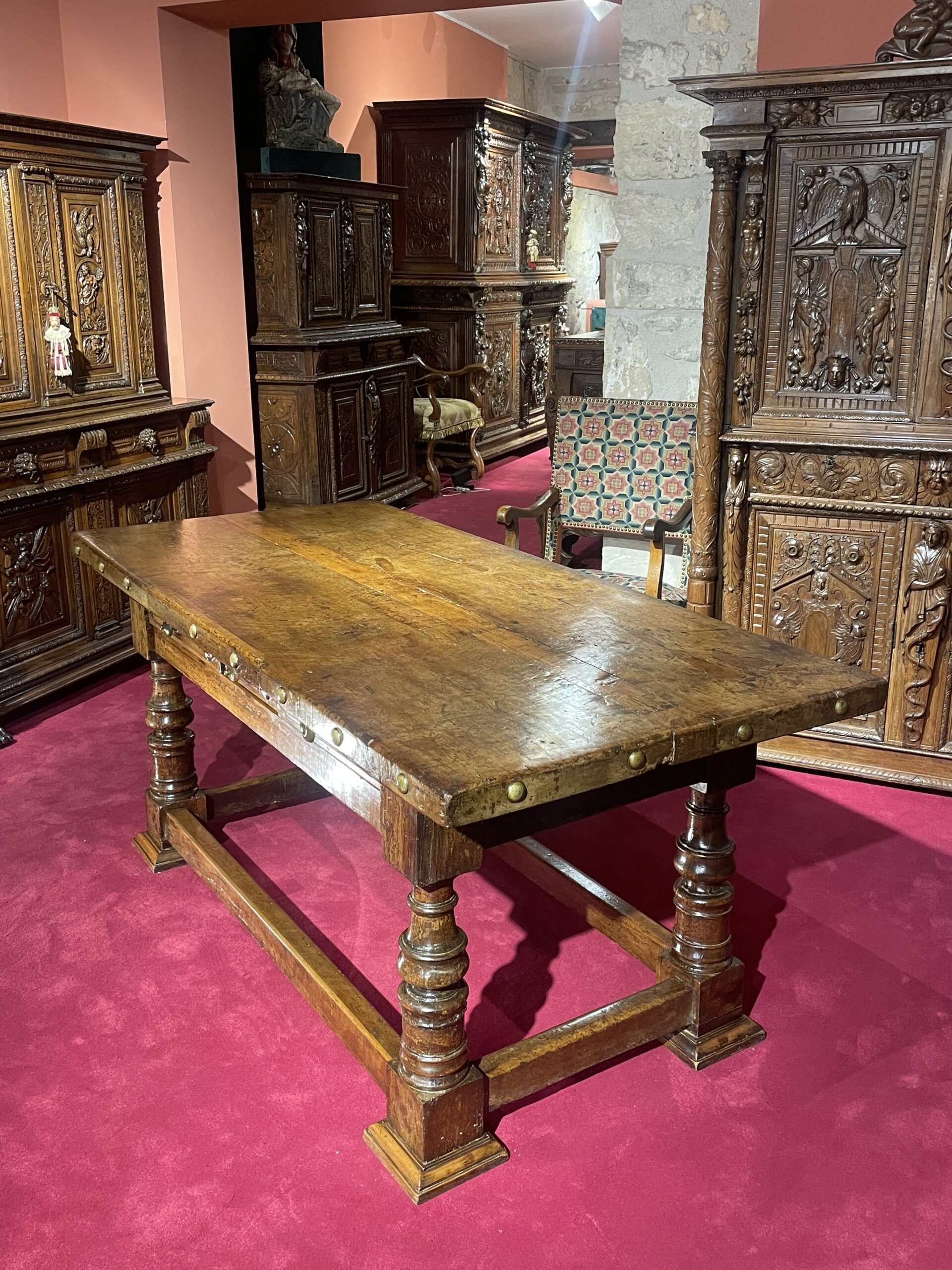
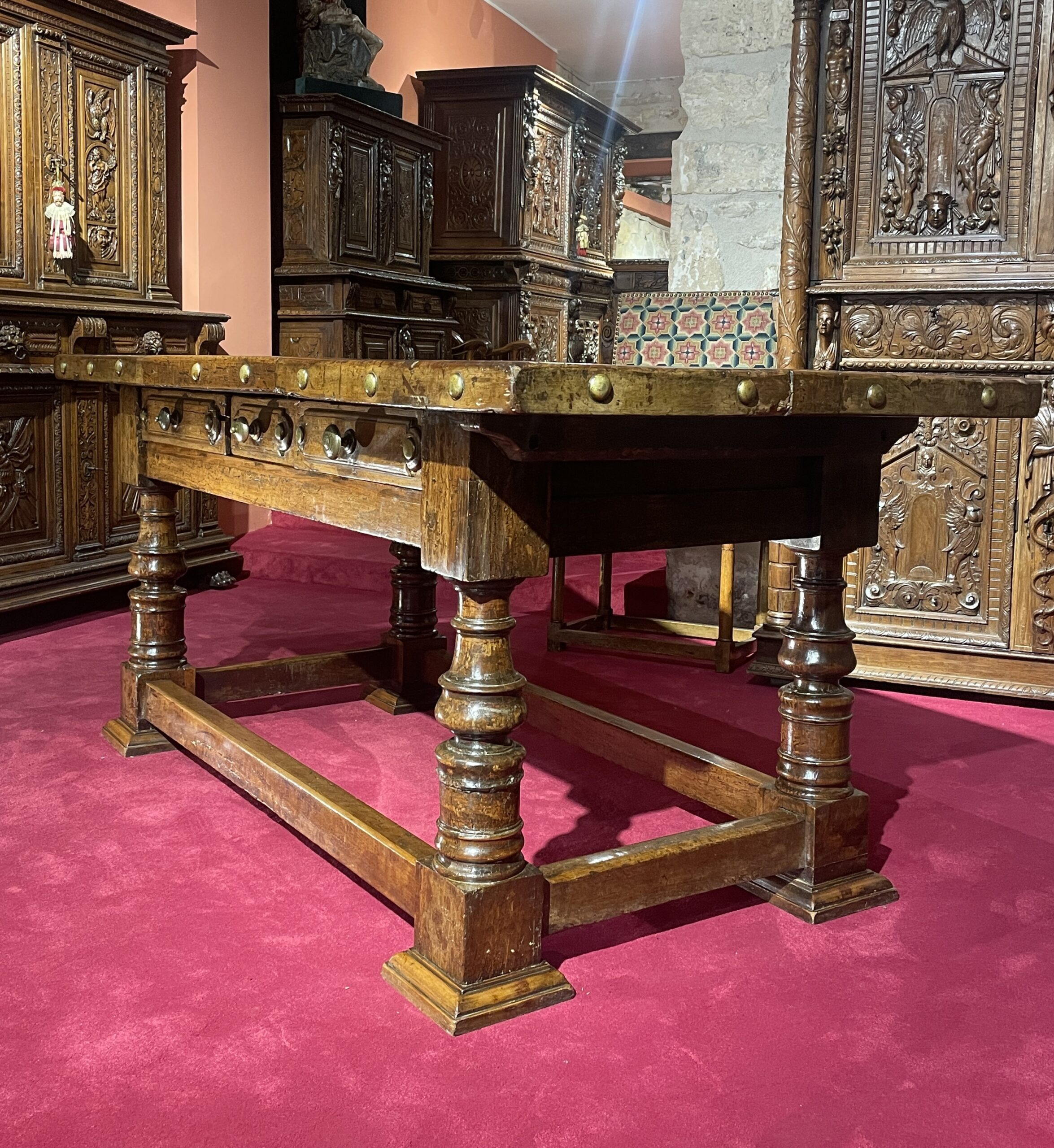
This striking table, notable for its generous proportions and the robust craftsmanship of its turned base, is a characteristic example of furniture from the Emilia region of Italy, and more specifically, the city of Bologna.
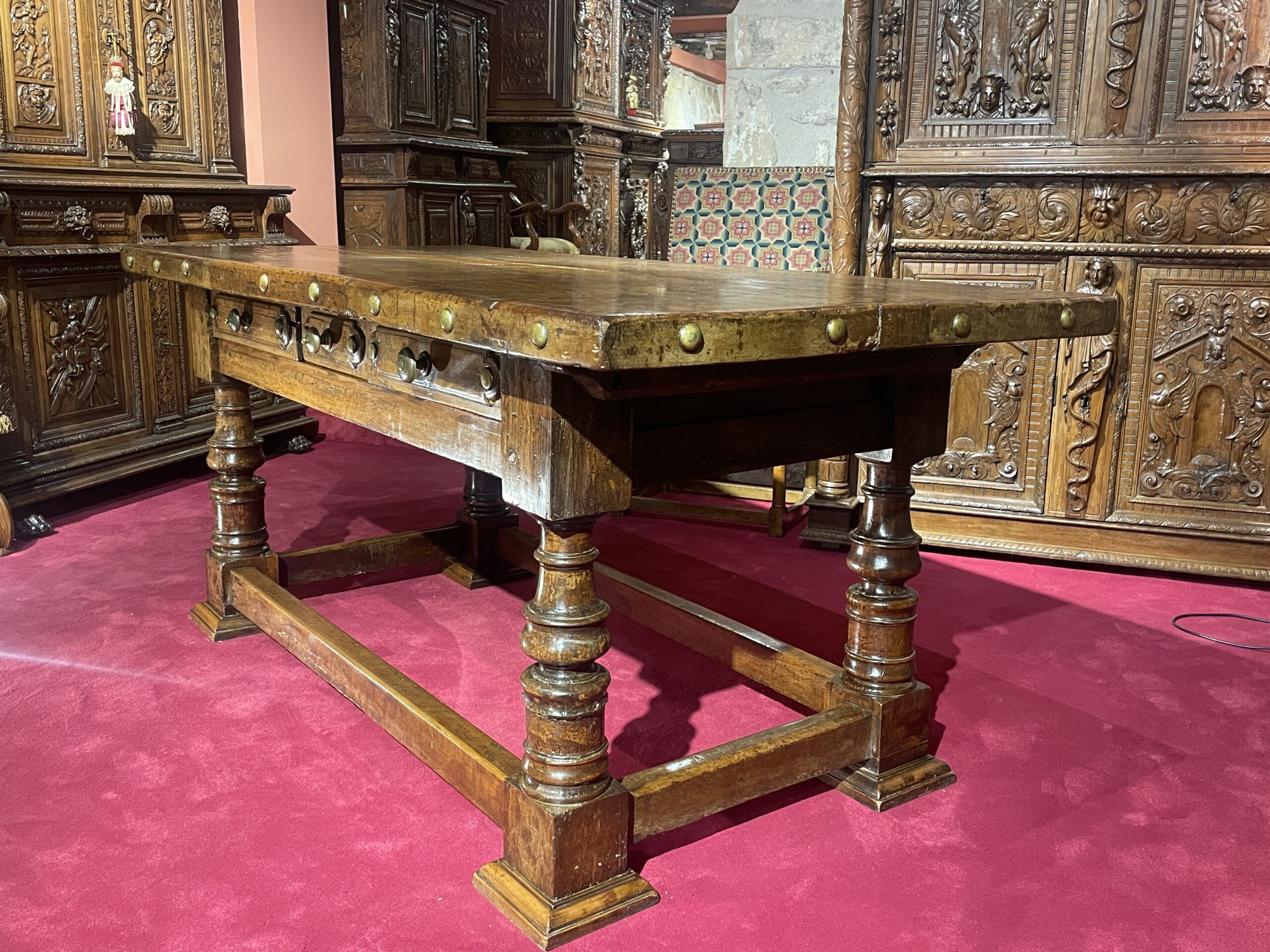
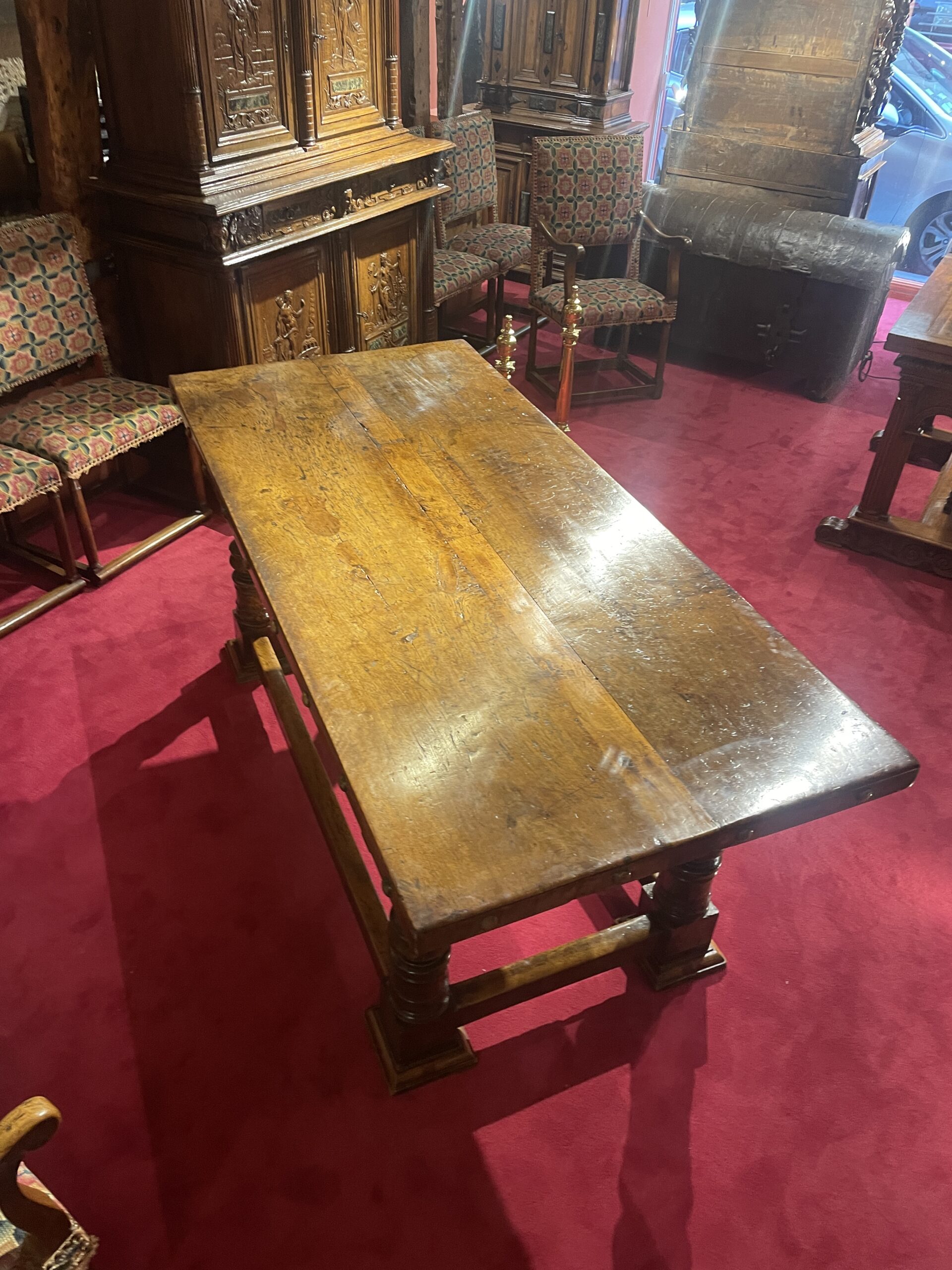
The thick tabletop, crafted from a single solid plank of wood, is bordered by a series of beautiful round bronze studs, evenly spaced to form a rhythmic decorative band around the perimeter.
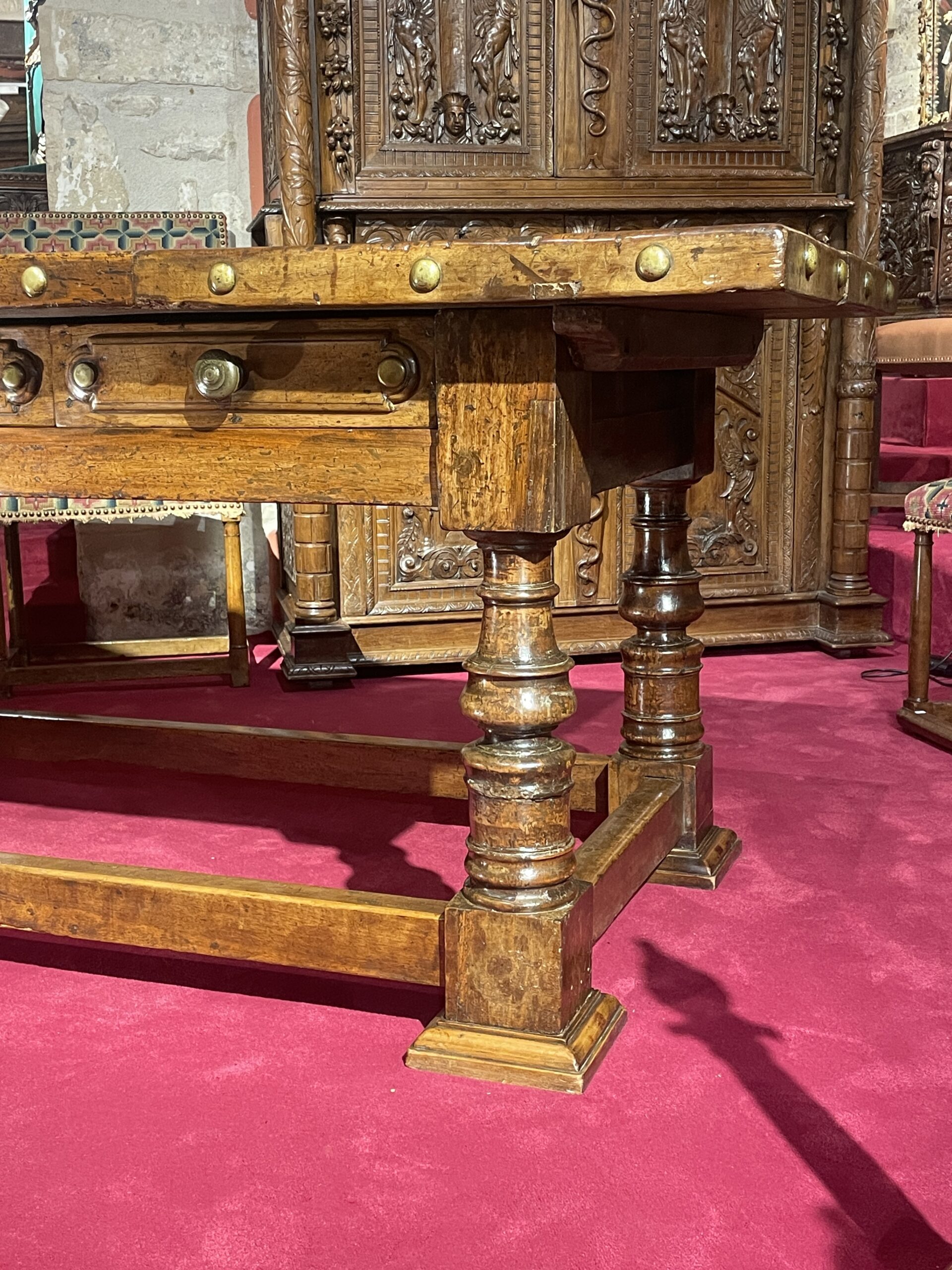
Beneath, the apron features three drawers on the front—two large lateral ones and a narrower central drawer. Each is adorned with a carved wooden escutcheon, at the center of which sits a bronze knob serving as the drawer pull. The structure’s stability is ensured by two long transverse stretchers, set beyond the leg frame and mortised into the underside of the top, then pegged into the base using traditional wooden dowels.
The table stands on four boldly turned legs, following the Bolognese model, connected by substantial corner blocks that secure them both to the apron and to the four stretchers forming the lower cross-frame.
Bronze studs, identical to those that punctuate the tabletop, also embellish the drawer fronts, a decorative motif that is emblematic of Emilian craftsmanship in the mid-16th century.
Tables with similar characteristics are reproduced in the following works:
Comparative Studies :
Silvano Colombo, L’Arte del Mobile in Italia, Bramante Editrice, Milano, 1975, fig. 121.
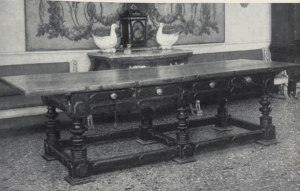
Graziano Manni, Mobili Antichi in Emilia Romagna, Artioli Editore, Modène, 1993, p. 203-206.