Description
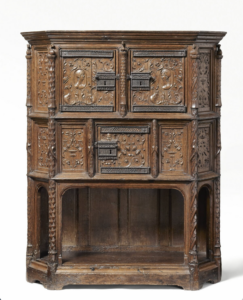
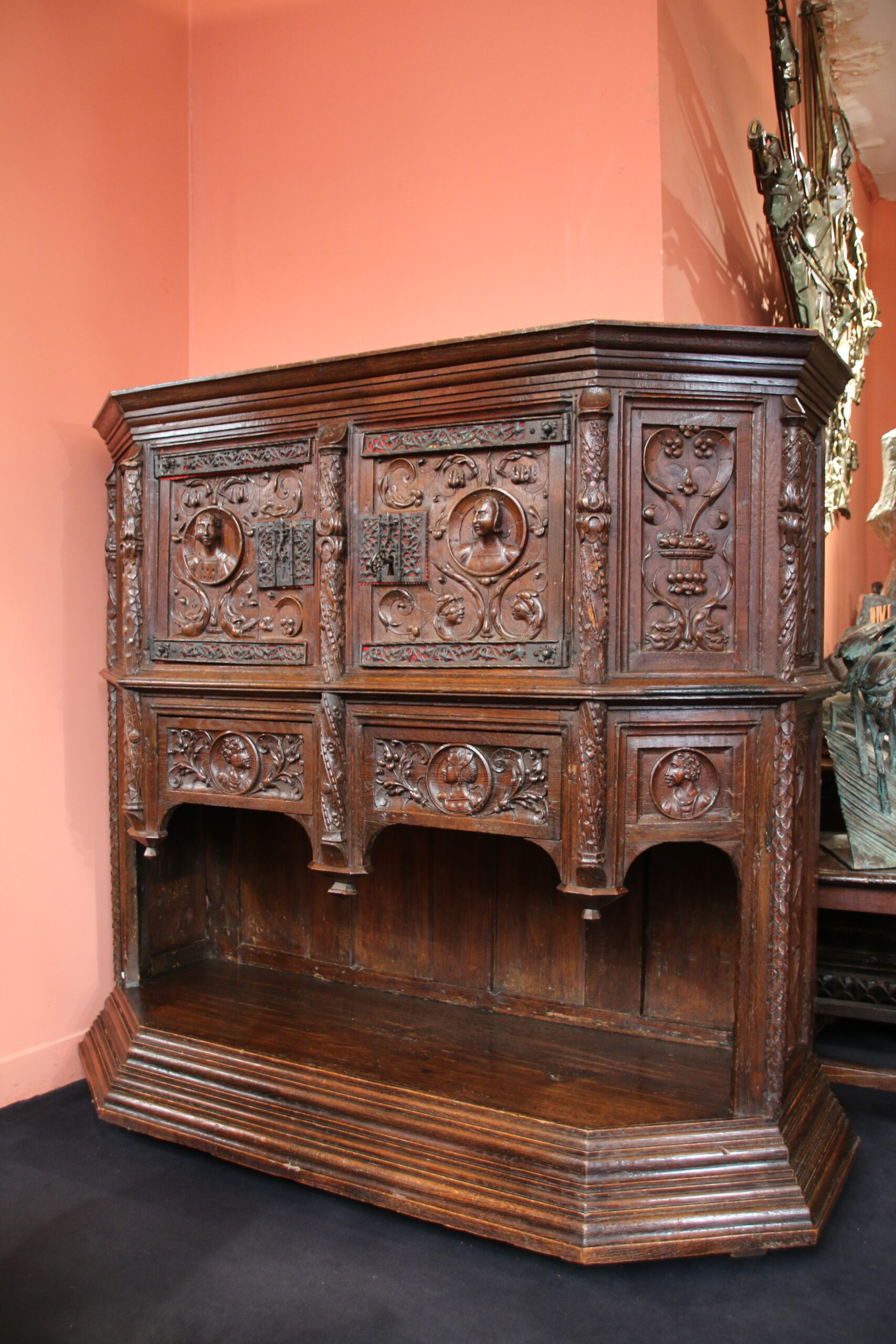
The end of the mediaeval period saw the invention of decorative forms applied to structures that were still Gothic. This sideboard is a fine example.
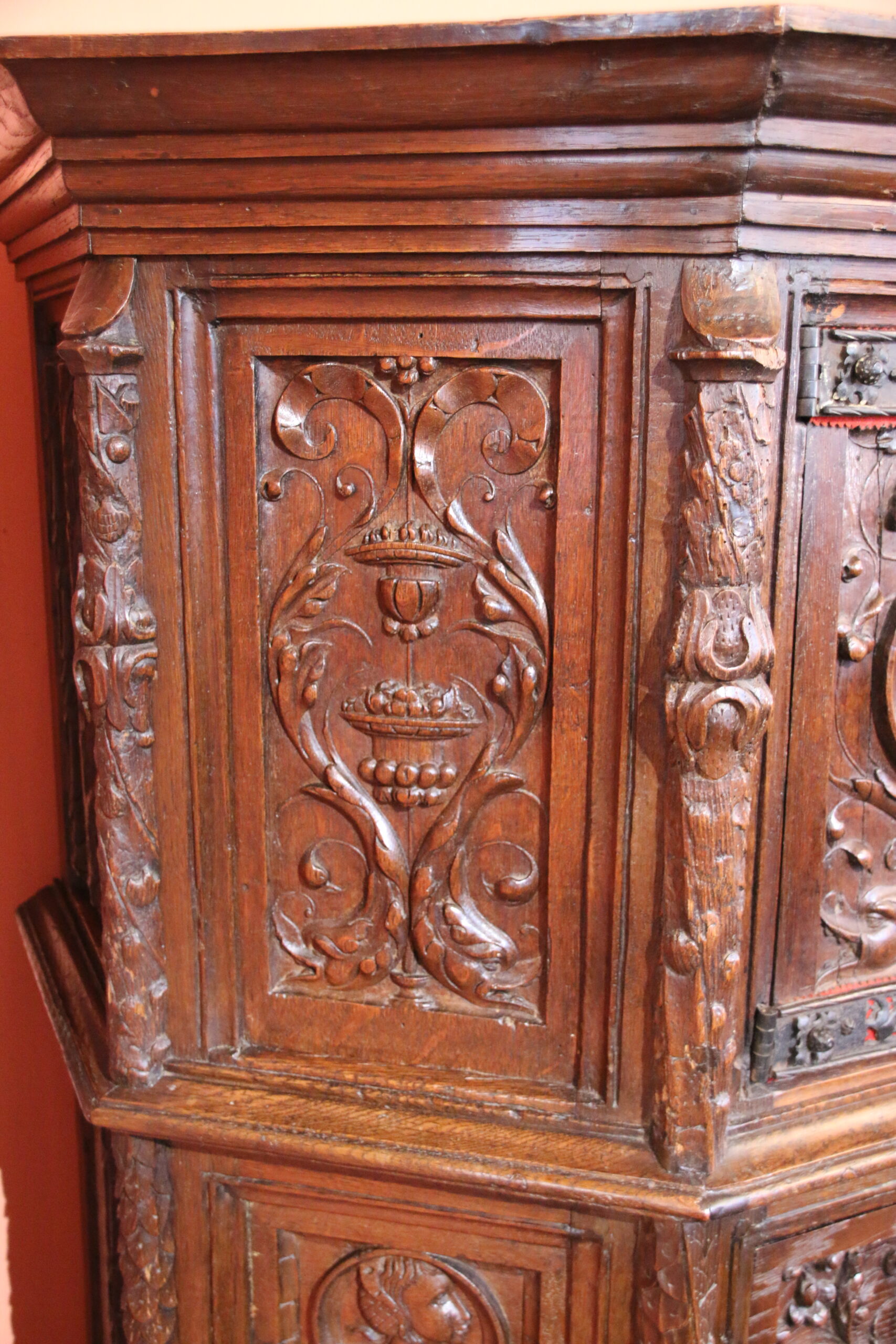
The introduction of canted sides softened the lines of the furniture, while horizontal lines were greatly favoured.
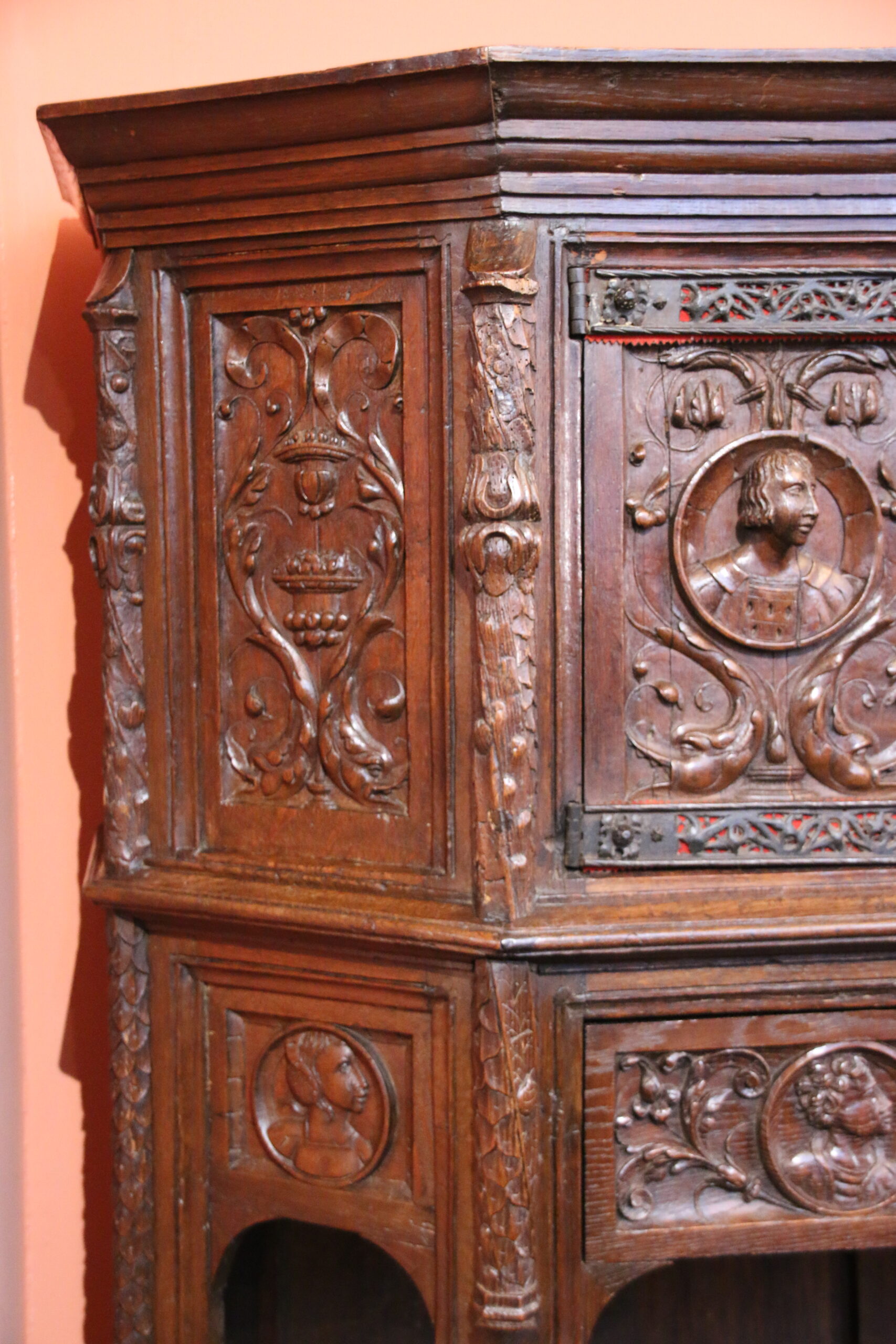
The two side jambs, underlined by pillars decorated with scale motifs, rise from a powerfully moulded plinth. The body rests on this base. Its canted plan defines five sides, separated by colonnettes and divided into two horizontal registers.
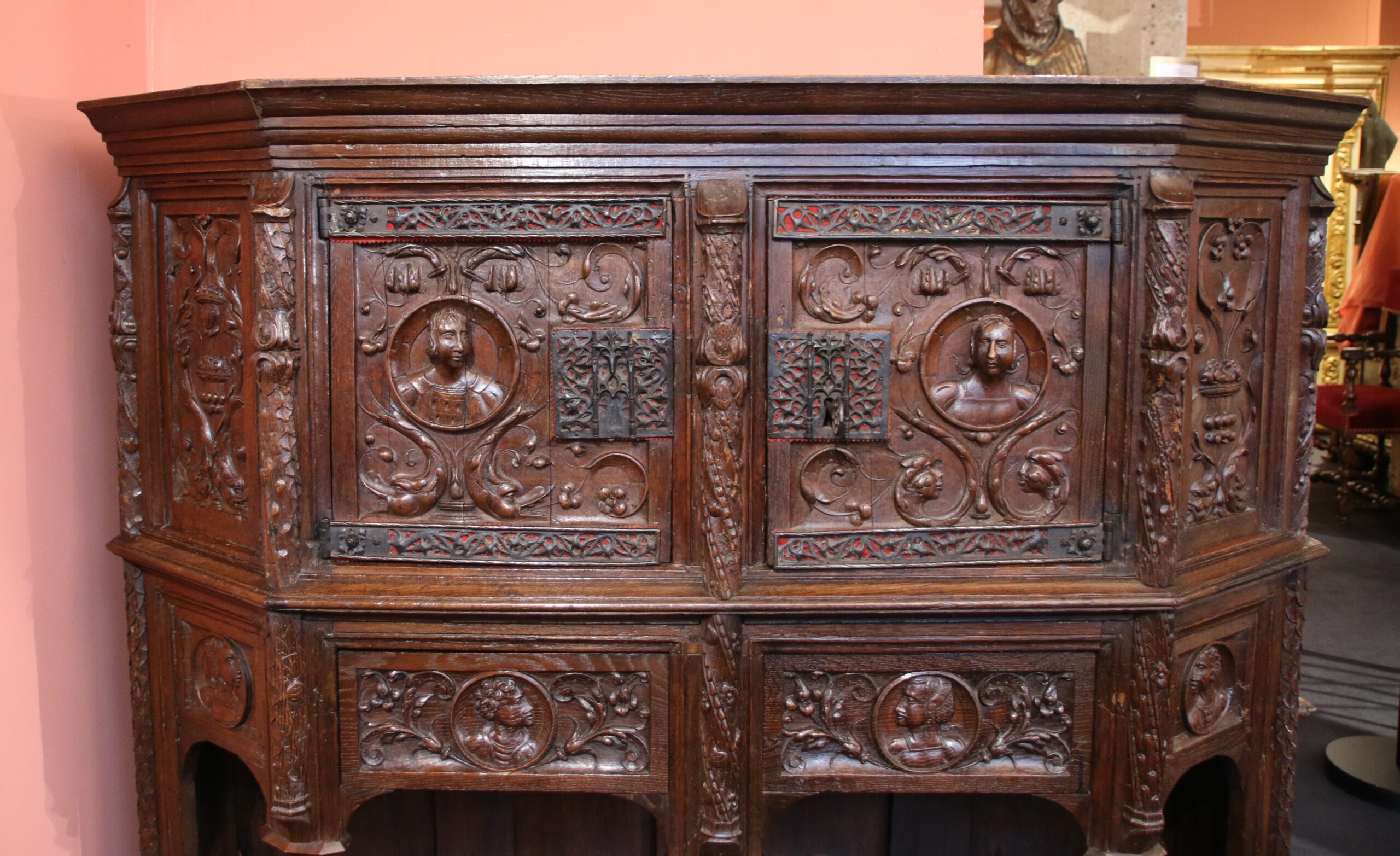
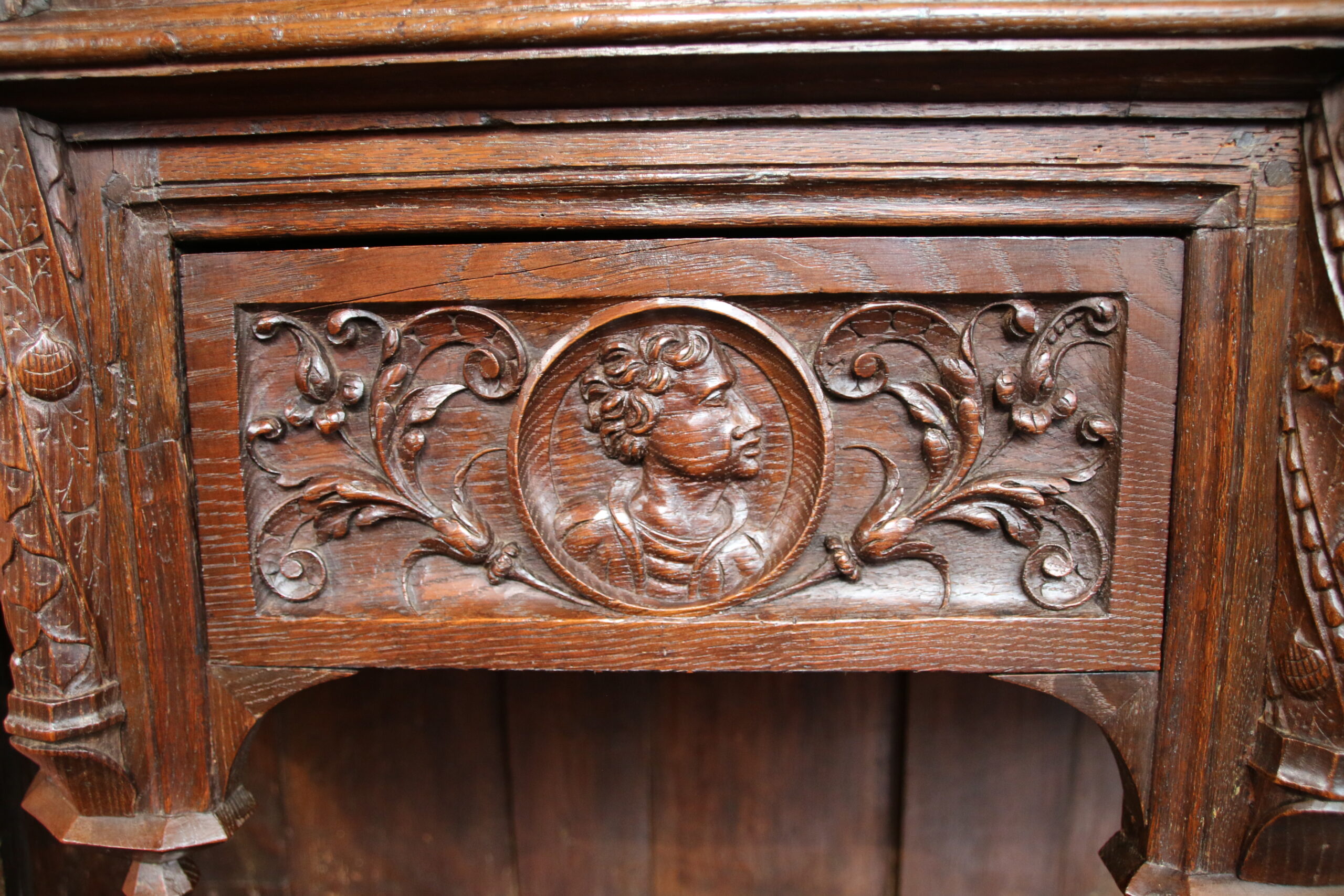
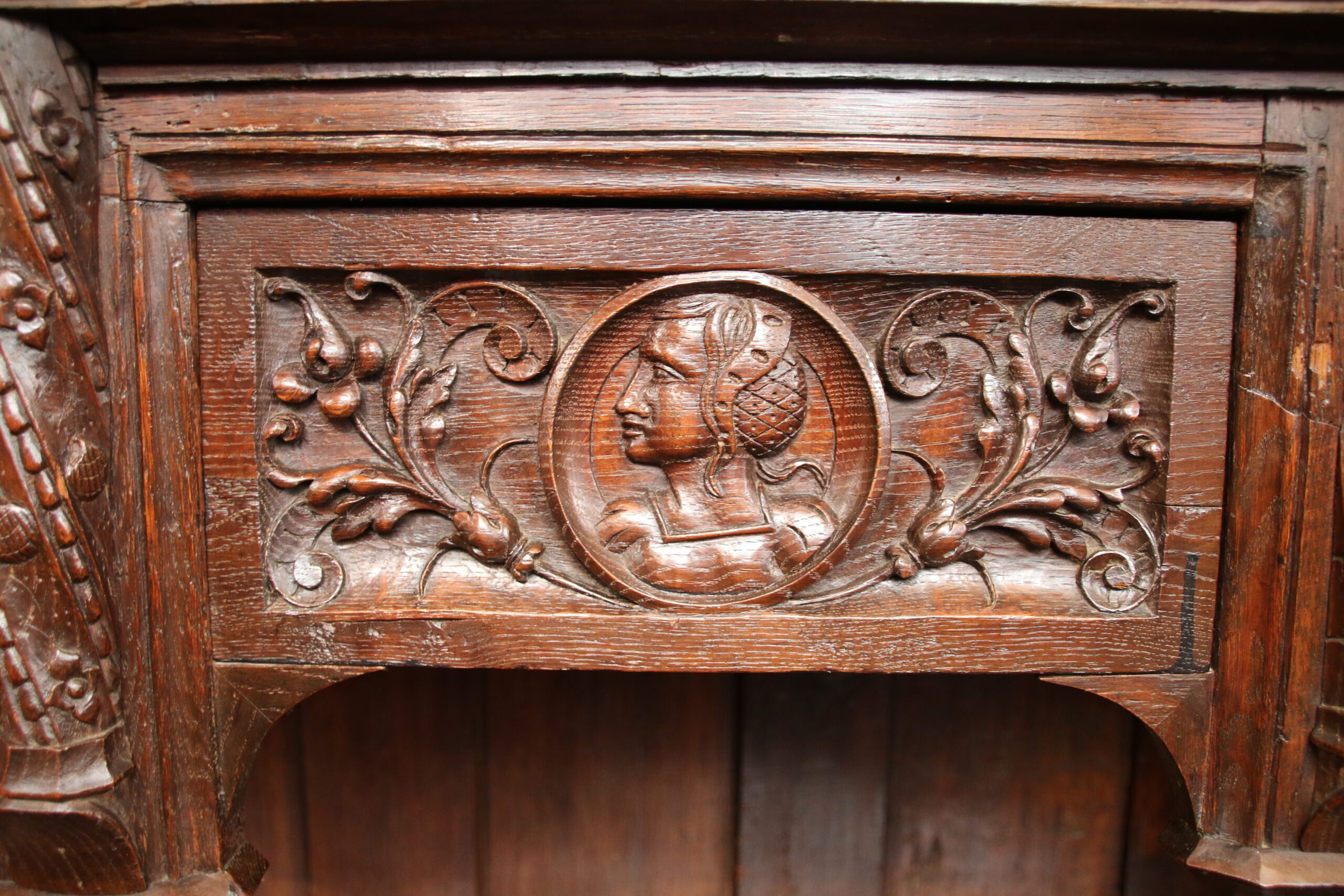
The lower register features two drawers. Each is adorned with flower stems on either side of a medallion in which a man’s profile is inscribed on the left and a woman’s on the right. Small columns carved with various geometric motifs separate them. The two adjacent panels also feature male and female profiles. These medallions with their vigorous profiles are typical of the François I style.
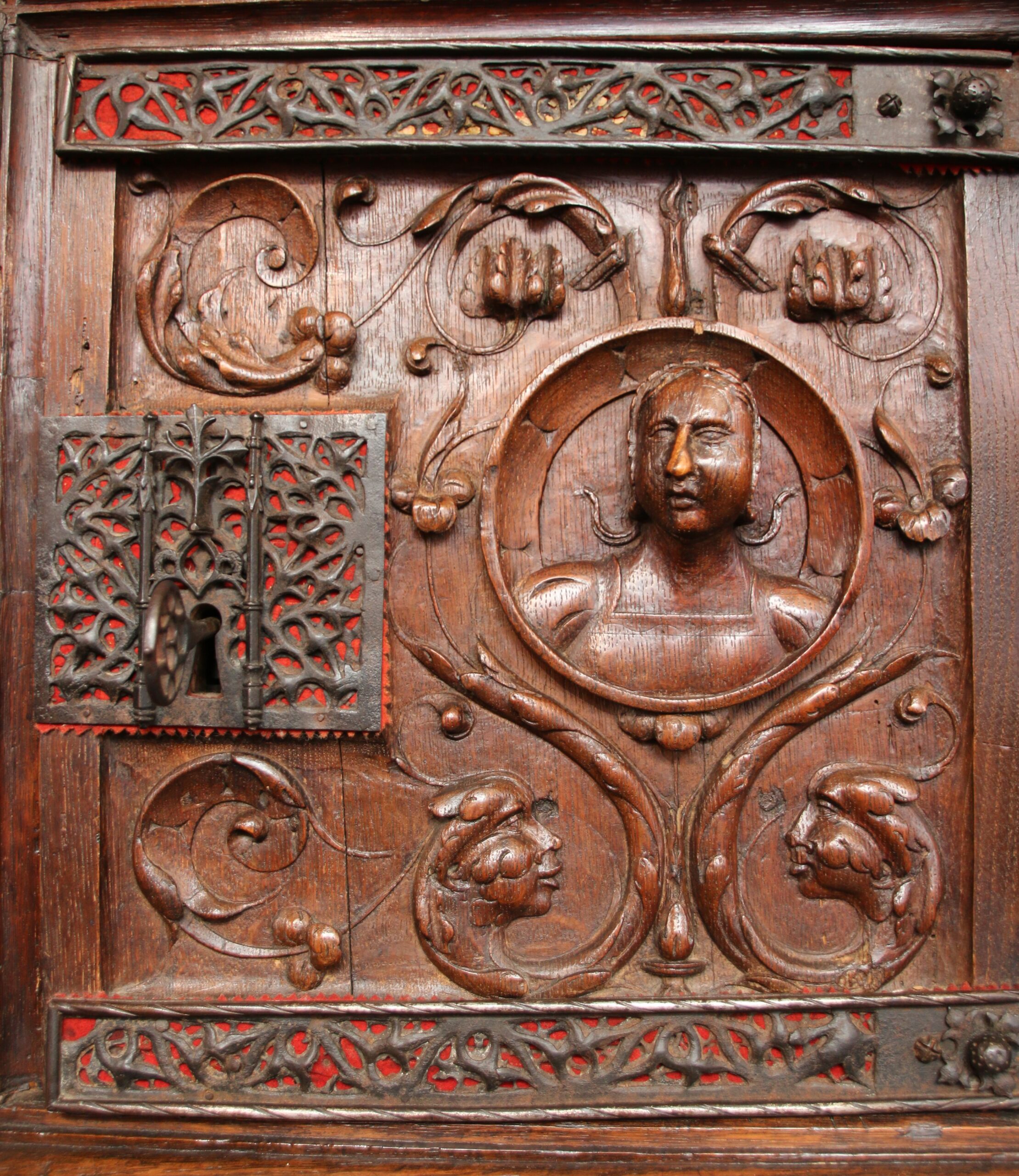
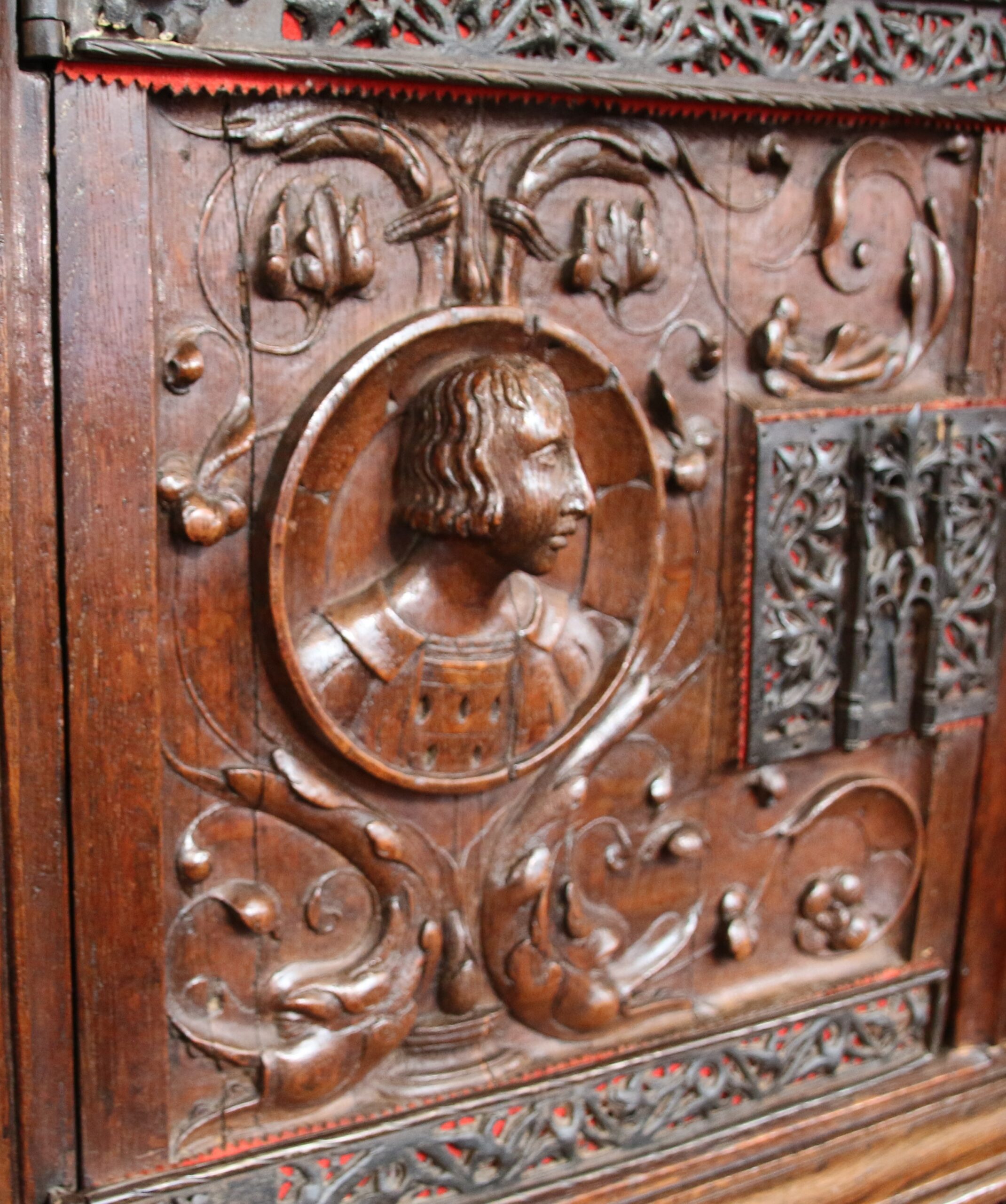
The upper register continues the twisted columns of the previous register. It opens to two leaves joined to the frame with finely openwork hinges. A large original lock plate follows the same pattern.
Two other medallions occupy the centre of the panels. They are treated differently to the previous four. The busts are projected forward and stand out more from the background of the medallion. While the first medallions are reminiscent of the work of Italian medallists, these are inspired more by the work of Flemish sculptors. Similarly, although the former do not seem to be intended to evoke real individuals, the two medallions in the leaves, a man and a woman facing each other, might suggest that this piece of furniture was a wedding gift, honouring the two spouses.
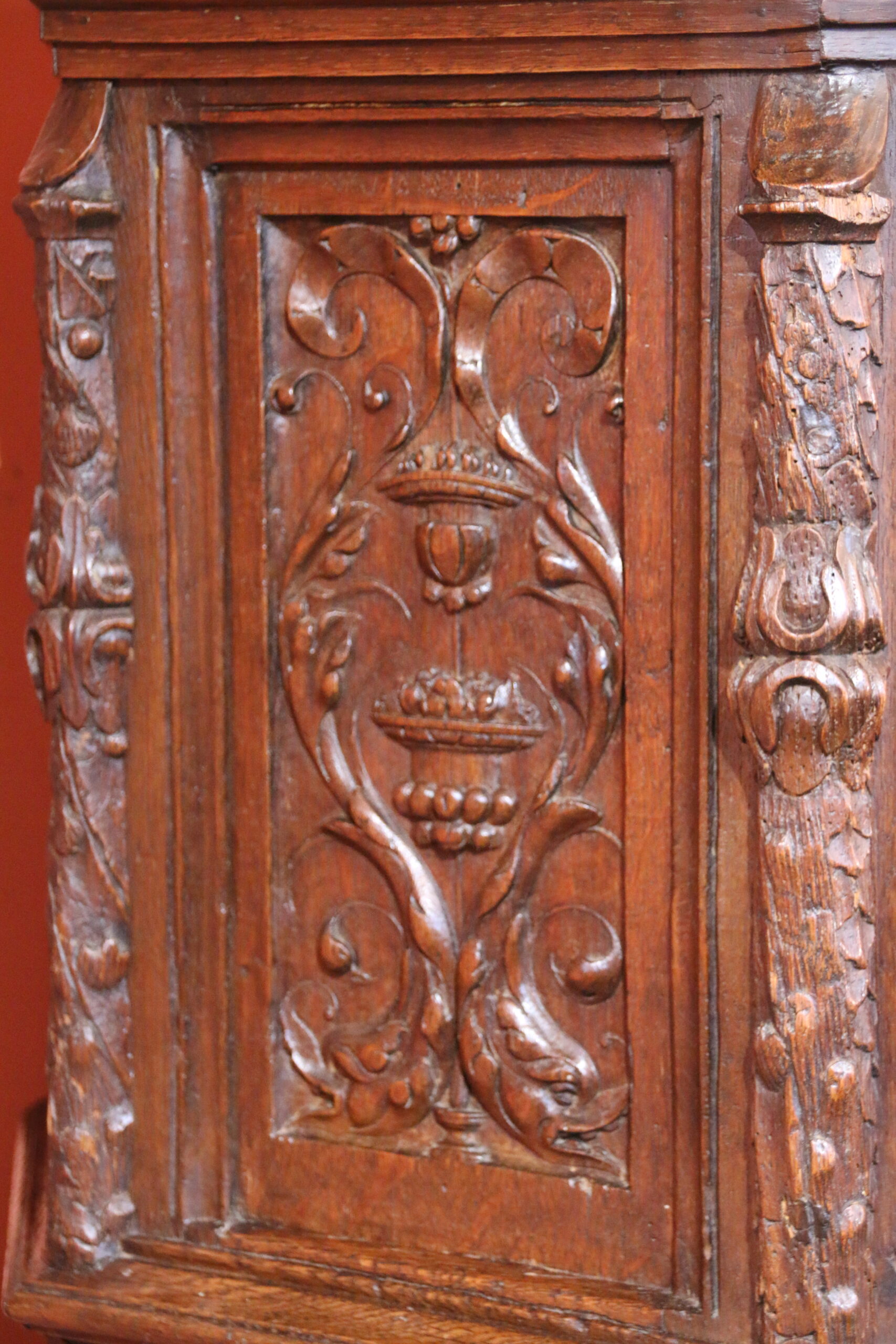
Each of the figures is dressed in court attire. The medallions are surrounded by arabesque plant motifs typical of the early French Renaissance. On the left-hand panel, these scrolls give rise to two stylised dolphins, while on the right-hand panel, they form two anthropomorphic faces.
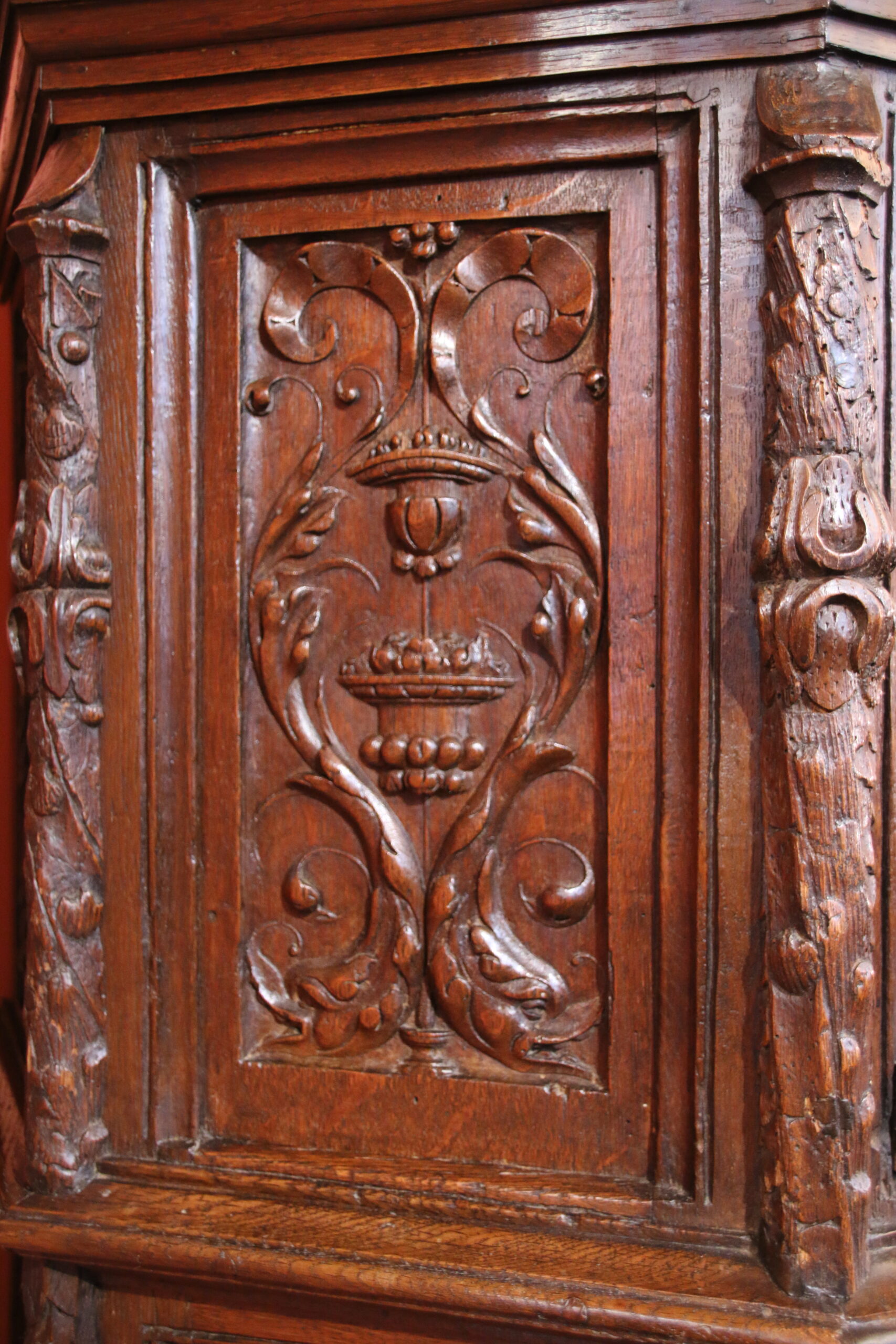
On the side panels, arabesque motifs are arranged symmetrically: vases, dolphins and leaves create a light, precise decoration that is equally suited to furniture and castle facades.
The side panels are carved with delicately executed napkin folds that play with the motif of the variously decorated columns.
A moulded cornice completes the piece.
A prestigious piece of furniture, this exceptional dresser combines a very accurate sense of composition with a solid Gothic tradition that the late 15th century brought to its apogee. A masterpiece of a model that no other period has reproduced, its sculpted decoration, borrowed from Italy, is designed to emphasise the human figure.
The textile motif, typical of the late Middle Ages, persists but is set against an arabesque decoration typical of the early Renaissance. The principle of symmetry governs the furniture, with a few whimsical touches.
Comparison
A similar decoration of foliage, medallion profiles and candelabras adorns the dresser from the former Arconati-Visconti collection in the Musée du Louvre (OA 6973).